
E-Collar Training
E Collar Training: A Step-by-Step Guide to Getting Started the Right Way
By Natasha Johnson, Founder & Head Trainer
Short answer
Training with an e-collar is a way to communicate with your dog at a distance, layered on top of commands your dog already understands. Build the foundation first with markers and praise, then add the collar in small steps: a snug fit, a quiet introduction, the lowest level your dog notices, and plenty of treats.
What You'll Learn
- The five steps of e-collar training, in order
- How to know your dog is ready before the collar goes on
- How to fit the collar and find the lowest level your dog notices
- How to pair it with commands your dog knows and keep training clear and kind
Quick Start: The Five Steps
Here is the order I follow with every dog. Each step builds on the one before it, and the details come below.
| Step | What you do | Why it matters |
|---|---|---|
| 1. Build the foundation | Teach each command on leash with markers and rewards | A dog who has never learned what "come" means cannot learn it from a collar |
| 2. Fit the collar | Contact points against the skin, snug without constant pressure | Your dog feels every signal the same way |
| 3. Let your dog wear it first | Several sessions with the collar on and no stimulation | Wearing it becomes neutral to positive |
| 4. Find the lowest level your dog notices | Start at the lowest setting and move up one level at a time | The first subtle reaction is your starting point |
| 5. Pair it with cues your dog knows | Use it as a reminder, then reward every right response | Your dog learns the sensation switches off the instant they respond |
E-Collars and Prong Collars: Different Jobs
Dog owners often ask me whether they need an e-collar or a prong collar. The honest answer is that these two tools do different jobs. A prong collar is for leash work, and it is the tool I trust most when a dog is pulling on the leash. When your dog pulls, the prong collar applies even pressure around the neck, and it releases the pressure the moment the pulling stops. An e-collar is for communication at a distance, which is why it is my tool for recall and off-leash reliability.
Neither tool replaces the training underneath. Many owners use each tool for its own job: the prong collar when pulling is the problem, and the e-collar for recall. Other tools, like a martingale collar or a slip harness, can help with everyday walks. A flat collar is not a training tool, it is for ID tags and daily wear. Prong collars can cause lasting neck issues if misused, which is why fit and technique matter. You can read more about the prong side in Prong Collar Training and Prong Collar Sizing. For the full side-by-side, read E-Collar vs Prong Collar.
What Is E-Collar Training?
An e-collar (electronic collar or remote collar) is a training tool with a handheld remote and a receiver that sits on your dog's neck. It can give your dog a tone, a vibration, or a low-level stimulation, and the better collars let you choose from 1 to 100 levels. Using that signal to communicate with your dog at a distance, on leash and off, is what this guide is about. Properly used e-collars are humane and effective training tools.
It is not a shortcut. Used correctly, it works as a layer on top of commands and behaviors your dog already understands. At the low levels people actually train with, the sensation is closer to a muscle twitch or a tingle than anything you would call pain, and it works like a tap on the shoulder: a quiet reminder for a cue your dog already knows, for example recall, heel, or place.
You may also see this called dog shock collar training. The term "shock collar" usually describes earlier devices with few settings. A modern e-collar is a precise communication tool with a wide range of levels, which is what lets you find the lowest level your dog notices. For the full explanation, read What Is an E-Collar?, and for the safety questions, my article Are E-Collars Safe for Dogs? covers them in detail.
Where an E-Collar Shines
It earns its place where distance and distraction are the obstacle: building recall, chipping away at off-leash obedience, and reaching your dog when a leash cannot. An e-collar can deliver a cue up to 1,100 yards away on many models, and the ones I recommend range from 1/3 mile to 1 mile. For most owners doing basic recall in the yard or a park, half a mile is plenty. Pulling on the leash is a different job, and that one belongs to the prong collar.

GET THE FREE PLAN
Want a Free Recall Plan Built for Your Dog?
Get our free Recall Starter Plan, customized to your dog.
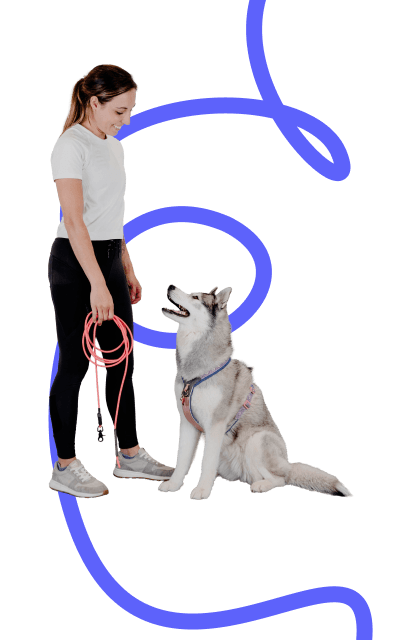
Is Your Dog Ready for an E-Collar?
Many dog owners want to start with the collar, but I always start with a dog who already understands what you are asking. Before the collar goes on, check these things:
- Your dog can do the cue without the collar.
- Your dog has a clear marker word and knows what a right response earns.
- Your commands have been taught with reward-based methods and proofed at gradually increasing levels of distraction.
- You are ready to learn the steps and follow them in order.
Foundation work can start the day you bring a puppy home. I don't recommend an e-collar on a puppy younger than 7 months, and I cover the full answer in my guide to e-collars and puppies. If your dog is struggling with fear or aggression, bring in a qualified behavior professional before adding any tool.
If any of the first three items is missing, keep working on the foundation. The Basic Voice Only Recall course covers that groundwork for recall, and Why Marker Training Dramatically Speeds Up Your Dog's Learning explains how markers work.
Keeping It Clear and Kind: Pros, Cons, and Honest Limits
No training tool is risk-free. Every tool has strengths and limits, and an honest guide covers both. Opinions on e-collars are divided, and the research deserves a fair hearing. The studies most frequently cited by critics of aversive training methods are real, peer-reviewed, and worth taking seriously. The American Veterinary Society of Animal Behavior advises against using e-collars as a first-line approach, and many experts recommend positive reinforcement methods over e-collar training. Critics also point out that aversive techniques increase distress in dogs, and that using aversive tools can lower a dog's ability to learn.
What the research does support is this: aversive methods used without a positive reinforcement foundation, without clear associations, and without a reliable reward system produce worse outcomes. That is why I teach the method I do, built on a reward-based foundation, a gradual introduction, and the lowest level that works.
The strengths are real. Training with an e-collar can lead to dramatically improved off-leash reliability, and it is highly effective for recall and for interrupting unwanted behaviors like chasing. You get clear feedback at a distance, and fine-graded levels mean you are always working at the lowest level that gets the job done.
Like any training tool, misuse carries real consequences. A collar set too high, timed poorly, or used without a reward-based foundation can cause stress signals like lip licking and tucked tails, or confusion if the dog associates the sensation with the wrong thing. That is exactly why working level, timing, and technique matter so much.
Responsible use means never using the collar to punish out of anger, never flooding a fearful dog with high stimulation, and never relying on the collar instead of proper training. For dogs with fear-based or aggressive behavior, work with a professional trainer or veterinary behaviorist first.
One honest note. When a behavior is driven by fear, anxiety, or separation distress, the feeling is the root, and management and rewards are where you start, often alongside a qualified trainer or behaviorist. An e-collar does not belong here. It cannot reach an emotion, and adding pressure to a worried dog usually makes the worry worse. E-collars change surface behavior, not underlying emotions like fear.
Rules also vary by place. Some countries and regions, including Germany and Wales, restrict or ban e-collars, so always confirm current rules where you live before you buy.
- Keep the reward rate high. This work sits alongside positive reinforcement and reward-based methods, with an immediate, clear reward every time your dog responds well.
- Stay at the lowest level that works. Level selection is a big part of doing this well, and it is what keeps the work humane.
- Read your dog's behavior. Soft eyes, a loose body, and easy breathing mean it is going well, and anything else means slow down and go back a step.
- Learn the techniques. Timing and level selection take practice, and a structured course shows you the techniques step by step, so owners are never guessing.
- Take the collar off after each session. Pressure sores can develop from prolonged wearing of e-collars, so wear it only while you are working.
- Keep levels low around other dogs, to prevent redirected aggression.
- Work toward needing the tool less. The goal is a dog who listens because they understand what you are asking, with the collar there as a backup.
Stop and go back a step if you see any of these signs:
- Your dog yelps at the working level.
- Your dog shuts down, refusing to move or listen.
- Aggression your dog did not show before.
- Your dog starts avoiding the collar, you, or the training area.
Step-by-Step: How to Introduce the E-Collar
Training with the collar works best as a structured training program, where each skill builds on the one before it. Here are the five steps.
Step 1: Build the foundation first. Teach each command on leash with markers and rewards, then add the collar as a layer so the signal means something to your dog. A dog who has never learned what "come" means cannot learn it from a collar, because there is nothing to build on. The How to Train a Dog to Come When Called guide walks you through the basics.
Step 2: Fit the collar correctly. The contact points should stay against the skin, so your dog can rely on feeling every signal the same way. Place the receiver high on the neck, just below the ears, snug with one finger space under the strap. The collar should fit snugly enough to keep consistent contact without constant pressure on the neck, with the contact points positioned to avoid bony areas. Rotate the position daily, watch the neck for redness during the first two weeks, charge it fully before a session, and take it off after each session.
Step 3: Let your dog wear it first. Have your dog wear the collar for several sessions before you ever use the stimulation. Your dog should associate wearing it with good things, for example walks, play, food, and treats, so that wearing it is neutral to positive before it carries any meaning.
The first time a dog feels an e-collar, the sensation comes out of nowhere. A dog cannot reason that the feeling started with a button in your hand, so left to their own conclusions they pin it on whatever is nearby, like a passing dog or a sound. That is how superstitious fears take root, which is why this phase is built around association: your dog should learn that the collar going on, and the first soft signals from it, mean clear communication and good things are coming, never punishment.
Step 4: Find the lowest level your dog notices. The first time you use the stimulation, the only goal is to find the lowest level your dog can just barely perceive. Start at the lowest setting and move up one level at a time until you see the first subtle reaction, for example an ear twitch, a slight head turn, or a shift in focus. That is the level you start at. From there, the working level is a step up: more noticeable, enough to get your dog's attention and prompt follow-through on a behavior they already understand.
Step 5: Pair it with cues your dog knows. Introduce the signal so your dog understands it comes from you and not from the environment. Then use a tone or a low stimulation as a reminder for a cue your dog already knows. Your dog learns that the sensation switches off the instant they respond, and that is the whole communication loop. E-collar training incorporates both negative reinforcement and positive reinforcement: the sensation ends the moment your dog responds, and the reward confirms the right choice. Reward every good response right away, using the same reward-based methods from step 1, and add distance and distractions gradually, once your dog clearly understands. Keep sessions short, five to fifteen minutes, and most days of the week. The Advanced E-Collar Recall Bundle teaches each piece in order.
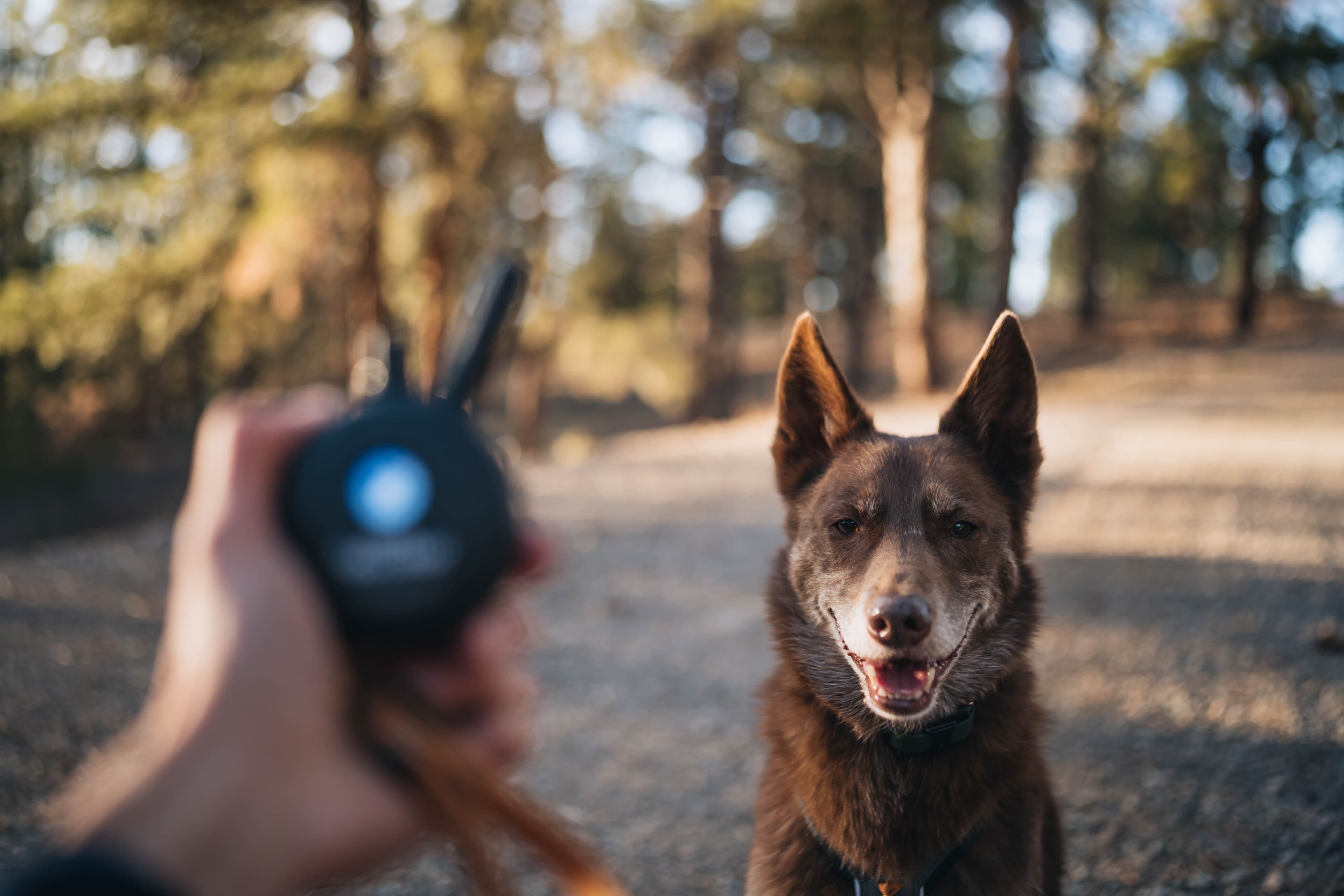
E-COLLAR TRAINING
Ready to Learn How to Use an E-Collar?
Natasha's step-by-step e-collar course covers everything from foundation to off-leash recall.

Choosing an E-Collar for Training
The tool you pick shapes how well things go. Here is what I look for:
- 100 stimulation levels. More levels means more precision, and fewer than that generally makes it hard to find your dog's true working level.
- The right range for what you will actually do. For basic recall in the yard or a park, half a mile is plenty. For field work, you will want 3/4 mile or more.
- A company that stands behind its product.
- Local rules that allow it. Check your local regulations before you buy.
For most owners, E-Collar Technologies is the brand I recommend more than any other. You can see my picks in The Best E-Collar for Dogs, and for size-specific picks, read the guides for small dogs and large dogs.
More in This Guide
Everything in this guide, along with the other tools I cover, links to a page with the full detail:
- What Is an E-Collar?
- The Best E-Collar for Dogs
- The Best E-Collar for Small Dogs
- The Best E-Collar for Large Dogs
- Are E-Collars Safe for Dogs?
- Can You Use an E-Collar on a Puppy?
- Prong Collar Training and Prong Collar Sizing
- E-Collar vs Prong Collar: Which Training Tool Fits Your Dog?
- Advanced E-Collar Recall Bundle and Basic Voice Only Recall
FREE COURSE
Start With the Commands Before the Collar
The foundation your dog needs before any collar goes on: essential commands, at no cost.

Frequently Asked Questions About E-Collar Training
What level should I start at?
Start at the lowest setting and move up one level at a time until you see the first subtle reaction, like an ear twitch or a slight head turn. That level is your starting point.
Is it safe?
At conditioning and working levels, where most of the work happens, the sensation is perceptible but not painful. Level selection, a gradual introduction, and rewards are what make it work well. The full discussion is in Are E-Collars Safe for Dogs?
Can I do this without a trainer?
It works best as a structured training program. A good course or a trainer who knows the tool helps dog owners learn each piece and the techniques behind it in order, which is why I teach it in the Advanced E-Collar Recall Bundle.
Final Thoughts
A solid foundation, a snug fit, a quiet introduction, the lowest level your dog notices, and treats and praise at every step: that is the whole approach. Take it one step at a time with reward-based methods, and let the tool support the training, not replace it.
Natasha Johnson
Founder & Head Trainer