Leash Training
Prong Collar Training: Safe, Clear Communication for Real-World Walks
Prong collar training uses a metal collar with inward-facing prongs to communicate leash pressure clearly and release it the moment your dog stops pulling, which is why many owners and trainers use it to improve leash manners safely and efficiently with strong pullers. It’s also one of the most polarizing topics in the dog world: some trainers swear by it, others call it barbaric, and most people land somewhere in the middle wondering what’s actually true. If you’re a dog owner or trainer considering a prong collar for leash training, this guide breaks down what the tool is, what safety and research say, when it makes sense to use one, how to fit and set it up correctly, the step-by-step training technique, how it compares with other tools, the mistakes that cause problems, and how to transition off it once your dog understands the leash.
What You'll Learn
- What a prong collar actually is, and what it is not
- Whether prong collars are safe, and what the research really says
- When a prong is the right choice and when it is not
- How to fit and set up a prong collar correctly
- How to use it on the walk to build calm, clear communication
- How to transition off the prong to lifelong good manners
Prong Collar Basics: What This Tool Is (and Is Not)
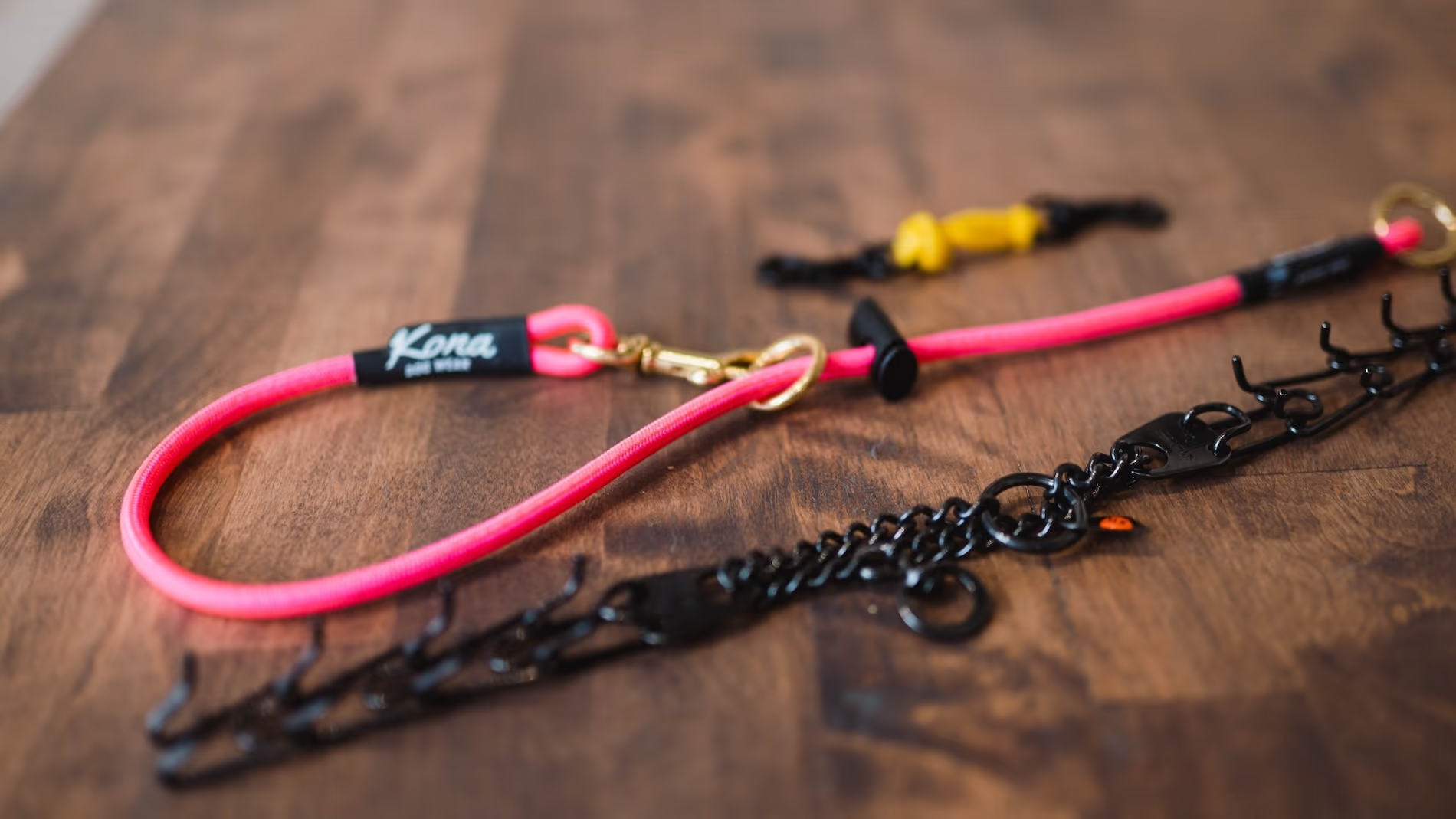
A prong collar is a metal collar made from interlocking links, each with inward-facing prongs that rest against the dog's neck. When leash tension is applied - typically because the dog pulls - the collar tightens evenly around the neck. When the tension stops, pressure releases immediately. That's the core mechanism: pressure and release.
This is fundamentally different from a choke chain, which concentrates force on the front of the throat and can stay tight even after the dog stops pulling. A flat collar sits passively around the neck with no built-in feedback mechanism at all. Because a prong distributes pressure evenly around the dog's neck rather than loading it onto one spot, it can deliver that on-off signal without crushing down on any single point, and that even distribution is exactly what makes the pressure-release conversation possible.
You'll sometimes hear that a prong mimics a mother dog's mouth correction, and while that analogy has some intuitive appeal, I wouldn't lean on it too hard. A mother dog corrects briefly, in context, with no hardware involved, so the comparison is useful for understanding the intent, a short and clear signal . What matters far more is remembering that a prong is a training aid, and not a stand-in for actually teaching heel, recall, and impulse control.
Are Prong Collars Cruel or Safe? What Science and Real Dogs Tell Us
A prong collar is only as humane as the hands using it, which is honestly true of almost any piece of dog equipment. Fitted properly and handled with skill, it communicates gently and clearly. Used carelessly, with a bad fit or cheap hardware or constant yanking, and it can absolutely cause harm. The difference between those two outcomes is knowledge, not luck.
LOOSE LEASH WALKING COURSE
Learn to Use the Prong the Right Way
Safe and humane is all in how you use it. Our leash training course teaches the technique that turns the prong into clear, calm communication.

The research is more reassuring than the reputation. A 2024 study published in PeerJ compared prong collars with front-clip harnesses and martingale collars during five-minute walks, and the prong significantly reduced pulling compared with the martingale (Z = -3.92, p < 0.001) while the welfare indicators showed little meaningful difference across the equipment. The researchers were careful to note that short, low-distraction testing doesn't capture everything about real life, but the takeaway still stands: a well-used prong doesn't automatically produce the stress people assume it must.
Reading your dog is how you keep it that way, so learn the body language and watch for it every walk:
- Relaxed signs: soft eyes, loose body, natural tail carriage, easy breathing
- Stress signs: hard or wide eyes, whites of eyes showing, rigid posture, tail tuck, lip-licking, freezing
My position is simple and it isn't the caricature people expect from a pro-prong trainer. The prong lives inside a training plan that's built on positive reinforcement and reward, and it earns its place there because it gives a strong dog a kind of clarity that genuinely changes the walk. Paired with that reward-based foundation and used with skill and proper guidance, it's a humane, effective tool, and the dog on the other end of the leash is the one who benefits most from it.
When (and When Not) to Use a Prong Collar in Dog Training
Before you use a prong collar, run through a quick checklist, because this is a tool you use thoughtfully rather than one you slap on and hope. A prong is a good fit when:
- Your dog is at least six months old
- You're genuinely ready to teach your dog what leash pressure means, because the collar itself doesn't stop the pulling, your training and its proper pressure-and-release mechanics do
- You want a tool that, used correctly, can actually be gentler on your dog than a flat collar, since it spreads pressure evenly around the neck and off the dog's trachea instead of loading it onto the front of the throat
For a strong dog and a committed handler, the prong can turn a walk around fast, and for an owner who's been dragged down the street for months, that kind of clarity can be life-changing. That said, it's the wrong answer in plenty of situations, and knowing them matters just as much. Skip the prong entirely if:
- Your dog has a history of a collapsed trachea or any medical condition affecting the neck
- Your dog is under six months old, which the CCPDT explicitly prohibits
- Your dog has unresolved fear, extreme anxiety, or aggression, unless a qualified behavior professional is involved
- You're not prepared to use the prong collar within a structured program like our Loose-Leash Walking Course or under a professional trainer's guidance, because buying the collar and expecting your dog to magically understand how to walk nicely is exactly how it goes wrong
Whatever you decide, remember the prong is for structured leash work, never casual wear, which means it comes off when you're not actively training and never stays on during crating, sleeping, or any unsupervised stretch.
How to Fit and Set Up a Prong Collar Correctly
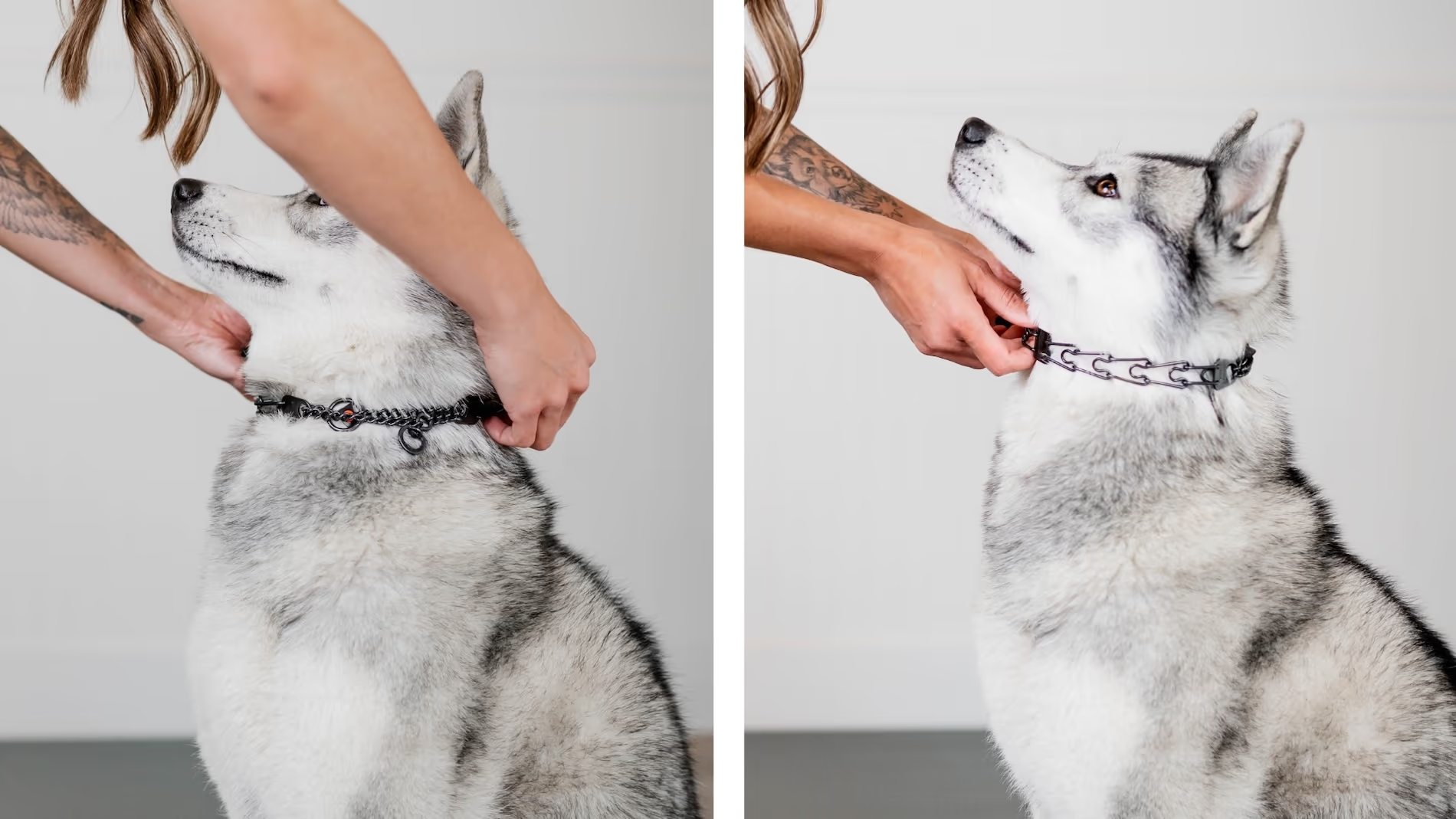
Fit is where most prong problems begin and end, and it deserves real attention, so we cover measuring, gauge selection, and the full fit-check in our Prong Collar Sizing guide. The short version for training is to place the collar high behind the ears at the narrowest part of the neck, snug enough that it can't slip down toward the shoulders but with just enough room for one finger underneath.
FREE PRONG FITTING GUIDE
Not Sure You've Got the Fit Right?
Fit is what makes the prong work. Our free guide walks you through sizing, placement, and the fit checks that keep it safe and clear.
A prong left loose and low rides onto the shoulders, pinches unevenly, and sends muddy signals, so snug and high is the goal every time. Herm Sprenger is the only brand I recommend here, because the smoothed prong tips, clean link connections, and durable steel are what let the collar do its job comfortably.
When you're ready, set up your safety before you ever clip in. Clip your leash to the D-ring, the ring built for the leash, and reserve the O-ring for a backup, running a flat collar or coupling strap underneath and using the leash clip to attach your safety clip there. Hardware can break or come apart, and if that does happen mid-walk, the backup reduces the risk of your dog getting loose instead of leaving safety to chance.
Step-by-Step: Using a Prong Collar on the Walk
Teaching your dog what leash pressure actually means is the only humane, ethical way to use a prong effectively, and it's exactly what we teach inside the Loose-Leash Walking Course. Everything below rests on that foundation, because a dog who understands the pressure feels a clear cue, while a dog who doesn't just feels confusing pressure with no path to relief. Treat the first week or two as a calm, unhurried protocol rather than a race.
Start indoors or in the yard with your dog wearing a prong collar and leash for five to ten minutes while you practice simple movements in a quiet spot with almost no distractions. Pay generously with treats for checking in, following your direction, and staying close, so your dog starts associating this collar with good things and clear answers. Hold the leash with a little natural slack and your hands at waist level, keep the other end controlled without wrapping it around your hand, and make every movement small, deliberate, and calm.
LOOSE LEASH WALKING COURSE
Stop Pulling, Fast!
Our leash training course teaches you how to stop your dog's pulling in 9 simple workouts, so calm walks stick.
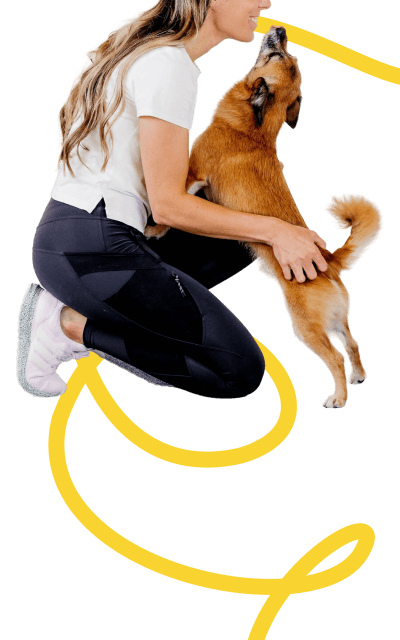
The heart of it is pressure as information, not punishment. Use a brief, light leash cue to guide your dog into position with clear cues, not to hurt or cause pain, then release the moment they respond and reward them for it, so the collar works on that clean on-off rhythm of pressure when your dog forges ahead and instant relief when they come back to you. The prong doesn't teach the good behavior on its own, it interrupts the unwanted one, which is precisely why pairing every single cue with reward matters so much. As you build the heel, mark and reward the instant your dog's shoulder lines up with your leg, add a tiny leash cue only if they keep forging, and walk straight-line patterns with a sit worked in at every stop to help a pulling dog learn to walk politely. Keep those early sessions to five to fifteen minutes, because several short, happy walks beat one long grind, and always end while your dog is still relaxed and successful rather than pushing past the point where it's fun.
Teaching a Reliable Heel Position: "You Drive, Your Dog Rides"
A solid heel isn't obedience for its own sake, it's safety. It's what keeps your dog from lunging into traffic, takes the charge out of passing other dogs, and lets you safely walk through a crowded sidewalk without getting dragged while you calmly lead through distracting environments. Define it clearly so your dog can actually hit it: the nose sits roughly at or just behind your knee, the leash stays loose, and your dog matches your speed and direction without pulling.
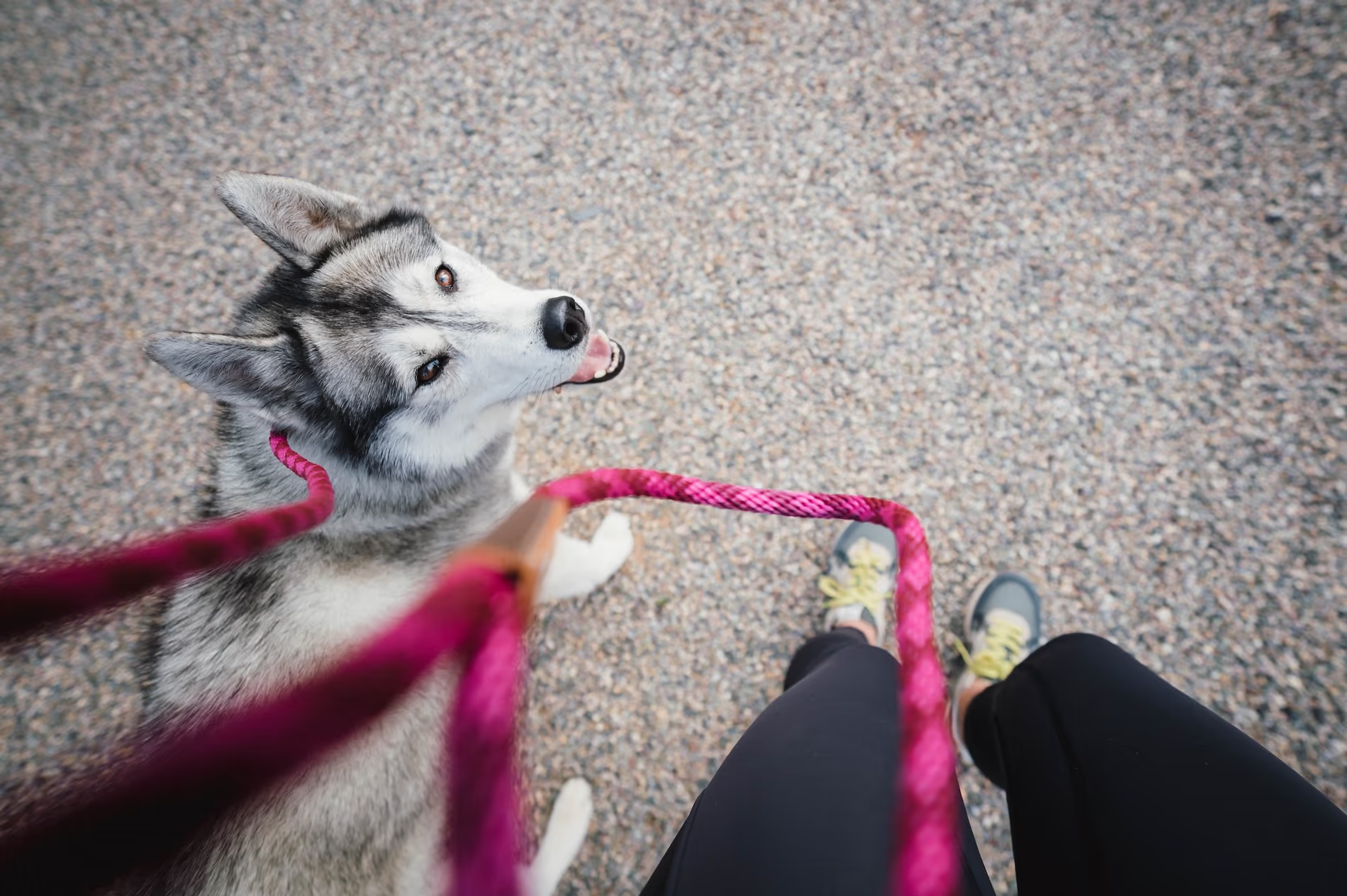
In trained hands, a prong acts like power steering for a strong dog, turning small movements from you into clear signals for them, and that even pressure distribution is exactly what makes such subtle communication possible without straining the neck. The catch is that this only works once your dog has been conditioned to understand the pressure-release, which is the whole point of the foundation work. Skip it and the collar just creates confusion; build it and the collar practically disappears into the conversation. From there the pattern is straightforward:
1. Walk straight lines, rewarding every few steps your dog holds a correct heel position
2. Add frequent turns, left, right, and about-turns, to keep your dog tuned in to you
3. Pair a verbal cue like "heel" or "let's go" with your leash guidance and a reward
The goal, always, is to need the tool less, meaning that your dog should start walking in a heel out of choice without the constant feedback from your leash over time.
Prong Collars vs. Other Walking Tools (Harness, Flat Collar, Gentle Leader)
I'll be straight with you about where I land here, because this is where a lot of trainers and I part ways. The no-pull harnesses and head halters like the gentle leader that get recommended everywhere all work the same underlying way, by making the act of pulling uncomfortable or awkward enough that your dog gives it up. A front-clip harness redirects the force to yank the shoulders sideways and throw off your dog's natural gait, and a gentle leader loops around the nose and torques the head, which is why so many dogs spend weeks fighting it. They can reduce pulling, but they do it by leaning on a discomfort your dog is trying to escape, and there's no clean moment of relief in the middle of it for your dog to actually learn from. That's the reason I won't recommend them.
A flat collar or martingale has a different problem. It's simple and cheap, but the moment a dog really leans into it, all that force lands on the front of the neck and the dog's trachea, and a martingale only snugs up a little while giving almost no release feedback, so your dog never gets a clear signal to respond to.
What sets the prong apart is that it's built on communication instead of avoidance. The pressure comes on when your dog forges ahead and releases the instant they ease off, so there's a clear on and, just as importantly, a clear off, and that off is the part your dog genuinely learns from. Spread evenly around the neck and paired with steady positive reinforcement, that pressure-and-release system lets you hold a real conversation down the leash rather than simply making pulling unpleasant, and it's why, for a strong puller, it's the tool I trust most. If you'd like it evaluated for your specific dog, a professional trainer who actually knows the tool is always worth the time.
Common Mistakes When Using a Prong Collar (and How to Avoid Them)
VIRTUAL DOG TRAINING
Struggling to Get It Right?
If the prong isn't clicking, a fresh set of eyes helps fast. Book a free consultation and we'll dial in your timing and fit for your specific dog.
Even with the right tool, technique errors can undermine everything. Here's what to watch for:
Collar fitted too low and loose. If the collar hangs across the shoulders, it rubs, pinches unevenly, and delivers unclear signals. Fix: remove links, reposition high behind the ears, and confirm snugness.
Constant pressure on the leash. Maintaining steady tension turns the prong into a permanent annoyance. The whole point is an on/off signal - apply pressure briefly, then reset to a slack leash. If you're yanking constantly, your dog learns nothing except that walking is unpleasant.
Using the collar only when the dog is already over threshold. Introducing corrections when your dog is lunging at other dogs, bikes, or squirrels means they're too aroused to learn. You'll escalate the behavior, not fix it. Build the foundation in calm, low-distraction settings first.
Pairing corrections with anger or force. Shouting and harsh jerking teach your dog to be scared of you or the environment - not to understand heel. Calm, brief cues followed by reward are the protocol. If you can't stay calm, put the collar away.
Transitioning Away From the Prong Collar to Lifelong Good Manners
Let's clear something up, because it trips a lot of owners up: the goal isn't necessarily to get off the prong at all. Plenty of dogs happily wear one for life, and there is nothing wrong with that. It's a communication tool, not a crutch to feel guilty about, so if your walks are calm and you and your dog are both enjoying them, you're welcome to keep right on using it.
If you do want to move off it, my recommendation is a slip harness rather than a flat collar. A slip harness lets you keep the same pressure-on, pressure-off principles you've already built, but because of how it sits on your dog's body, those signals come through less clearly than they do on a prong. That's why this transition rests entirely on your foundation work. Before you make the switch, your dog needs to genuinely understand their leash pressure cues, so take your time building that understanding first, then move over gradually rather than all at once.
Keep the reward rate high the whole way through, paying your dog for walking near you, for spontaneous check-ins, for ignoring distractions, and for staying calm at the door, using treats, praise, or toys, whatever your dog actually values. Lower the baseline arousal too, because a dog whose brain is engaged and whose needs are met simply pulls less no matter what's around their neck, so add nose games, puzzle feeders, structured play, and impulse-control work to their life.
At the end of the day the prong is a communication tool, whether you reach for it this season or for years to come, and the real, lasting change always comes from consistent, kind training and the trust you build with your dog along the way. The question worth sitting with isn't whether this tool should exist, it's whether you're ready to use it well and inside a system that makes your dog's life bigger rather than smaller. Do that, and every walk becomes what it's meant to be, clear communication and mutual trust between you and your dog.