
E-Collar Training
What Is an E-Collar? How It Works and How It Differs From a Shock Collar
By Natasha Johnson, Founder & Head Trainer
An e-collar (also written e collar or ecollar, and short for electronic collar) is a remote training collar. You hold a transmitter, your dog wears a receiver, and you use it to send a signal from a distance. Most people call it a shock collar. This post explains what an e-collar is, how it works, what e-collar training looks like in practice, and why the quality of the collar and the way it is used make all the difference.
What You'll Learn
- What an e-collar is and the two parts it has
- How tone, vibration, and static stimulation work
- How an e-collar differs from a shock collar
- Where an e-collar fits in training, and when to start
What Is an E-Collar? The Quick Answer
An e-collar is a training aid you control with a remote. It gives you a way to get your dog's attention when your voice or a leash cannot reach, which is why most pet owners come to it for recall and off-leash control in everyday life. Used well, it gives a dog clear, consistent communication, and that is exactly why professional trainers value it.
An e-collar is one of several dog training tools, a way for humans to communicate with dogs at a distance, and it is not a shortcut. It does not train a dog by itself. Everything it can do depends on what your dog already understands.
Yes, an e-collar and a shock collar are the same kind of device. The section on e-collar vs shock collar below explains what the name does and does not tell you.
E-COLLAR TRAINING
Ready to Learn How to Use an E-Collar?
Natasha's step-by-step e-collar course covers everything from foundation to off-leash recall.

How an E-Collar Works
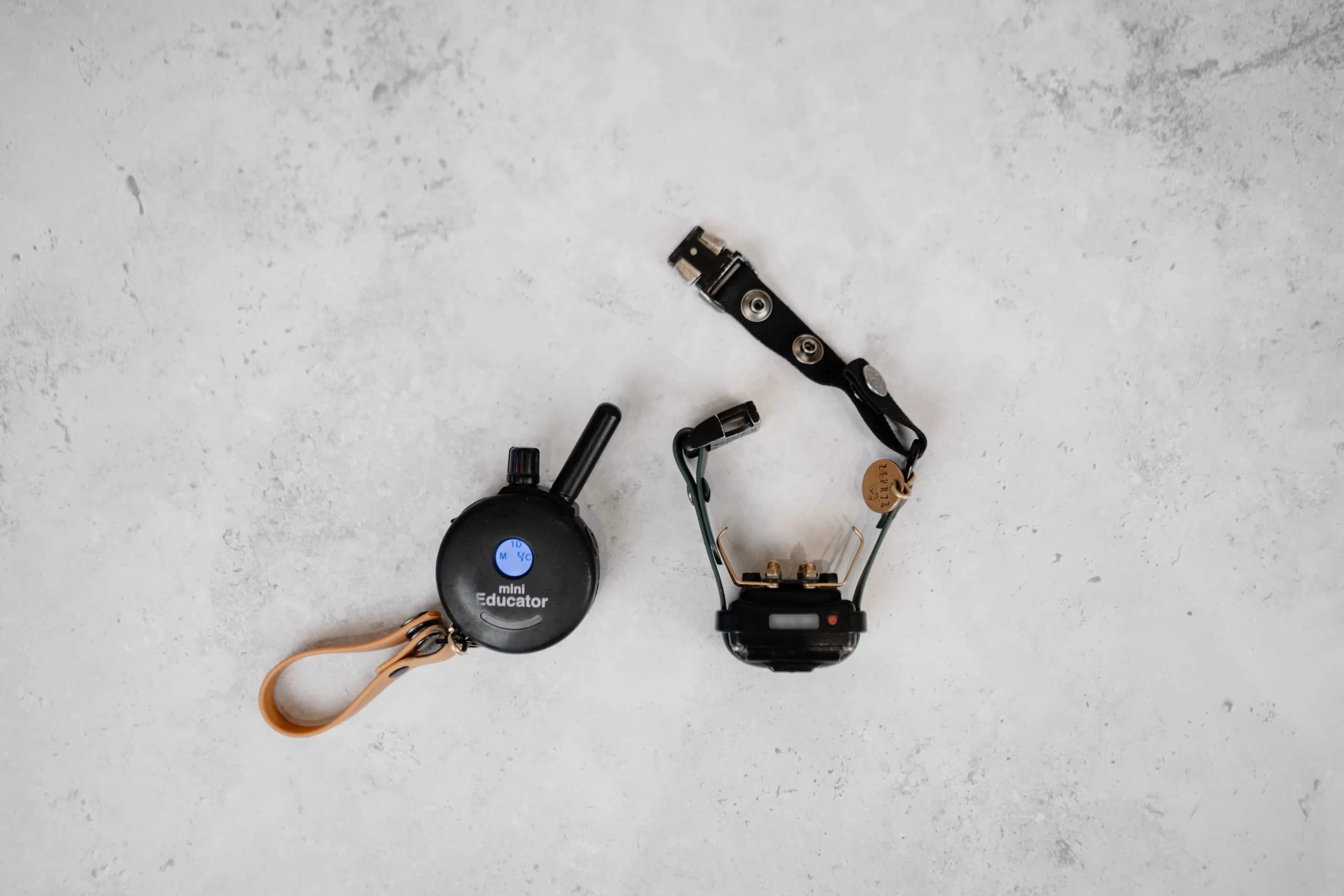
An e-collar has two parts: a handheld transmitter (the remote) and a receiver that sits on your dog's neck. When you press a button on the transmitter, the receiver gives your dog a signal, and it is the same clear signal whether your dog is close beside you or far across a field. The receiver has two contact points that rest against the skin, which is how it delivers stimulation.
An e-collar can deliver static stimulation, vibration, or an audible beep. Depending on the model and the button, the signal is one of three things:
- Tone: an audible beep that gives your dog an auditory cue.
- Vibration: a tactile cue your dog feels, without electrical stimulation.
- Electronic stimulation, sometimes called static stimulation: a brief pulse that you can adjust level by level.
Modern e-collars give you a lot of control, including the ability to work at a very low level of stimulation. The collars I recommend for training from E-Collar Technologies and Dogtra have 100 levels. GPS collars built for hunting have fewer: 10 on the Garmin Sport PRO and 18 on the Alpha series. More levels means smaller steps between settings, which lets you fine-tune the signal and find the correct level for a particular dog: the lowest level the dog notices, often called the working level. It also lets the dog learn to respond to it calmly.
This page covers remote training collars. Other products are different tools: spray collars release a burst of spray to deter specific behaviors, automatic anti-bark collars detect barking and respond with a deterrent, and electronic containment collars work with invisible boundaries to keep dogs within designated areas. They are not covered here. For specific models, see The Best E-Collar for Dogs.
What Does an E-Collar Feel Like?
What an e-collar feels like depends on the level. At the lowest level your dog notices, the aim is a signal your dog can recognise and respond to calmly, never fear. The first sign is usually small, a flicker of a response such as a turn of the head. That is why quality equipment and fine steps matter: they let a trainer find the right level for each dog at any given moment, and adjust it as the environment changes, for example from a quiet living room to a busy park, or from one distracting environment to another.
GET THE FREE PLAN
Want a Free Recall Plan Built for Your Dog?
Get our free Recall Starter Plan, customized to your dog.
E-Collar vs Shock Collar: What Is the Difference?
They are two names for the same kind of device: a remote-controlled collar that delivers electronic stimulation. Shock collar is the older name, and the term is often used derogatorily. Whether an e-collar is a shock collar is a fair question, and the answer is yes. The reality is that the name tells you much less than two other things do: the quality of the collar and how it is used.
The collar. A quality modern e-collar has 100 fine steps, small increments that let you find the lowest level a dog notices. Dogs learn from a clear, consistent signal, and fine steps are what make that possible. Shock collars, the cheap ones in particular, often have very few stimulation levels, just a handful of big steps, which makes them harder to use well, and that is where the older, harsher name fits better.
The use. The main difference is how the collar is used: the lowest level your dog notices, on a dog who already understands the cue. Proper use is what turns the same device into clear communication: a signal for a behavior the dog already knows, never a correction for one it has not learned, never fear, inside a structured training program. Safety and results both depend on the training behind the tool.
Questions about safety, pain, harm and the research are worth answering properly, and I go through them in Are E-Collars Safe for Dogs?.
Where an E-Collar Fits in Dog Training: A Training Tool, Not a Shortcut
E-collar training works as a layer on top of commands and behaviors your dog already understands, on leash and off. That is why the foundation comes first. The dog learns each cue through leash work, food rewards, and clear communication, with no collar involved. Good dog training starts with basic obedience and verbal commands such as come, and a dog that already responds to verbal commands is ready for the collar to act as a reminder. The collar comes later, as a reminder for a cue the dog already knows, which makes it a clear signal and not a correction. Whether you call it an e-collar or a shock collar, the rule is the same: the dog learns first, and the collar comes later. With a modern e-collar it is used less and less as the dog becomes reliable.
If a dog has never learned what come means, a collar cannot teach it, because there is nothing for the signal to build on. What separates good e-collar training from a bad outcome is the training behind the tool. Dog training with an e-collar is one part of a training system, not the whole of it, and most dogs do best when their trainers and owners understand the timing and the level. This matches the position of the American Veterinary Society of Animal Behavior, which prioritizes reward-based training, and it is why I teach the foundation with rewards first.
That is also why it matters in real life, not only in exercises. Unwanted behavior outdoors, such as bolting after something in the real world, is where a reliable recall matters most. Done well, e-collar training can lead to a recall you can rely on, and recall and off-leash reliability are the focus of my E-Collar Recall Course. This post covers what an e-collar is, not how to train with one step by step.
FREE COURSE
Start With the Commands Before the Collar
The foundation your dog needs before the e-collar goes on: essential commands, at no cost.

Frequently Asked Questions
Is an e-collar the same as a shock collar?
Yes, they are the same kind of device. The difference is the quality of the collar and how it is used, as explained above.
Is an e-collar painful for dogs?
The aim of e-collar training is the lowest level your dog notices, never fear or discomfort, and clear communication, not pain or harm. A quality collar with fine steps is what makes that possible. The evidence, including where the research is mixed, is in Are E-Collars Safe for Dogs?.
At what age can a dog start e-collar training?
Five to six months is the absolute earliest, and only with an experienced trainer guiding the introduction in person. If you are training on your own for the first time, I lean closer to a year, so the foundation and the obedience are reliable first. The full answer is in Can You Use a Shock Collar on a Puppy?.
Does an e-collar replace training?
No. It is not a shortcut. It is a reminder for a cue the dog already knows, not a correction for one it was never taught, which is why the foundation, the leash work, the food rewards, and the obedience come first.
Which e-collar should I buy?
E-Collar Technologies is the brand I recommend more than any other, but the right collar depends on your dog and how you will use it. See The Best E-Collar for Dogs for my picks by brand.
Natasha Johnson
Founder & Head Trainer
Read similar

September 24, 2026
Can You Use a Shock Collar on a Puppy? (Full Guide for Safe, Humane Training)
May 26, 2026
Are E-Collars Safe for Dogs? A Trainer's Honest Answer
May 25, 2026