E-Collar Training
Can You Use a Shock Collar on a Puppy? (Full Guide for Safe, Humane Training)
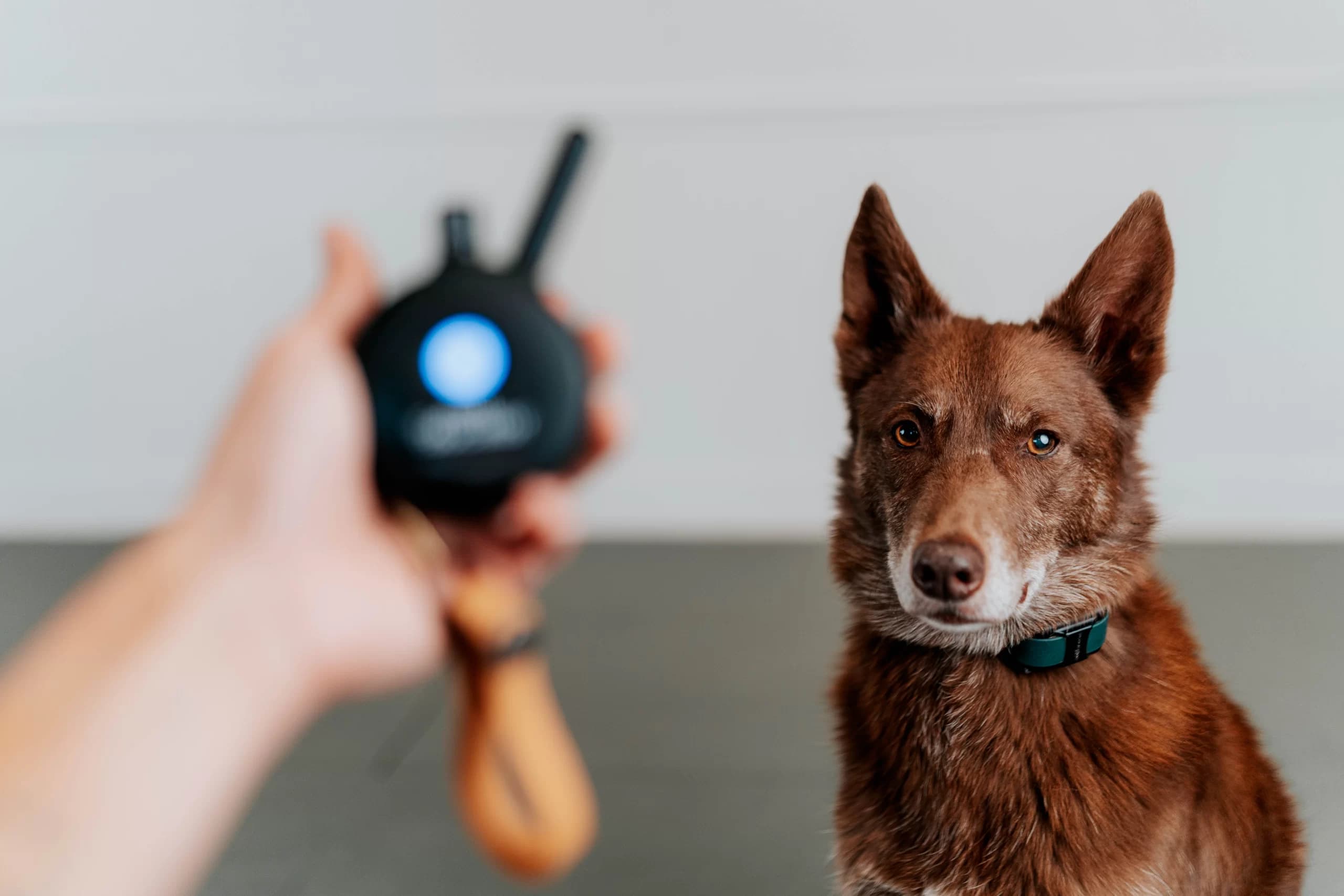
Most people asking whether they can put a shock collar on their puppy are really asking something simpler: how do I get this behavior to stop, and fast? The chewing, the barking, the puppy who hears "come" and runs the other way. Wanting your puppy to leave the furniture alone and to listen when you call is completely fair. Here is the catch -> A shock collar is a layering tool, not a magic button. It works by reminding your dog of a command it already knows, so it can only strengthen a behavior your dog has already learned. A young puppy has not learned those behaviors yet, so there is nothing for the collar to remind them of. This guide walks through why that timing matters so much, what to do with your puppy in the meantime, and when an e-collar can actually earn a spot in your training later on.
Should You Put a Shock Collar on a Puppy?
Never.
The recommendations you will see floating around usually say a dog can generally wear an e-collar somewhere after six months of age. I take a more conservative line than that. For the average owner training their own dog, I would wait until closer to a year old in a lot of cases, and here is the reasoning behind it.
An e-collar does not teach your dog anything. That is the piece almost everyone misunderstands. The collar cannot explain a command, it cannot show your dog what you want, and it cannot install a behavior that was never there. All it can do is reinforce something your dog already knows cold. If your dog does not yet understand "come" in a quiet room with zero distractions, a collar has nothing to reinforce. It is just an unpredictable sensation attached to a word your puppy has not learned yet.
That is where the timeline comes from. Most owners, even ones following a solid guided program, have not fully trained their dog up on the commands the collar is supposed to reinforce before they reach for it. The commands feel "good enough" at home, so the collar gets layered on too early, and the dog ends up confused instead of clearer. Give yourself and your puppy the extra months to build genuinely reliable obedience first, and the tool has something real to work with when the time comes. That is why a year is my rule of thumb for the do-it-yourself owner.
If you are working directly with an experienced trainer who is guiding the introduction in person, reading your specific dog, and adjusting as they go, then younger can be fine. Even then I would not go under six months, and a lot of it comes down to the individual dog: some puppies are emotionally mature and focused at seven months, while others are still scattered and soft at fourteen. Personality and maturity matter as much as the calendar.
Here is a rough age framework to anchor all of that:
- 8 to 12 weeks: No, never. What to focus on: Socialization, name recognition, house training.
- 12 to 20 weeks: No. What to focus on: Basic cues, crate training, leash introduction.
- 5 to 6 months: Only with hands-on professional guidance. What to focus on: Reinforcing genuinely known commands.
- 8 to 12+ months: A realistic starting point for most owners. What to focus on: Layering an e-collar over solid obedience.
The goal is a confident, well-behaved companion, not a puppy that complies because it is nervous. Reach for the collar before the foundation is there and you tend to get confusion and behavioral fallout that takes far longer to undo than it would have taken to build the training in the first place. The rest of this guide covers how to train your puppy effectively right now, and when a more advanced tool might reasonably enter the picture.
What Is a Shock Collar or E-Collar, Really?
"Shock collar," "e-collar," and "remote training collar" all point to the same category of equipment, but the products inside that category vary enormously, and that variation matters more than most owners realize.
A typical e-collar has two parts. There is a receiver that sits on the dog's neck with two contact points touching the skin, and a handheld remote the handler uses to send a signal. Most modern collars offer three modes: a tone, a vibration, and electrical stimulation. The stimulation runs on a scale, often 0 to 100, which gives a skilled handler a wide, fine range to work in. At the low settings people actually train with, the sensation is closer to a muscle twitch or a tingle than anything you would call pain, and the tone or vibration usually works as a heads-up before any stimulation is used at all.
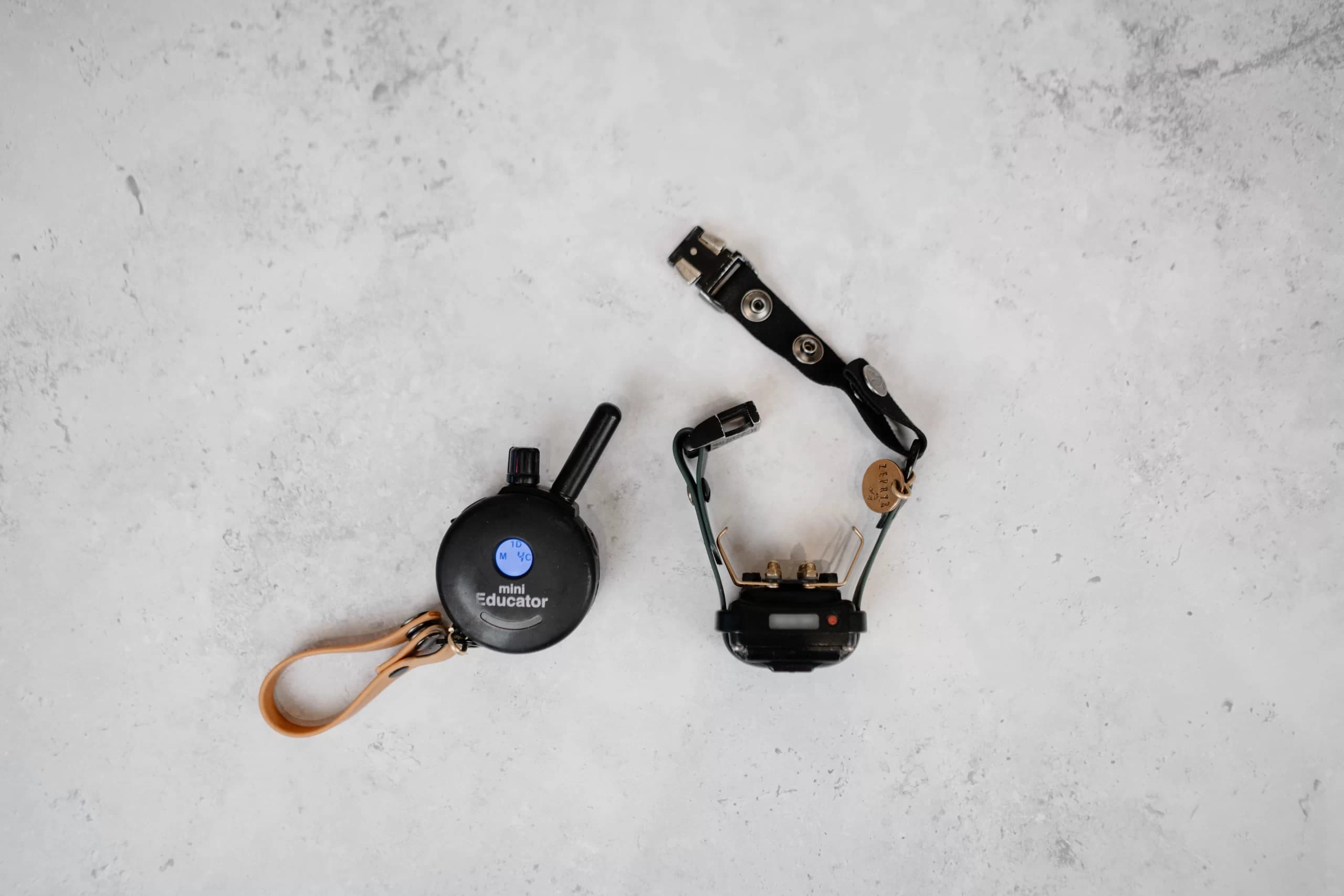
Quality is not a small detail here. A well-engineered collar like a Mini Educator or a Dogtra delivers calibrated, consistent output with real safety features and contact points designed to sit correctly. A twenty-dollar no-name collar off a marketplace can deliver harsh, uneven output with no meaningful controls, which means you cannot trust that low is actually low. When people describe e-collars as cruel, they are very often describing a cheap collar used at the wrong level, which is a different thing from the tool used well.
Used correctly, an e-collar is a communication tool inside a larger training plan. It is not a shortcut, and it is certainly not a way to punish a puppy for failing to do something it was never taught.
How Old Should a Dog Be Before Considering an E-Collar?
Age here is really about physical and emotional readiness, and the number on the calendar is just a proxy for both.
Between roughly 8 and 16 weeks, puppies are in a critical developmental window. They are forming their earliest associations about the world, learning what is safe, building trust in you, and still wiring up their nervous system. Their neck skin is thinner, their bones are still growing, and their cartilage is immature. A collar that is too tight or a sensation they have no framework to understand lands on a body and a brain that are simply not built for it yet.
Common guidelines put five to six months as the absolute earliest for a careful, professionally guided introduction, and many trainers wait until eight to ten months or beyond. As I said up top, for a first-time owner going it alone I lean closer to a year. Before that, most puppies lack the focus, the impulse control, and the command vocabulary to make any sense of what the stimulation is telling them, so there is nothing for the tool to reinforce.
A few things need to be true before an e-collar belongs anywhere near a young dog. The dog should already know sit, down, come, and leave it reliably, not just in the kitchen but with a little real-world distraction. The pup should be physically developed enough for the collar to fit and sit correctly. Temperament and breed sensitivity should be honestly assessed, because a soft, sensitive dog needs a very different approach than a bold, driven one. And a professional trainer or your veterinarian should be part of that decision. Rushing the timeline does not speed anything up. It usually just produces a confused dog and a longer road back.
The Real Risk of Using a Shock Collar on a Puppy
The core problem with a shock collar on a puppy is not the device, it is the timing, and once you see that clearly the whole thing makes sense.
The same research that supports responsible e-collar use in trained adult dogs keeps landing on one variable: whether the dog can predict what causes the sensation and knows exactly how to make it stop. That predictability is the entire thing that makes the tool humane. A puppy who has not yet learned a marker word, a recall cue, or basic obedience has no way to predict or control the experience, no matter how nicely the collar itself is calibrated. So the risk is baked into the timing, not the hardware.

Emotional fallout. Introduce stimulation before a puppy has any vocabulary to interpret it, and you strip out the predictability that makes the whole approach fair. A pup exposed to a sensation it has no foundation to understand experiences it the way any of us would experience something confusing and out of our control: stress goes up. Studies on dogs given unpredictable stimulation with no clear path to turn it off show measurably higher cortisol and heart rate than dogs trained with rewards alone. Where owners really feel this is in the relationship. The trust that takes a hit almost never comes from the tool itself, it comes from asking a baby dog to understand something nobody taught it yet.
Behavioral side effects. When a correction lands on a puppy with no framework to make sense of it, the fallout is real and specific. You can see a dog shut down and disengage entirely, start submissively urinating, bark more, or get defensive. A puppy can also form what trainers call a superstitious association, pinning the sensation on something completely unrelated to what it was actually doing. Picture a twelve-week-old corrected for chewing the coffee table with no marker system and no cue attached to the moment. That pup does not learn to leave the furniture alone. It learns the living room is an unpredictable place and starts avoiding the room. The collar did not fail there. It was handed a job the puppy was in no position to understand.
Physical fit. Separate from timing, fit matters at any age. Neck irritation, pressure sores from a collar worn too tight, and contact dermatitis are documented concerns, and a puppy's thinner skin and still-growing neck make getting the fit right even more important before the tool is ever on the table.
Whatever stage of training you are in, keep reading your dog. Avoidance, a tucked posture, flattened ears, a puppy going quiet and small, all of that is information. Most of the time it is telling you the same thing: it is too soon.
Why Some Trainers Use E-Collars (and Why That Is Different From Puppy Use)
Plenty of experienced, respected balanced trainers use e-collars successfully on adult dogs as part of a complete training plan. That is simply true, and pretending otherwise ignores how these tools actually work in skilled hands.
On a trained adult dog, low-level stimulation works like a tap on the shoulder, a quiet reminder for a command the dog already knows, like recall, heel, or place. When the sensation is clearly tied to a cue the dog understands, it can help clean up habits like nuisance barking, because the dog has the maturity to connect the signal to the behavior and to its own choice to respond.

The difference that matters is what came first. In those cases the collar is layered on top of months of foundation. The dog already knows sit, down, come, and leash skills through food rewards, leash work, and clear communication, so the collar is reinforcing a known answer rather than introducing a mystery.
Ethical and Legal Considerations Around Shock Collars
Several European countries, including Austria, Denmark, and Germany, have restricted or banned e-collars, and the European Parliament has raised formal questions about how they square with pet welfare conventions. In the UK, groups like the Kennel Club advise against aversive tools, especially for puppies. In the United States, the rules vary by state and even by city, so it is worth a quick check of your local regulations before you use one on any dog.
Major veterinary behavior organizations, including the American Veterinary Society of Animal Behavior, recommend positive reinforcement as the first-line approach for training, and for most puppies and most dogs that recommendation is a good one. It helps to understand what those positions rest on, though. Most of them cite research on high-level, unpredictable, or badly timed use, not the low-level, foundation-first methodology this guide is describing, and several of these bodies openly acknowledge that the research on responsible, structured use is thin. A professional organization advising against a tool in general practice is a sensible risk-management stance for a broad audience. It is not the same as a clinical finding that correct use causes harm.
None of that shifts the answer for a puppy. Wherever you land on e-collars for trained adult dogs, a puppy does not yet have the cue vocabulary for the tool to communicate anything at all, and that alone is reason enough to wait.
Foundations First: What Puppies Need Before Any Training Collar
These are the non-negotiables of the first six to twelve months, and no training tool replaces a single one of them.

Your puppy needs name recognition and recall built through reward-based games, so turning toward you and coming when called becomes the most rewarding thing in the room. It needs house training through crate work, a consistent schedule, and rewarding the right choice in the right spot. It needs calm crate time, where the crate is a resting place rather than a punishment, and the pup can settle in it without distress. It needs leash skills, learning to walk on a loose leash, to yield to gentle pressure, and to check in with you on a walk. It needs the basic cues, sit, down, come, and leave it, taught with food luring and marker words long before any aversive tool is even a conversation. And it needs socialization, safe and positive exposure to other dogs, people, sounds, surfaces, and places, which is genuinely the education that shapes the entire rest of its life.
Here is the part worth sitting with. A huge share of the "problems" owners want to zap away, the chewing, the jumping, the mouthing, the nuisance barking, are not defects. They are normal puppy phases. Young puppies are in an exploratory stage, and they are supposed to be wandering around, putting things in their mouths, and figuring out how the world works. That is nature doing exactly what it is meant to do. Punishing a puppy for exploring is punishing it for being a puppy.
So if you are struggling with a pup that keeps getting into things it should not, the best rule of thumb is management. Set the environment up so your puppy simply does not have the opportunity to make the mistake in the first place. Shoes go behind a closed door. The trash goes up on the counter or behind a cabinet latch. The cords get tucked away, the off-limits rooms get a baby gate, and the pup gets a pen or a tether when you cannot actively watch. You are not letting it rehearse the wrong behavior fifty times and then correcting the fifty-first. You are quietly removing the temptation, redirecting that natural curiosity onto things the puppy is allowed to chew and explore, and rewarding the choices you want to see more of. Structure and management solve the vast majority of early puppy behavior. A shock collar does not.
Humane, Effective Ways to Train a Puppy Right Now
You do not need electrical stimulation to raise a well-trained dog. Here is what to reach for instead, and you can start today.
The right equipment. For everyday walking, a properly fitted flat collar is fine for holding ID tags, but it is not the tool for a puppy that pulls. For pulling, a well-fitted martingale collar or a slip-harness gives you fair, even communication without teaching your dog to lean into pressure, and when your dog is old enough, the prong setup we walk through in the Loose Leash course is the humane next step. A long line, somewhere in the 15 to 30 foot range, is worth its weight in gold for practicing recall and giving your pup a taste of freedom while you still have a safety net.
Reward-based training. Food rewards, marker words like a bright "yes!", and clear timing build real, fast results on recall and loose-leash walking, and they do it by teaching your puppy a simple, motivating lesson: listening pays. Keep a stash of high-value treats for your training sessions, the good stuff you save for exactly this, so coming when called competes with the squirrel instead of losing to it. This is not the soft, permissive option people sometimes assume it is. It is the foundation every advanced tool later gets layered on top of.
Mental enrichment and time with other dogs. A bored puppy invents its own job, and you will not love the job it picks. Interactive toys and puzzle feeders give that busy brain something legal to do, which quietly heads off a lot of barking and destructive chewing. Structured play with other appropriate dogs builds social skills and burns real energy, and games like tug and controlled fetch teach the beginnings of impulse control, which is one of the most valuable things a young dog can learn.
Do all of this and you end up with genuine obedience and something better underneath it: a dog that wants to work with you because good things happen when it does, not a dog that complies because it is worried about what happens if it does not.
When an E-Collar Might Be Considered Later in Life
"Never for puppies" and "sometimes right for an older, trained dog" are both true at once. Once a dog has a solid obedience foundation, an e-collar can make real sense in specific situations: off-leash reliability on hikes where there is wildlife around, working or sport dogs that need cues at a distance, rural dogs where recall away from livestock or a road is a genuine safety issue, and dogs that have earned real freedom in places where dragging a long line is not practical.

By that point the dog should already respond to sit, down, come, and heel on leash without any collar in the picture. The e-collar gets layered on to sharpen and proof what is already there. It never gets substituted in to create it.
Choosing Equipment: The Mini Educator and Similar Tools
When you do reach this stage, a high-quality, wide-pulse collar like a Mini Educator is worth the money over a generic bargain collar, for all the engineering reasons above. Trim the strap so it fits snugly against the neck without pinching, and charge it fully before a session so it does not die halfway through. Test the levels on your own hand or forearm first. If a level feels sharp or painful to you, it is too high for your dog, full stop.
And this is not a solo project the first time through. Any introduction should happen under the eye of an experienced balanced trainer who can tailor the plan to your specific dog's temperament, breed, and history, and show you exactly how to time and read everything.
How E-Collars Work in a Balanced Training Program
Balanced training pairs positive reinforcement with fair, clearly timed consequences, and an e-collar is just one tool inside that system. Learning to use it well matters far more than which collar you buy. In a well-run program it tends to unfold in phases.
It starts with a foundation phase where the dog learns every cue, recall, heel, place, down, through leash work, food rewards, and clear communication, with no collar involved at all. Then comes the introduction, where the collar is brought in at the lowest level that gets a flicker of a response, often somewhere in the low single digits to single-double digits depending on the dog, aiming for the gentlest possible "I hear you," never an overwhelming jolt. From there you move into layering, where a tone or a low stim becomes a reminder for a cue the dog already knows, and the dog learns that the sensation switches off the instant it responds, which is the whole communication loop right there. Consistency carries it, with the collar worn regularly across roughly four to six months so the cue system fully sinks in. And finally the collar phases out, used less and less as the dog gets reliable around dogs, wildlife, and distraction, until many dogs need only the collar's presence, or nothing at all.
This is advanced work. Watching a video course does not qualify anyone to run this protocol, and a first-time owner should not attempt it alone, least of all on a puppy.
Common Myths About Shock Collars and Puppies
Bad information is what sends owners reaching for a shock collar years too early. These are the myths that do the most damage.
"A quick shock will break bad habits in a few days." Puppies do not learn why they were shocked. They learn to be afraid of something, and it is often the wrong something. You might stop the barking in the moment, but you have not taught the pup what to do instead, so the behavior comes back, or a worse one shows up in its place.
"A high-end collar is automatically safe at any age." Even the best collar can be misused on a dog that is too young. A quality device with clean stimulation levels does not erase the risk of fear, confusion, or a mistimed correction. The handler's skill and the dog's readiness decide the outcome, not the price tag.
"My puppy is stubborn, so I need a stronger tool." What looks like stubbornness is almost always incomplete training, unmet needs, or a level of arousal the pup cannot manage yet. Tiredness, hunger, overstimulation, and a lack of structure drive most unwanted puppy behavior. Escalating to an aversive before the behavior was ever taught is chasing the wrong culprit.
"A shock collar is the only way to get off-leash control." Plenty of dogs reach rock-solid off-leash reliability through reward-based training, long-line practice, and patient distance work. A shock collar is one road to that destination. It is not the only one.
Consistent routines, mental enrichment, and steady training are what actually move the needle. The instant fix does not exist, not with a shock collar, not with anything.
Working With a Professional Before Using an E-Collar
If you think an e-collar is in your dog's future, professional input is not a nice-to-have, it is the difference between a tool that helps and a tool that hurts. A good trainer will assess your dog's age, temperament, and health, whether the dog actually has a solid command vocabulary, any history of fear, anxiety, or past trauma, and, honestly, whether the behavior you are worried about even calls for this tool at all.
When you are choosing that person, look for direct, transparent experience with e-collars, a willingness to put your dog's welfare ahead of speed, and clear explanations at every step with no mystery and no pressure. A trainer worth hiring starts with leash work, food rewards, and obedience, and only revisits a remote collar once that base is genuinely in place. If someone tells you to strap an e-collar on your ten-week-old, keep looking. If someone tells you to build the foundation first and check back in six months, you have found a person who actually understands your dog's development.
There is a quieter half of this that owners tend to skip: the trainer is also sizing up whether you are ready. Timing a signal, reading your dog's body language, dialing stimulation in and out, knowing the exact moment to stop, those are handler skills, and they take real coaching to learn.
ADVANCED E-COLLAR RECALL COURSE
Ready to Layer in the E-Collar the Right Way?
Our Advanced E-Collar Recall course walks you through the foundation-first steps, so the collar reinforces the obedience your dog already knows instead of confusing a dog that is not ready for it.

Raising a Well-Behaved Companion
The point at the center of all of this is simple. You want a safe, confident, well-behaved dog you genuinely enjoy living with. Patient education and correct training get you there. A shock collar on a young puppy does not, because it can only reinforce what your dog already knows, and a puppy does not know enough yet for it to mean a thing. Build the foundation first. Everything else follows from there.