Leash Training
How to Stop Your Dog from Pulling on the Leash (and Enjoy Walks Again)
Leash pulling is the single most common complaint among dog owners, and if you want to know how to stop your dog from pulling on the leash, the core method is simple: stop moving the moment the leash goes tight, wait for slack, then move forward again and reward your dog right away for walking politely. If you've ever been towed down the sidewalk by an otherwise sweet animal, you already know how frustrating and unsafe it can make a walk. The encouraging part is that fixing it doesn't take expensive equipment, months of group classes, or any kind of background in animal behavior. What it really comes down to is a clear plan, a little consistency, and about ten minutes a day. For dog owners who want practical training that works in real life, this guide breaks down why dogs pull, how to start loose leash walking, what gear helps, how to handle distractions without turning walks into a battle, the mistakes that slow progress, and when it's time to get professional help.
What You'll Learn
- Why dogs pull on the leash in the first place
- How to start loose leash walking with a simple stop-and-go method
- What gear actually helps (and what doesn't)
- How to handle distractions without turning walks into a battle
- The common mistakes that slow progress
- When it's time to call a professional trainer
Quick-Start Steps to Stop Leash Pulling Today
Here's something you can put to work on your very next walk, no prep required. The rule at the heart of it couldn't be simpler: when the leash tightens, you stop walking, and movement starts again only when the leash is loose. The moment the leash goes taut, you plant your feet, and the walk doesn't pick back up until there's slack in the line again. That really is the whole foundation. Dogs are practical creatures who repeat behaviors that get reinforced, so once pulling stops carrying them forward, they gradually stop bothering with it.
FREE LEASH PULLING STARTER GUIDE
Want to Know Why Your Dog Pulls?
Our free leash pulling starter guide pinpoints your dog's personality type and gives you the right first exercises to fix the pulling.
Give this a try today. The instant your dog hits the end of the leash, stop and stand still. Wait for the leash to soften or for your dog to glance back at you, and the moment you get either one, mark it with a calm "yes," hand over a treat, and set off again at a good pace. If your dog surges ahead and pulls again, you simply run through the same steps once more. Changing direction by calmly going the other direction can also head the pulling off before it ever builds into a tug-of-war.
Do this on a quiet sidewalk, driveway, or in the yard as a low-distraction environment for five to ten minutes rather than trying to tackle your usual full-length walk right out of the gate. Stay calm through all of it, with no yelling, no dragging, and no jerking on the leash, because that helps avoid escalation and steady consistency will always outwork raw intensity here.
Your "today" rules:
- No forward motion when the leash is tight
- Reward good behavior — any loose-leash progress — with a treat or praise immediately
- Keep training sessions short and fun - five to ten minutes maximum
- End before sessions get too long and leash training turns frustrating
- If you forget everything else, remember: tight leash = stop, loose leash = go
Why Dogs Pull on the Leash in the First Place
Leash pulling is normal. It isn't naughty, it isn't defiance, and it isn't your dog trying to dominate you. Dogs simply move faster than humans, which is one reason pulling is so common, and their nose is their primary tool for making sense of the world. Every exciting smell, every squirrel, every passing dog is a reward the dog enjoys, and pulling gets them there faster.
That's the learning loop. Each time your dog pulls and you keep walking, the tension gets rewarded with forward movement, which teaches the dog to walk that way because pulling works. Add in the pull of new scents and sights, along with the buzz of excitement or anxiety that comes with them, and every successful outing deepens the habit. It's driven by instinct and reinforcement rather than any attempt to be in charge.
The American Veterinary Society of Animal Behavior ranks leash pulling among the most frequently reported behavioral problems - and identifies lack of training, not temperament, as the most common cause.
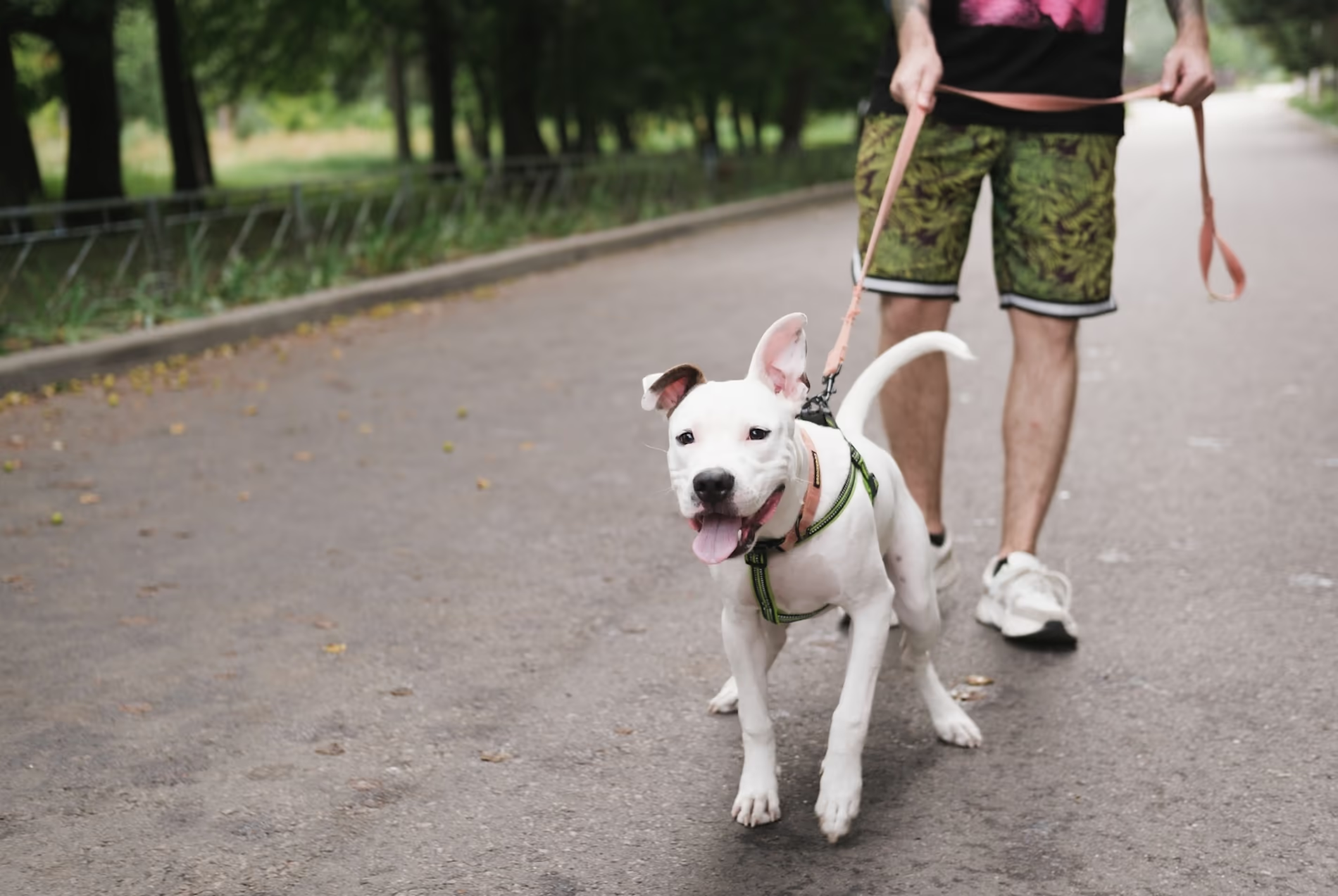
Common motivations behind pulling:
- Joyful excitement (the walk is the highlight of the day)
- Fear or reactivity (wanting distance from something scary)
- Pent-up energy (not enough exercise before the walk)
- Habit (no early leash training or inconsistent rules between handlers)
Leash pulling is often a sign of a lack of training, not a character flaw.
Essential Gear for Safer, Easier Loose Leash Walking
Tools help manage a dog who pulls, but they cannot replace training. No leash, collar, or harness teaches loose leash walking on its own - the best any piece of gear can do is keep you and your dog safe and comfortable while you do the actual teaching. Whichever tool you choose, the goal is the same: a setup that fits well, protects your dog, and gives you clear communication.
Here's what most owners miss: the tool isn't what changes the behavior - leash pressure is. Leash pressure is the gentle tension your dog feels when you guide them in a direction, or when they add tension by forging ahead. A dog's instinct is to push _against_ that pressure - the harder you hold, the harder they pull. The skill you're teaching is the opposite reflex: to feel the pressure and _move into it_ to release it, rather than bracing against it. Once a dog understands that yielding to the leash makes the tension disappear, walking calmly beside you stops being a fight and starts being the easy choice. No collar or harness installs that understanding for you - it has to be taught. (This is exactly what we walk you through step by step in our Loose-Leash Walking Course - if pulling is your daily battle, start there.)
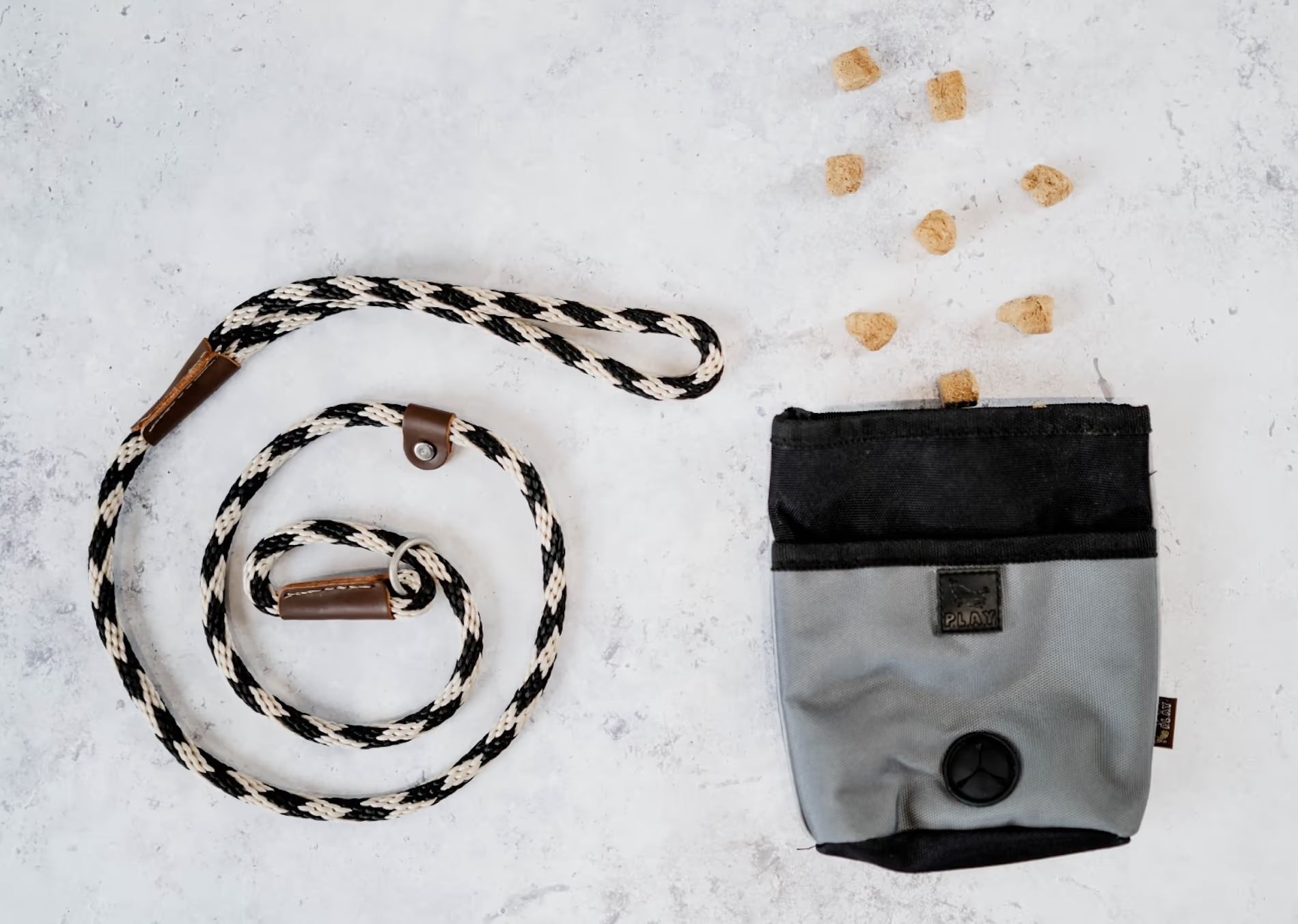
So choose the tool that keeps your dog safest and gives you the most comfortable control. Remember, no matter what you choose - whether that be a flat collar, martingale, harness, or prong collar - understanding how to fit the tool properly is key.
Fit and safety checklist:
- Harness snug but not tight - two fingers under any strap
- Martingale & Prong Collars should sit up high on the neck
- No rubbing at armpits or chest
- ID tags secure on the dog's collar
- Check all gear for wear before every walk
- Treat pouch, clicker, and high-value treats (boiled chicken, cheese) for easy rewarding
Foundation: Teaching Your Dog That a Loose Leash Pays Off
Most of us spend our walks reacting. We tell the dog to quit pulling, tighten up on the leash, repeat the same word we've said a hundred times, and then wonder why nothing sticks. The piece that usually gets skipped is the part where we actually show the dog what we'd rather they do. A dog who has never been taught to walk beside you on a slack leash needs you to encourage the position you want, not just react when they pull, especially when pulling has always gotten them where they wanted to go faster. Once you flip your attention toward catching and rewarding the moments the leash goes loose, the dog starts to figure out that staying near you is what makes good things happen, and rewarding helps teach the dog to walk near you because that position pays off.
FREE LEASH PULLING STARTER GUIDE
Ready to Enjoy Walks Again?
Get our free starter guide, matched to your dog's personality type, with simple exercises you can start on your very next walk.
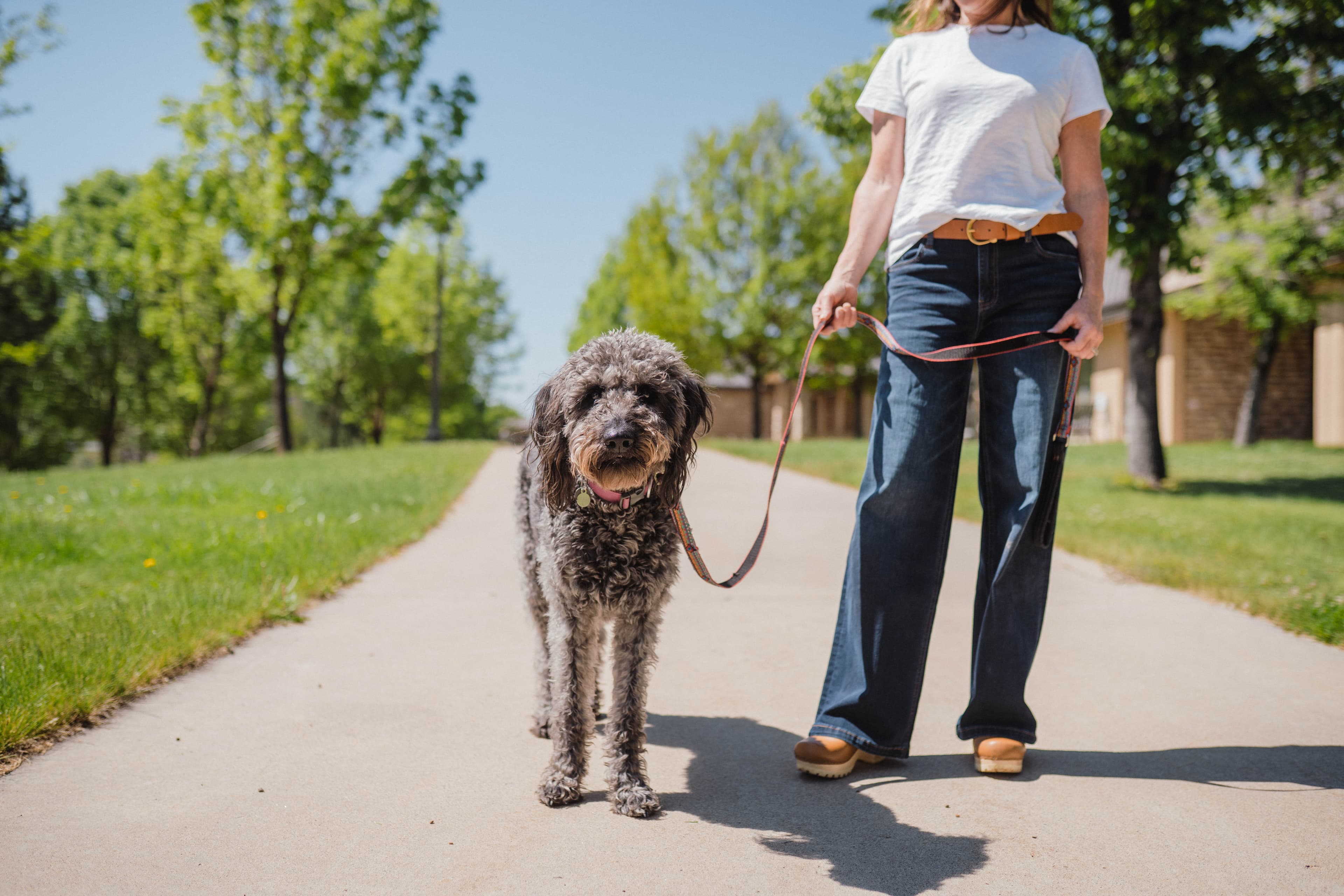
Picture the shape you're after in the leash: a soft J-shape, a gentle curve of slack hanging between the two of you rather than a taut line under tension. That curve is your signal that the dog is in a good spot and worth rewarding. A clicker or a quick verbal marker like "yes!" helps you capture the exact half-second the leash softens, and the closer your treat follows that moment, the faster the dog connects the loose leash to the reward. Aim to deliver the treat within about half a second while the leash is still slack, because a reward that arrives too late ends up marking whatever the dog happened to be doing next.
Start somewhere boring in one easy environment. A hallway, a quiet room, or a fenced yard gives your dog a chance to learn the game before you add harder ones and before the outside world floods them with smells and distractions they can't yet ignore. A handful of short sessions scattered through the day will teach far more than one long, tiring stretch, since dogs absorb new behavior in small, focused doses and lose the thread when a session drags on.
Basic exercise:
- Clip the leash to your dog's collar or harness and stand still in a quiet space.
- When the dog settles near your side and the leash goes loose, mark ("yes" or click) and reward.
- Take one or two steps forward, and mark and reward again if the leash stays slack.
- Gradually add more steps before each reward as the dog gets the idea.
- Keep each session under ten minutes and end on a success.
In these early stages, rewarding your dog for choosing to walk beside you is what builds the loose-leash habit, and five to ten minutes is genuinely plenty. Short and engaging beats long and repetitive every time.
Step-by-Step Loose Leash Training Plan
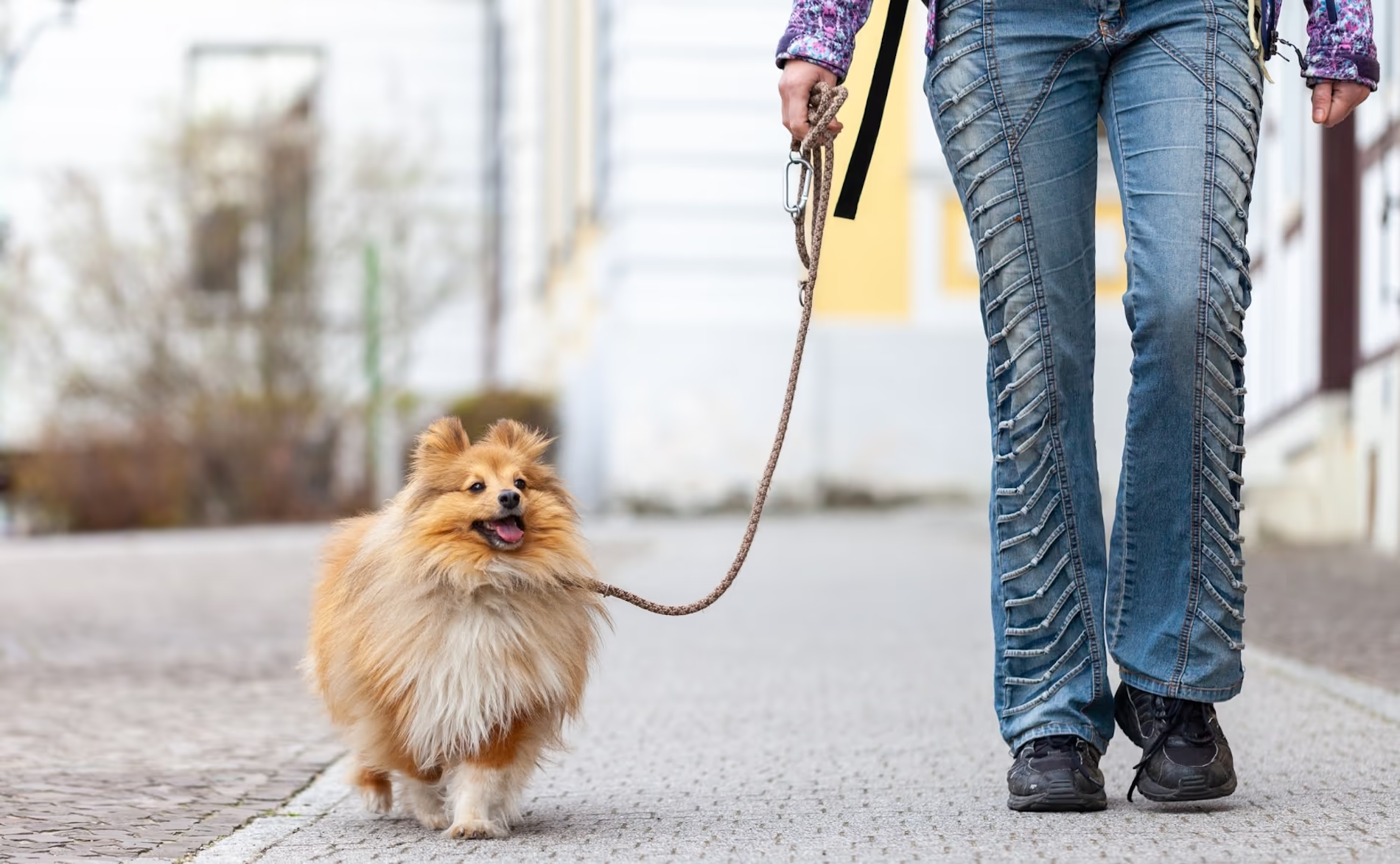
This is the core program, and the easiest way to remember it is "red light, green light" because the goal is to teach your dog to stop pulling. Green light means the leash is loose and the two of you move forward together, covering ground and enjoying the walk. The instant the leash tightens, it's a red light: you plant your feet and wait, standing still until the dog eases off and the slack returns. Over enough repetitions, the dog starts to understand that pulling is what stalls the whole outing, and that a relaxed leash is what keeps things moving.
Some dogs will keep leaning into the leash even after you stop, and that's when an about-turn comes in handy. Calmly pivot a full 180 degrees and walk the other direction, letting the dog catch up to you without force or leash jerks. When they reach your side and the leash goes slack, mark and reward. Done consistently, this teaches your dog that forward progress happens on your terms, not at the end of a tight leash.
Progression:
- Week 1: 1–2 steps before a reward — reward every step
- Week 2: 5 steps before a reward — reward every 3–5 steps
- Week 3: 10 steps before a reward — reward every 5–10 steps
- Week 4+: 20+ steps before a reward — reward intermittent
Work through this progression in quiet, low-distraction areas first, and only move to busier settings once your dog is reliable in calm ones. Early sessions should stay under ten minutes, once or twice a day, and everyone in the household needs to play by the same rules. Most dogs can make steady progress if you raise the difficulty gradually across different environments. Consistency is what makes or breaks the whole thing, and it's the same basic point professional dog trainers emphasize. If one person lets the dog pull while everyone else enforces the stop-and-go, the dog learns that pulling pays off often enough to be worth trying, and that intermittent success is exactly what makes a habit so stubborn to undo.
Using the World as a Reward on Walks
Food is a powerful motivator, but if you watch your dog on a walk you'll notice that what they're really there for is everything around them. The smells, the grass, the lamppost every other dog has visited, the possibility of a friend up ahead — these are all rewards in their own right, and they cost you nothing. When you start treating that access as something the dog earns by keeping the leash loose, you build a system around what the dog enjoys, so the walk itself is doing the reinforcing for you. Folding sniff breaks into the walk this way tends to make the whole outing more pleasant for both of you, since the dog gets to be a dog and you get a companion who checks in instead of dragging.
Life reward scenarios you can use today to encourage your dog to walk politely without relying only on food:
- Walk nicely for five steps, then cue "go sniff" and let the dog investigate a patch of grass.
- Dog wants to check a fire hydrant: wait for slack in the leash, then release with an "okay" cue.
- Pause mid-walk and let the dog follow their nose for 30–60 seconds, as long as the leash stays loose.
- Use a verbal cue like "explore" or "free" to signal that sniffing time is earned.
Lean on this often enough and you'll find your dog walking calmly without needing a steady stream of food, which matters most on the longer walks where you'd otherwise run out of treats halfway through. The fun of being out in the world becomes the thing your dog is working for, and earning what they want can help the dog learn to walk politely for real-world rewards.
Staying Calm and Handling Distractions
Dogs read us far more closely than we tend to realize, and tension travels straight down the leash. When you're anxious, white-knuckling the handle, or pushing through a spot that's stressing you out, your dog feels all of it and winds up more amped than they started. Slowing your breath, dropping your shoulders, and keeping your voice even sounds like soft, feel-good advice, but it genuinely moves the needle on how the walk goes, so it's worth treating as part of the training rather than an afterthought.
It also helps to remember that dogs learn differently from one environment to another, so the picture can change completely from one place to the next. A dog who's flawless in your backyard may pull like a freight train at the park, and as your dog moves into harder settings that pulling can reappear, so training should scale up gradually rather than jump straight to the toughest version.
When distractions appear, your goal is to stay calm, stay neutral, and keep your dog moving past without any fuss. Movement is your friend here, so rather than stopping to fight the distraction, calmly guide your dog in another direction or steer them past it:
- Crowded sidewalk: keep a steady pace and walk your dog through, staying calm and neutral so they take the cue from you
- Passing another dog: guide your dog past on a loose leash without stopping to stare, keeping your body moving forward
- Squirrel darts across the path: calmly change direction and keep walking rather than bracing against the lunge
While your dog is still learning, do yourself a favor and pick the quieter routes and the calmer times of day. If a walk tips into something that feels dangerous or overwhelming, there's no harm in cutting it short and heading back to an easier setting, because dropping down to a level your dog can actually handle is one of the smartest training decisions you can make.
What Not to Do When Your Dog Is Pulling
Plenty of advice out there sounds sensible on the surface but ends up making pulling worse, and some of it can genuinely hurt your dog. The trouble almost never comes from the equipment you choose. It comes from how that equipment gets used, and from reaching for a correction before your dog has any real idea what you'd like them to do instead.
Mindless leash-popping is the clearest example of getting it wrong. Jerking, yanking, and dragging a dog around, on any collar or harness you can name, puts real strain on your dog's body, and it tends to crank up fear and reactivity instead of settling anything down. The tool in your hand isn't the issue there; the issue is a dog being punished for a behavior nobody ever taught them to replace. For example, a prong collar can absolutely be a fair and effective part of a training program when it's introduced the right way, conditioned with patience, and fitted to a dog who's ready for it. What turns any piece of equipment into a problem is using it to muscle a dog through a walk rather than to communicate with them. Correction without a clear, well-taught alternative just suppresses the pulling in the moment, and quietly skips the part where the dog actually learns what you want, which is the only part that holds up over time.
Marching a dog through an entire walk in a rigid heel with no chance to sniff or explore tends to backfire too, because it strips out everything the dog actually values about being outside. Inconsistency does its damage more quietly. If you let the pulling slide "because we're running late" even once a week, your dog quietly learns that leaning into the leash pays off often enough to keep trying. Calm, consistent handling paired with the right tool for your dog asks more of you up front, and it rewards that patience with results that actually hold.
Troubleshooting & When to Call a Professional Trainer
Progress on the leash almost never runs in a straight line, so don't be thrown when it stalls. Adolescent dogs somewhere between six and eighteen months old are famous for backsliding right when you thought you'd cracked it, and rescue dogs carrying years of unknown history often arrive with habits that take real time to unwind. Plateaus are simply part of the process, and expecting them keeps you from getting discouraged when they show up.
FREE LEASH PULLING STARTER GUIDE
Not Sure Where to Start?
Take the quick quiz in our free leash pulling starter guide and get exercises picked for your dog's personality type.
Common issues and quick fixes:
- Pulls hardest at the start: burn off energy first with a short game of fetch or tug in the house or yard before clipping the leash
- Pulls only with certain people: ensure every walker uses the same rules; train each person separately if needed
- Pulls in specific locations: run short training loops near the exciting area (parking lot before the park entrance) before heading in
If your dog blows past the rewards you're offering or just seems too overwhelmed to think, that's usually a sign to make things easier: simplify the surroundings, bring out higher-value food, or trim the session down to something manageable. And when the pulling crosses into genuinely dangerous territory, like a big dog capable of pulling someone off their feet, or when it comes packaged with reactivity or aggression, that's the point to bring in a qualified, professional trainer rather than pushing through on your own.
With patient, positive training, the vast majority of dogs really can learn to walk nicely, and their owners can finally trade the daily tug-of-war for walks worth looking forward to. There's no reason not to start today. Pick your quietest route, pocket some good treats, and give the stop-and-go method a solid ten minutes, because that's genuinely all it takes to get the ball rolling.