Leash Training
How to Leash Train a Dog to Walk Nicely on the Lead
Teaching a dog to walk nicely on the lead is not complicated, but it does take a clear method and the willingness to stick with it. Whether you have a new puppy dragging you down the pavement or an adult dog who has been rehearsing bad habits for years, the fundamentals are the same, because they come straight from the way dogs learn. When pulling gets a dog where it wants to go, pulling gets stronger. When a loose lead is the thing that moves the walk forward, loose leash walking gets stronger. Everything below is built on that one idea. This guide covers exactly how to leash train a dog, from what to do on your very next walk to building reliable loose leash walking over the weeks and months that follow.
What You'll Learn
- What to do on today's walk if your dog pulls
- Why gear matters, and when a martingale or prong collar beats a harness
- How to teach leash pressure so your dog yields instead of leaning in
- The step-by-step method for building loose leash walking
- How to handle pulling toward other dogs, lunging, and strong dogs that drag you
Quick Start: What To Do Today If Your Dog Pulls
You do not need to read this whole article before your next walk. If your dog pulls on the lead right now, there are three things you can start today that will begin changing the pattern immediately.
FREE LEASH PULLING STARTER GUIDE
Want a Plan Built for Your Dog?
Get our free leash pulling starter guide, matched to your dog's personality type, with simple exercises you can start today.
- Stop when the lead goes tight. Every time your dog hits the end of the leash, stop walking and stand still and quiet. Do not tug, do not talk, just become a post. Stay still and quiet until your dog either looks back at you or lets the leash go slack, and the moment they do, move forward again. This works because forward motion is the reward your dog actually wants, and pulling is how they have learned to earn it. When pulling suddenly makes the walk stop instead of go, the dog learns that pulling slows everything down, and stopping is the fastest way to teach that lesson. It only works if you are consistent, so there are no exceptions, not even the one time you are in a hurry.
- Turn and walk the other way. If your dog keeps pulling after you stop, turn 180 degrees and walk in the opposite direction. The split second he pays attention and moves toward you, mark it with a "Yes!" and reward with a treat. Change direction to keep dogs engaged during walks rather than locked into pulling ahead.
- Pay for every moment of slack. Any time your dog is walking on a loose leash, even if it is only two steps, tell them so with praise and a treat. It is tempting to react only when things go wrong, but a dog cannot learn what you want from correction alone. They learn it from the feedback that says yes, that, more of that, and the more consistently you reward loose leash walking, the faster it sticks. Keep these first sessions short. A focused ten to fifteen minute walk where you hold to these rules teaches far more than an hour of being dragged, because every minute of a dragging walk is another rep of the exact habit you are trying to undo.
- Keep it short. A focused 10–15 minute walk where you practice these rules consistently teaches more than an hour of being dragged. Pulling is a common response to leash pressure, and the dog learns that pulling gets them nowhere while a loose leash makes the walk go.
Why Leash Training Matters for Every Dog
Leash training is about more than making walks less annoying, though it certainly does that. The real benefits reach into safety, welfare, and the relationship you have with your dog.
- Safety in busy environments. A leash keeps your dog out of traffic, away from cyclists, and out of confrontations with other dogs, and in most towns it is legally required in public spaces and parks. It protects you too. One outpatient study found 443 patients with upper-limb injuries from leash incidents, most of them from being pulled off balance or getting a hand or finger caught in the line. A dog that walks without pulling removes most of those situations before they can ever happen.
- Less stress for everyone. Walking lowers stress for owners, and a dog that has been taught to walk nicely on the lead shows fewer signs of the anxiety and frustration that come with constant tension and correction. A calm walk gives your dog physical exercise and mental stimulation at the same time, and that combination is a large part of what keeps a dog settled once you are back home.
- Legal compliance. Many towns and cities require dogs to be leashed in public spaces and parks. Fines, restrictions, and complaints follow dogs that are off-leash or uncontrolled.
- Fewer behavioral problems. A dog that has learned to give you attention and focus on the lead is far less likely to develop leash reactivity, because reactivity feeds on frustration and on having no better option than to lunge and bark. Teach the dog what to do instead, and you take away the fuel. The result is fewer fines, fewer complaints, fewer tense encounters, and a stronger relationship that makes the next piece of training easier still.
Essential Gear for Loose Leash Walking
Gear does not train your dog, you do, but the right equipment makes the process smoother and keeps you from creating problems you will only have to fix later. The job of every piece of it is clear communication, not control by force.
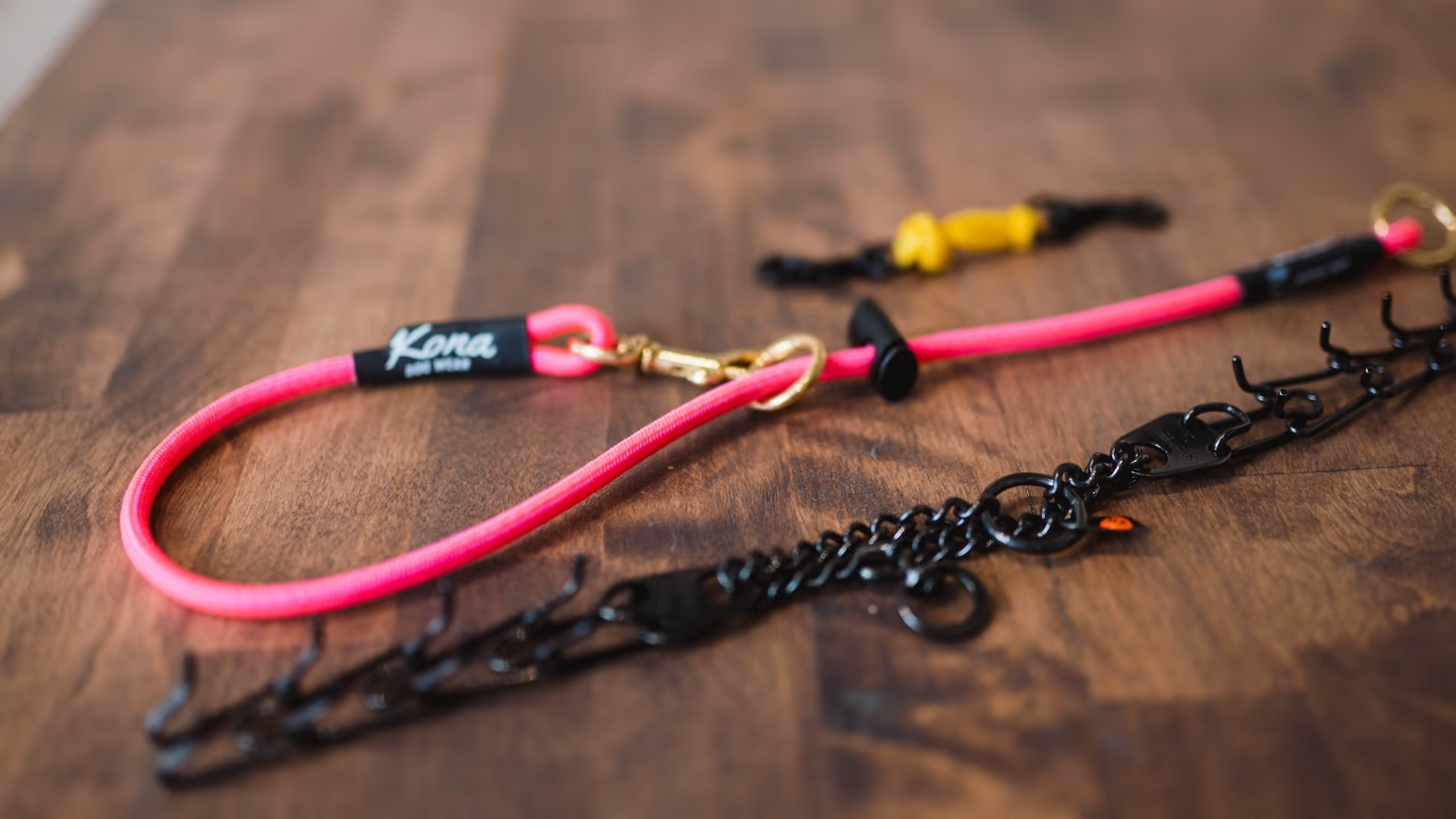
- Martingale or Prong Collar. For a dog that genuinely pulls, I prefer a properly fitted martingale collar or a correctly fitted prong collar over a front-clip harness. A harness sits across a dog's chest and shoulders, which is the exact part of the body built to pull weight, so for a lot of dogs a harness quietly encourages the sled-dog lean you are trying to get rid of. Fit is fiddly, too. A 2023 biomechanics study found improper harness fit altered a dog's gait in roughly 63% of dogs within fifteen minutes of walking. A martingale collar solves a different problem: it tightens only to a set point when the dog reaches the end of the lead, so it stops a dog backing out of it without ever choking them. A prong collar, fitted high on the neck and introduced the right way, spreads gentle, even pressure around the neck so the signal to ease off is clear and consistent, and most dogs read it quickly because there is nothing confusing about it. Used correctly, these are humane, communication-first tools, and used correctly is the part to hold onto, because any piece of equipment is only ever as good as the timing and technique behind it.
- Leash. For the leash itself, use a lightweight fixed-length lead of about six feet, and avoid retractable leashes during training. A retractable keeps a constant light tension on the line the whole time, which teaches the dog that leaning into pressure is simply how walking feels, and that is the opposite of what you are trying to build.
- Treats and marker. Use high-value treats to maintain the dog's attention. Soft, pea-sized treats work best so you can deliver them fast without interrupting pace. A clicker can be used as a training marker, or a verbal marker like "Yes!" to bridge the moment the behavior happens and the reward that follows. Keep treats in a pouch at your hip.
Foundation Skills Before You Start Walking
The key to teaching a dog to walk without pulling starts before you ever leave the house. Skip the foundation and outdoor leash training turns into an uphill fight against distractions your dog was never prepared for, so begin indoors or somewhere else with very little going on.
FREE LEASH PULLING STARTER GUIDE
Ready to Stop the Pulling?
Our free starter guide shows you why your dog pulls and the first exercises to fix it, built around their personality type.
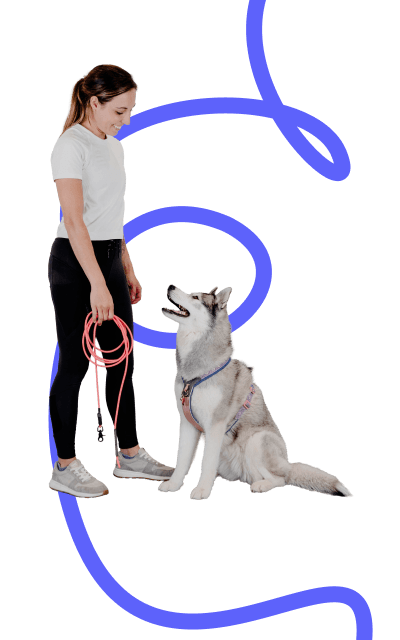
- Let your dog get comfortable in the gear first. Plenty of dogs feel vulnerable the first time they are leashed, and that unease often shows up as pulling or freezing, so let them wear the collar and lead around the house for short stretches until it is completely boring. With a puppy, let a light line drag behind them under your supervision so the leash becomes part of the furniture. Puppies will chew the lead, and the calm response is to redirect them onto a toy rather than turn it into a tug game, because a leash that becomes a toy is a leash they will fight you over later.
- Build a rock-solid response to your dog's name. That name is your main tool for winning attention back once you are outdoors. Say the name once, and the instant they look at you, mark and treat. Repeat it in easy moments until the head turn is automatic. In the same spirit, catch and pay for the eye contact your dog offers on their own. Every time they glance up at you without being asked, mark and reward it, because rewarding those check-ins helps encourage your dog to reorient toward you on the leash.
- Teach your dog what leash pressure means, which is the most important foundation of all. Dogs are born with something called an opposition reflex, which simply means that when they feel pressure pulling one way, their instinct is to push back against it rather than give in to it. That reflex is exactly why a tight leash makes so many dogs lean in harder instead of easing off, and it is quietly working against you on every pulling walk. So before you worry about pace or position, your dog needs to learn the opposite response: when they feel the leash go tight, the way to make that pressure disappear is to move toward it and put slack back in the line, not to brace against it. Once a dog understands that a tight leash is information they know how to answer rather than a tug-of-war to win, loose leash walking gets dramatically easier. Teaching it well takes some careful, low-key repetition in a quiet spot, and we walk you through exactly how to teach your dog leash pressure inside our Loose Leash Walking Course.
Step-by-Step: How to Teach Your Dog to Walk Without Pulling
The whole point of leash training is to teach your dog that walking on a loose lead is getting them where they want to go - and pulling isn't; in other words, the point of the lead is to teach that slack moves the walk forward. Here's the progression.
- Start small. Start small and boring. Work in a low-distraction space like a hallway, a backyard, or a quiet garden before you take it anywhere interesting, using your six-foot fixed leash. Reward your dog for staying close, dropping a treat by your leg every few steps while the leash stays slack, so the spot next to your leg becomes the place where good things happen.
- Gradually increase steps between rewards. As your dog gets reliable, stretch the distance between rewards. When they can manage a few steps without pulling, ask for five, then eight, then a dozen before the treat arrives. You are gradually teaching them to hold the behavior on their own rather than for a bribe at every step. Keep each session to three to five minutes, because short and regular sessions beat long, exhausting ones every time. A tired, frustrated dog stops learning and starts guessing.
- Enforce the stop-and-go rule. Through all of it, hold the stop-and-go rule without wobbling. Every single time your dog surges ahead and the leash goes tight, stop, wait for slack, and only then move on. This is the non-negotiable core of the whole method, because the one thing that unravels all your progress is letting pulling work even occasionally. If pulling gets a dog forward one walk in ten, they will keep trying it, so the answer has to be the same every time.
Building Attention and Eye Contact on Walks
Strong attention is what keeps loose leash walking together once you are out in the world, because without it every distraction becomes a pulling trigger. Attention work also gives your dog the mental enrichment that makes a walk genuinely satisfying rather than just a lap around the block.
Keep paying for the eye contact your dog offers. Any time they glance up at you mid-walk, mark and treat. You are not commanding it, you are buying it, and the more you pay, the more freely they offer it. On top of that, teach a deliberate "watch me" cue. Say the word, wait for your dog to look up, mark the moment their eyes meet yours, and feed the treat right next to your leg so you build attention and good position in the same repetition.
The real value of that cue shows up at the moments dogs naturally pull, so use it there. Ask for attention before you cross a road, at junctions, and as you step out of the front door, and you interrupt the pull before it can start. This is also your best answer to reactivity. If you have a mastiff cross dog like Buddy who locks onto every squirrel he sees, a solid "watch me" hands him something to do that actually earns a reward, which is far easier than trying to physically hold a strong dog back once he has fixated.
Handling Common Problems When Your Dog Pulls
Every dog pulls at some point. The question isn't whether it'll happen - it's how you respond when it does. Learning go not to pull takes time patience and consistency but the benefits are worth the effort.
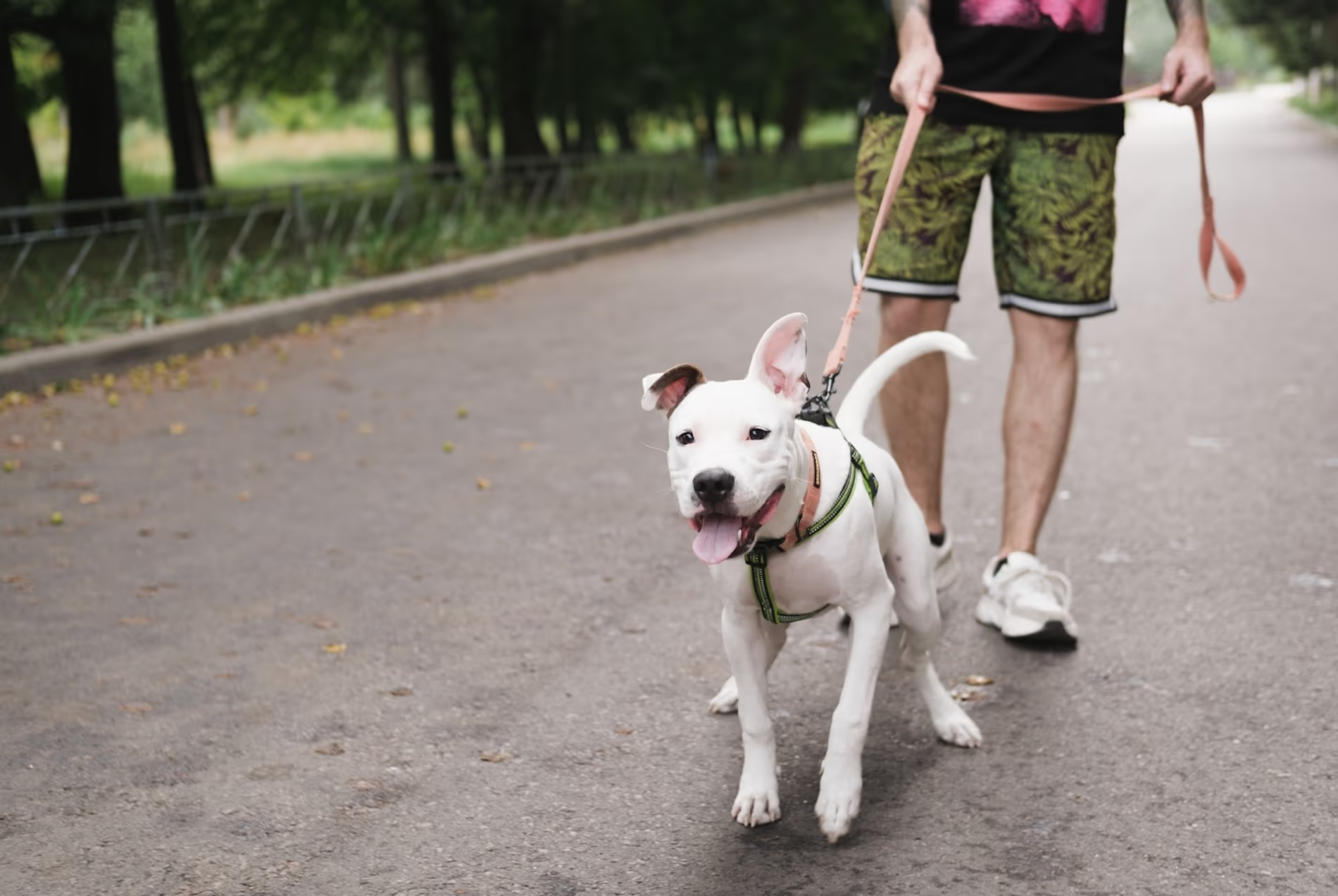
- Pulling toward other dogs or people. The answer here is distance rather than force. Arousal around a distraction can cause even a well-trained dog to regress, so back off to a range where your dog can still think, ask for eye contact there, mark and treat when their attention returns to you, and then carry on. Forcing a close pass before your dog is ready only proves to them that pulling is the only way to cope.
- Lunging or barking. Turn away calmly and create space instead of matching your dog's energy, because winding up alongside an already wound-up dog just adds fuel to the fire. Wait until they settle and go quiet, then re-engage with a simple focus exercise so their brain has something manageable to do.
- Strong dogs dragging the handler. Reach for equipment that gives you clear communication paired with shorter, more frequent training walks. A well-fitted martingale or prong collar lets you stop forward movement early and cleanly, and keeping the leash short during training means you can catch a pull before it builds into a full-body lunge. A game helps here too: toss a toy on the floor, and as your dog moves toward the toy, stop and call them back before they get to it, then mark and reward the turn. Over time this teaches that checking in with you, rather than charging ahead, is what earns access to the good stuff.
- Never jerk the leash. Remember the tool is only half of it, and your technique is the other half. Constant nagging tension or mindless yanking on the lead teaches a dog nothing, because a signal that never switches off stops carrying any meaning. Clear, well-timed communication, paired with generous rewards for the behavior you want, is what actually changes how your dog walks, on any equipment.
Making Walks Rewarding So Your Dog Wants to Stay Close
If a walk is all rules and no fun, your dog has every reason to pull toward the interesting stuff, because you have made yourself the least interesting thing out there. The fix is to become the best thing on the walk, so that staying close is what your dog would choose anyway.
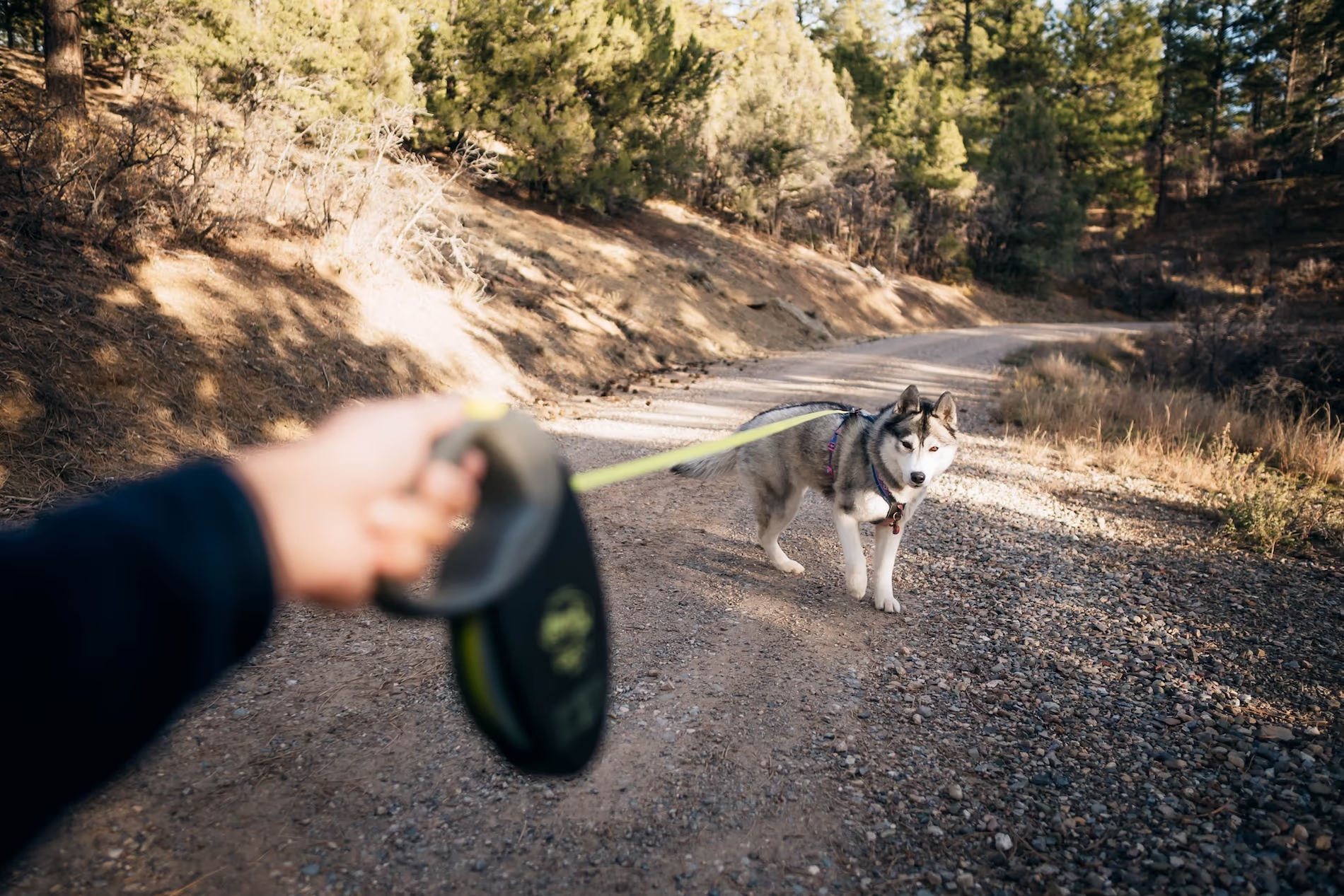
- Build in sniff breaks. Put them on a cue like "go sniff" that releases your dog to explore at the full length of their lead. Sniffing is real mental enrichment, not wasted time, and a walk in the woods where your dog gets deliberate sniffing time satisfies them in a way a rigid march never will. Those opportunities go a long way toward satisfying your dog and making the structured parts of the walk easier.
- Vary the walk. Change your routes, your pace, and your direction, and drop in the odd moment of play. A dog who walks the same path at the same speed every day checks out, and a checked-out dog drifts to the end of the lead and pulls. Keep things unpredictable enough that keeping half an eye on you is worth their while.
- You become the reward. When you are the source of the treats, the praise, the play, and the permission to go sniff, your dog starts gravitating toward you on their own, because that is where everything good comes from. That is the real goal, a dog who genuinely prefers being near you rather than one who only tolerates the rules, and the handler who makes walks fun will always earn better leash manners than the one who makes them a chore.
Leash Training Puppies vs. Adult Dogs
Age and history change the pace of leash training, though not the method, so it helps to set your expectations to match the dog in front of you.
- Puppies. Start the day you bring them home, and do not wait for the full course of vaccinations to begin, because you can practice indoors and in your own garden long before public walks are on the table. Early leash training teaches a puppy to walk politely before the pulling habit ever gets a chance to form, which is far easier than undoing it later. Keep the sessions playful and shorter than feels necessary, because a puppy's attention span is measured in seconds, and the benefits can be huge when you teach polite lead habits before pulling becomes rehearsed. Always end on a small success, even if that success is only three steps of slack leash. Do not use prong collars with puppies
- Adult dogs. An adult dog with years of pulling behind them needs patience, because the habit is deeply grooved and every past walk has rehearsed it. Reach for higher-value rewards, keep the sessions even shorter than you think you need, and measure progress in weeks rather than days. It is worth the effort, and it does not have to be stressful for your dog. A large study of 92 companion dogs found that reward-based training produced lower stress and better learning, which matters most exactly when you are overwriting a well-established behavior.
- Rescue dogs. Adapt expectations. A rescue dog may be nervous on the lead, overwhelmed by outdoor stimuli, or have no leash history at all. Move at a pace they can handle. Let them set the initial tempo. Pair the leash and harness with positive experiences indoors before expecting anything outdoors.
- Regardless of age or history, keep training positive and end on success!
When to Get Help From a Professional Trainer
There is no shame in bringing in expert help, and leash training is one of the most common reasons people hire a trainer for good reason, because some situations genuinely need a skilled eye on them in real time.
FREE LEASH PULLING STARTER GUIDE
Not Sure Where to Start?
Take the quick quiz in our free leash pulling starter guide and get exercises picked for your dog's personality type.
- When to seek help. Severe pulling where you feel physically unsafe. Leash aggression or fear reactions toward people, dogs, or traffic. A dog that shuts down or panics on the lead. Any situation where you've been consistent for weeks and see no improvement.
- Finding the right trainer. Look for a qualified, experienced trainer who works in a balanced way, meaning someone who builds on reward-based foundations but is also genuinely skilled with tools like a properly fitted martingale or prong collar and can teach you to use them well.
- Ask direct questions. Find out how they handle pulling, what equipment they would put on your dog and why, and how they introduce it, because a good trainer should be able to explain the reasoning behind every choice and should always put your dog's wellbeing first. The right person will show you humane, correct technique, rather than either hauling a dog around with no skill or refusing on principle to use a tool that would help.
- Early help pays off. A few sessions with the right trainer can save you months of frustration. The moment someone watches your timing and your mechanics and adjusts them on the spot, the things you have been struggling with tend to click, because pulling is often the fastest problem to solve once another set of eyes can see exactly what your hands are doing. From there, every walk gets calmer and more enjoyable for both of you.Leash training isn't a weekend project. It takes time, patience, and consistency - but the benefits of a dog that walks nicely on the lead pay off on every single walk, for the rest of your dog's life. Pick one technique from the quick start section above, use it today, and build from there.
Leash training is not a weekend project. It takes time, patience, and consistency, but a dog that walks nicely on the lead pays that back on every single walk for the rest of their life. Pick one technique from the quick start section above, use it on today's walk, and build from there.