Dog Commands
Top 7 Essential Dog Commands Every Dog Owner Must Teach
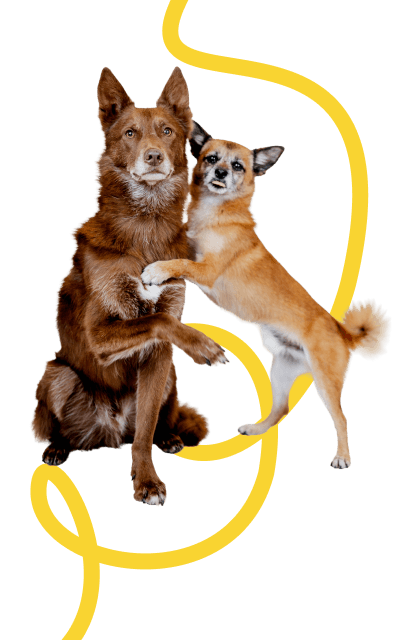
Dog commands are the language between you and your dog. They're how you communicate expectations, keep your pup safe, and build the kind of relationship where both of you actually enjoy living together. Teaching basic dog commands improves safety and communication with pets in ways that go far beyond parlor tricks. The essential commands for dog training include "sit," "stay," "come," "leave it," "place," "heel," and "off." These seven commands aren't arbitrary, but were chosen because they prevent real harm, solve the most common behavior problems, and create a foundation sturdy enough to support everything from fun tricks to advanced obedience work. Master these, and you'll have a dog that's safer, calmer, genuinely easier to live with, and honestly more fun to be around.
Before You Start: Teach the Marker Words First
Before you try to teach sit, stay, come, or any command on this list, your dog needs a foundation most owners skip entirely: a small set of marker words that create clear, reliable communication. Without this foundation, teaching sit or place usually turns into guesswork, they don't fully understand what's earning the reward, or when it's coming, so progress stalls and sessions get frustrating for both of you.
FREE BASIC DOG COMMANDS COURSE
New to Marker Training? Start Free
Our free Basic Dog Commands course teaches all six marker words in about 10 minutes a day, the exact foundation every command below is built on.
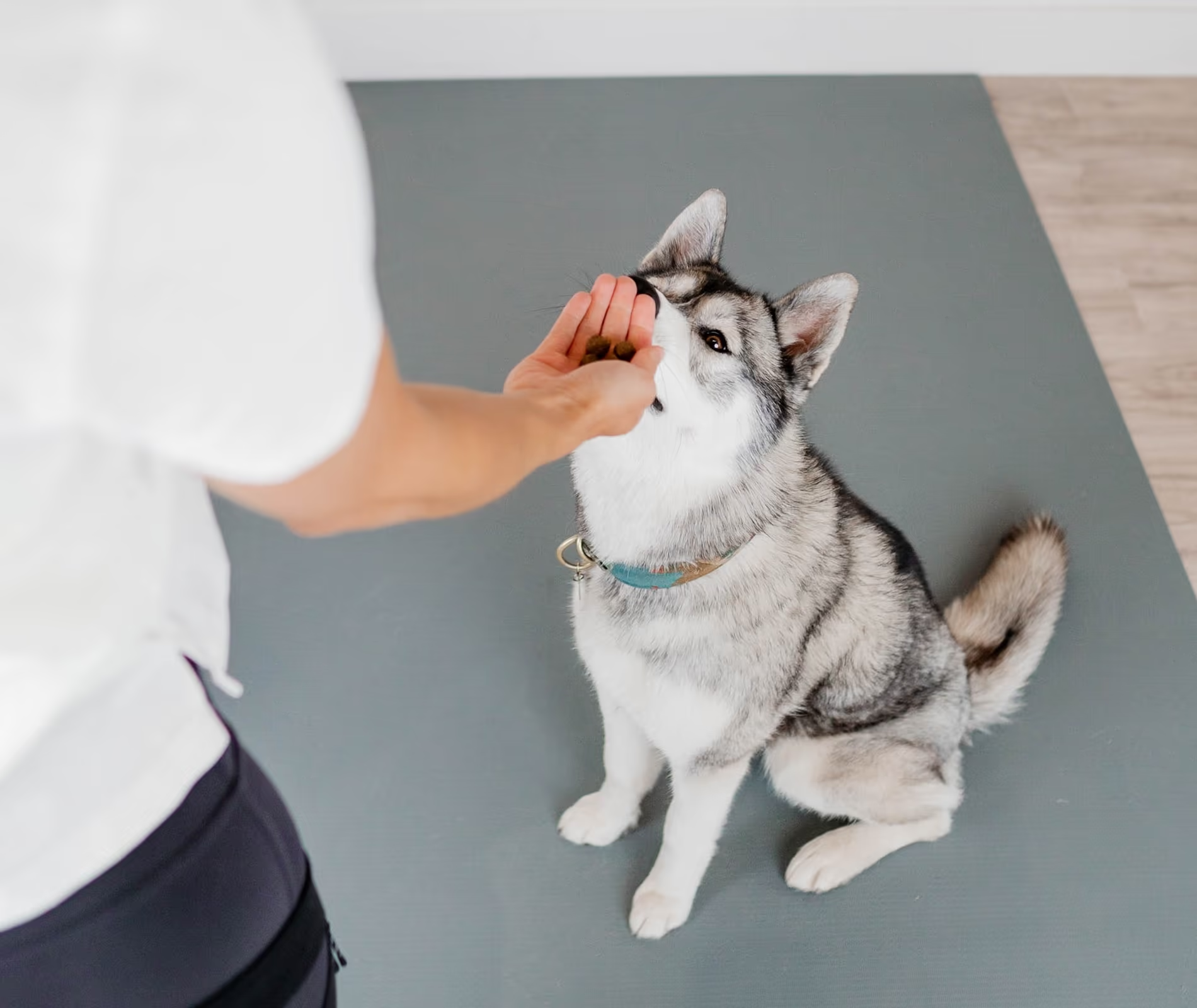
Our free Basic Dog Commands course (you may see it listed as the Foundations course once you're logged in) teaches exactly this foundation in about 10 minutes a day: "Hold & Deliver" (how to hand your dog a treat cleanly), "Yes!" (the reward is coming), "Get it!" (go find the tossed treat), "Catch!" (a bonus reward in midair), "Good..." (hold this position), and "Break!" (you're free to move). Once they reliably understand these six markers, every command in this article, sit, stay, come, place, loose heel, leave it, and off, gets dramatically easier and faster to teach, because they already know how to listen for a cue and expect a reward.
Think of it as two levels: Level 1 is the foundation, and Level 2 is the specific commands covered below. Skipping Level 1 doesn't make Level 2 impossible, but it makes every single command on this list slower to teach and less reliable once they're distracted. That's why every "How to Teach" section below starts the same way: make sure the marker words come first.
Learn all six marker words for free in the Basic Dog Commands course. It's a fast, simple starting point before you tackle anything below.
How We Chose the Most Essential Dog Commands
Every command on this list earned its place through a simple filter: does it matter in real life, and can the average dog actually learn it?
Here's what we evaluated:
- Safety and emergency response. Can this command prevent injury or death? Commands like come and stay aren't optional for dogs that spend any time near roads, wildlife, or other animals.
- Behavioral management effectiveness. Does it solve problems owners actually face? Jumping, pulling, scavenging, and ignoring boundaries are the behaviors that erode relationships.
- Foundation building. Does learning this command make other training easier? "Sit" unlocks "stay," which unlocks "place," which unlocks real-world reliability.
- Universal applicability. Does it work across breeds, ages, and environments? A command that only works for calm Labradors in quiet living rooms isn't useful enough.
- Training difficulty and success rate. Can an average owner teach it with positive reinforcement and see results?
- Real-world usefulness. Will you actually use this command daily, not just in formal dog training sessions?
Behavioral issues are cited in roughly 28% of dog relinquishments to shelters. These seven commands directly address the behaviors most likely to land a dog in that situation.
Top 7 Essential Dog Commands Every Dog Should Know
1. "Sit"
The "sit" command is often the first taught to dogs, and for good reason. It's mechanically simple, you lure a treat above a dog's head, the dog's nose follows upward, and the rear end naturally drops to the ground. Most dogs can learn it within a few consecutive days of short practice sessions.
How to Teach Sit
Make sure your dog already knows "Yes" and "Get it" from the free Basic Dog Commands course first. It makes every step below faster and clearer for them.
- Hold a treat just above your dog's nose and slowly move it back over their head.
- As their head tilts up to follow the treat, their rear end will naturally drop to the ground.
- The moment their rear touches down, mark it with "Yes!" and deliver the treat.
- Repeat 5 to 10 times per session, then start saying "sit" right before you lure, so they connect the cue to the action.
- Once they're sitting on the cue alone about 80% of the time, drop the treat lure and reward after the sit instead.
Tip: since dogs pick up visual cues faster than speech, try teaching a hand signal for sit (a closed fist raised from your side) before adding the verbal cue. See the hand signals section below for the full method.
Why It Stands Out
"Sit" is the gateway to everything else. It's the first command most trainers teach because success comes fast, and that early momentum matters. When a dog sits on cue, you've established a communication loop: you ask, the dog responds, and good behavior gets rewarded. That loop is the foundation for every other command on this list, from safety cues to fun tricks. A reliable dog sit is often the very first milestone in training, and it opens the door to everything else.
Best For
- First-time dog owners just starting out with a new puppy
- Creating structure before meals and greetings at the door
- Building foundation for advanced obedience training
Key Strengths
- Easy to teach using a treat luring method, slowly bring a treat above your dog's nose and the position follows naturally
- Immediately useful for managing an overly excited pup
- Creates calm, controlled behavior across situations
- Essential prerequisite for teaching stay, place, and loose-leash walking
Possible Limitations
- Very young puppies under 8 weeks may lack the muscular coordination to hold the position reliably.
- Dogs with hip dysplasia or joint issues might find prolonged sitting uncomfortable. Keep duration short or use an alternative like a stand cue.
2. "Stay"
"Stay" means your dog holds a position until you give a release word. The "stay" command is vital for keeping dogs safe, and the "stay" command prevents dogs from moving into hazardous areas like roads, open gates, or construction zones. In our Foundations course we use "good" for this exact job. When we say "good," we are asking the dog to hold whatever position they are in until we release them, so a good "good" is really just a stay command by another name. Pick whichever term feels natural to you and use it consistently.
How to Teach Stay
Stay relies on the "Good..." marker from the Basic Dog Commands course. It's the same cue, so if your dog already knows it, they already half-know stay.
- Ask your dog to sit, then say "stay" (or "Good...") and take one small step back.
- If they hold position, mark it, step back in, and reward. Ask them to wait a couple extra seconds before releasing to build duration.
- Say "Break!" to release them and end the rep on a positive note.
- Gradually increase distance, then duration, then distractions, one variable at a time.
- Always release with "Break!" rather than letting them decide when they're done.
Tip: pair a raised, flat palm with "stay" from the very first rep. Hand signals stick faster than speech for many dogs, so this becomes your fallback cue at a distance or in noisy places.
Why It Stands Out
This is pure impulse control. A dog that can stay reliably at a door threshold, at a curb, or while you handle a situation is dramatically safer. The wait command also controls dogs' movements at doorways, working as a close partner to stay in managing boundary behavior.
Best For
- Dogs that rush through doors or bolt toward traffic
- Creating boundaries at thresholds and dangerous areas
- Dogs that need impulse control training before earning off-leash freedom
Key Strengths
- Prevents dogs from running into dangerous situations
- Creates reliable boundary respect and self-control
- Can be practiced at increasing distances, durations, and distractions
- Essential for off-leash safety
Possible Limitations
- Requires consistent practice to maintain reliability. A stay that works in your living room may collapse at a busy park.
- Highly distracting environments need gradual, systematic exposure.
3. "Come" (Recall)
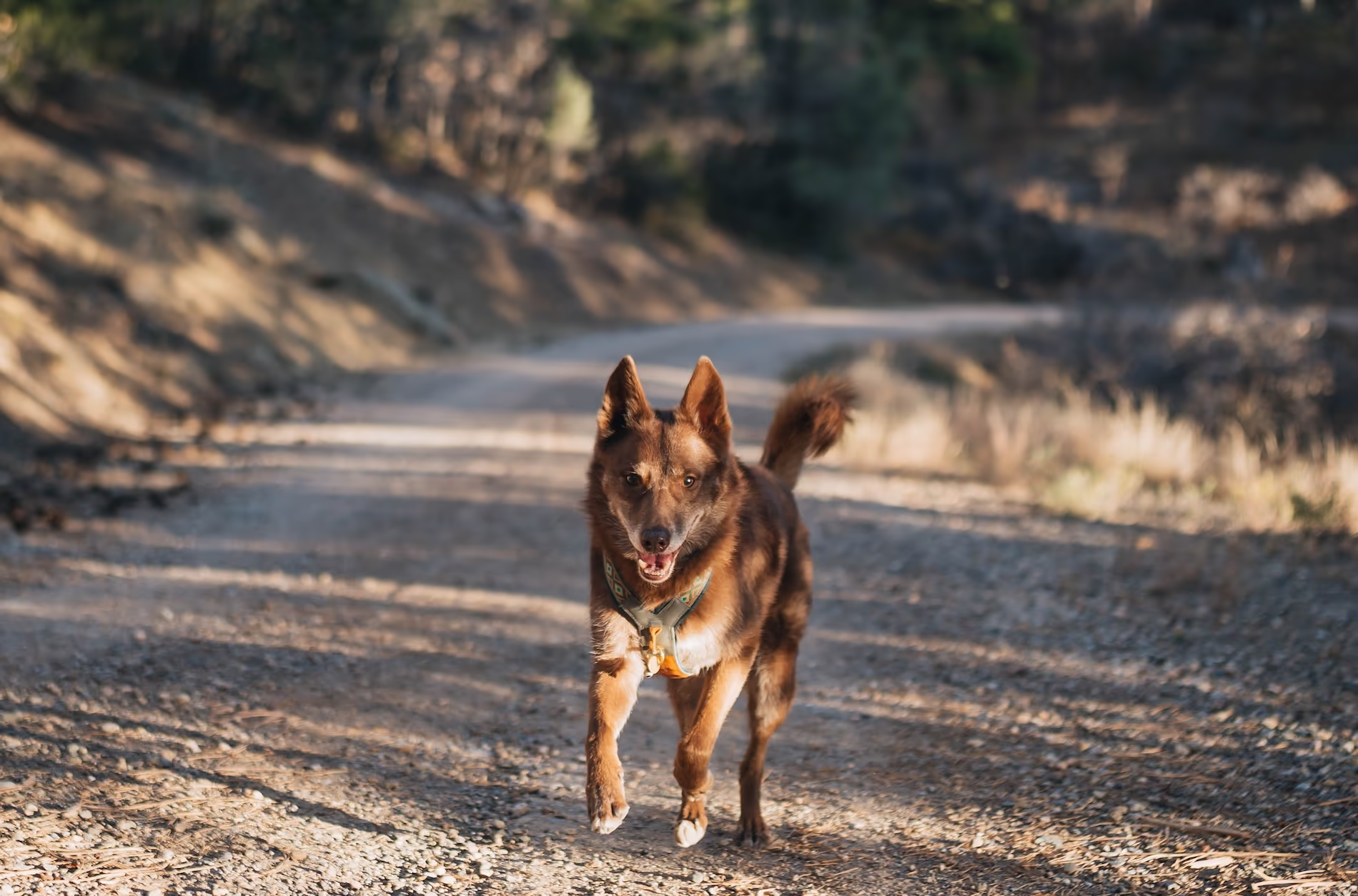
The "come" command is essential for effective recall. When your dog returns to you immediately upon hearing this cue, you have a tool that can genuinely save a dog's life.
How to Teach Come
Recall works best once your dog already responds to "Yes" and "Get it," the same markers taught in our free Basic Dog Commands course, since those are what make the reward for coming back feel instant and worth repeating.
- Start indoors with no distractions. Say your dog's name, then "come," in a happy, upbeat voice.
- The moment they start moving toward you, mark it with "Yes!"
- When they reach you, reward generously. Recall should always feel like the best thing that happens to them all day.
- Practice on a long line outdoors before ever trying it off-leash.
- Never call them over to punish them or end something fun, like bath time or crating. It teaches them that coming back sometimes leads somewhere they don't want to go.
- Once your dog is reliable on a long line, a properly conditioned e-collar through our Advanced E-Collar Recall course can take recall further, giving you a clear way to communicate at a distance for real off-leash freedom outdoors.
Why This Command Matters
This is the single most important command for emergency situations. An emergency recall that works under pressure, near traffic, wildlife, cliffs, or other dogs, is the difference between a close call and a tragedy. For owners who love the outdoors, a properly conditioned e-collar can take recall to another level. Used correctly, it gives you a clear, reliable way to communicate at a distance, and that is what makes true off-leash freedom on trails and open land possible.
Best For
- Dogs that spend time off-leash in yards, parks, or on hikes
- Emergency situations where immediate return is critical
- Active owners who enjoy car rides to trails and outdoor adventures with their pup
Key Strengths
- Can prevent tragic accidents by calling dogs away from danger
- Enables supervised freedom and off-leash activities
- Strengthens the bond between dog and owner, the dog learns that coming back is always rewarding
- Essential for working dogs in search and rescue or hunting
Possible Limitations
- Recall is one of the hardest commands to generalize reliably across all environments
- Can be weakened if you use it to call your dog for unpleasant experiences like bath time or crating, they learn that coming back sometimes leads to something they don't like
FREE RECALL STARTER GUIDE
Want Reliable Off-Leash Recall?
Get our free recall starter guide, built around your dog's personality type, with simple exercises to teach a come that actually holds up outdoors.
4. "Place"
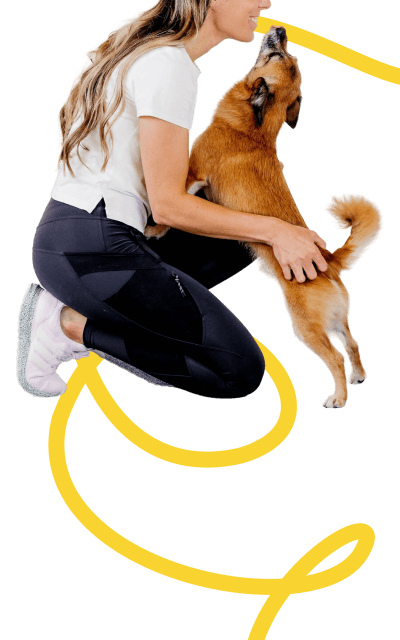
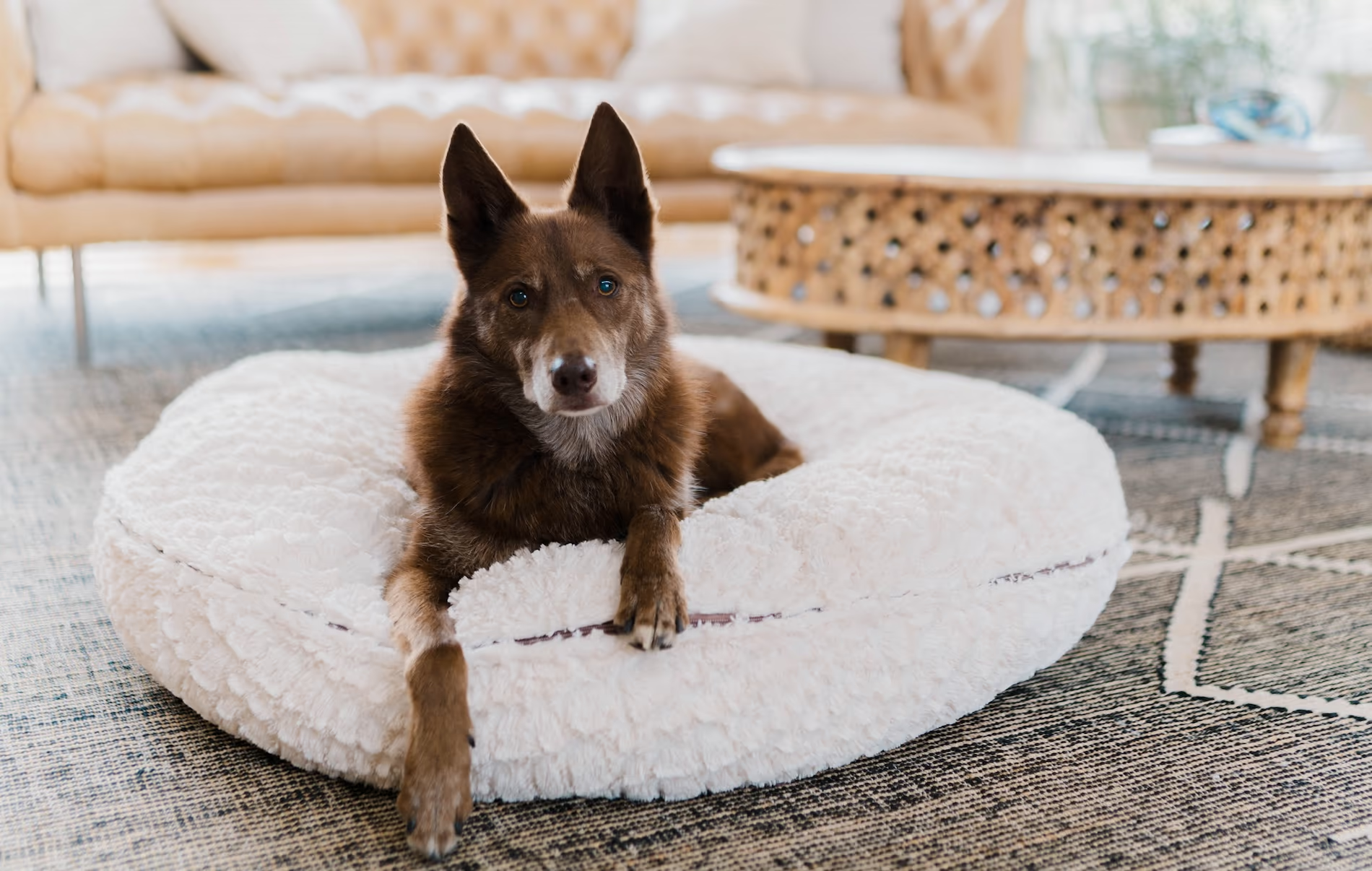
"Place" teaches your dog to go to a specific spot, usually a dog bed or mat, and stay there until you give a release word. Unlike a plain "stay" anywhere, place gives them a physical destination, so once they're on their spot, they know exactly what's expected until you call them off. It's flexible, too: once they understand the concept, "place" can apply to a bed, a mat, a raised platform, or really any surface you point to.
How to Teach Place
Place layers on top of "Yes," "Good...," and "Break!" from the Basic Dog Commands course. Your dog needs those three markers first so they understand exactly what's earning the reward.
- Set a dedicated bed or mat in a low-traffic area of your home.
- Lead your dog onto it with a treat, and the moment all four paws are on the mat, mark it "Yes!" and reward.
- Once they're reliably stepping up for the treat, add the word "place" right before you lead them on.
- Use "Good..." to build duration while they stay on the mat, rewarding periodically for holding position.
- Release with "Break!" and gradually stretch how long they hold place before you call them off.
- Once solid on one mat, practice on a different bed, mat, or surface to generalize the concept.
Tip: a pointed finger toward the bed or mat works as the hand signal for place. Teach it before the verbal cue, the same way you would with any other command.
Why This Command Matters
Place solves a problem stay alone can't: where does your dog actually go when you need them out from underfoot, without you needing to hold a formal down position the whole time? A solid place command lets them settle calmly during dinner, when guests arrive, or whenever the house gets chaotic, without you having to manage them constantly. It's one of the most requested skills we hear from owners who just want their dog to "go lie down" and actually mean it. Much like a classic "down" cue, place has a naturally calming effect too, it helps curb hyperactivity by giving an excited dog a physical position to settle into, rather than just a word to obey.
Best For
- Dogs that get underfoot during meals, guest visits, or busy moments at home
- Households that want a designated "settle" spot instead of a moving target
- Dogs that struggle with a generic "stay" but do better with a clear physical destination
Key Strengths
- Gives them a specific spot to settle, rather than an abstract instruction to "just stay"
- Naturally calming, most dogs relax faster once they're on their own bed or mat
- Transfers easily to new surfaces once the concept clicks, like a mat in a hotel room or a bed at a friend's house
- Builds duration and impulse control at the same time
Possible Limitations
- Requires a consistent "place" object at first, a dog still learning the concept can get confused if the spot keeps changing.
- Some dogs initially treat their place as a launch pad rather than a landing pad, hopping on and off. Patience and short sessions fix this quickly.
5. Loose Heel
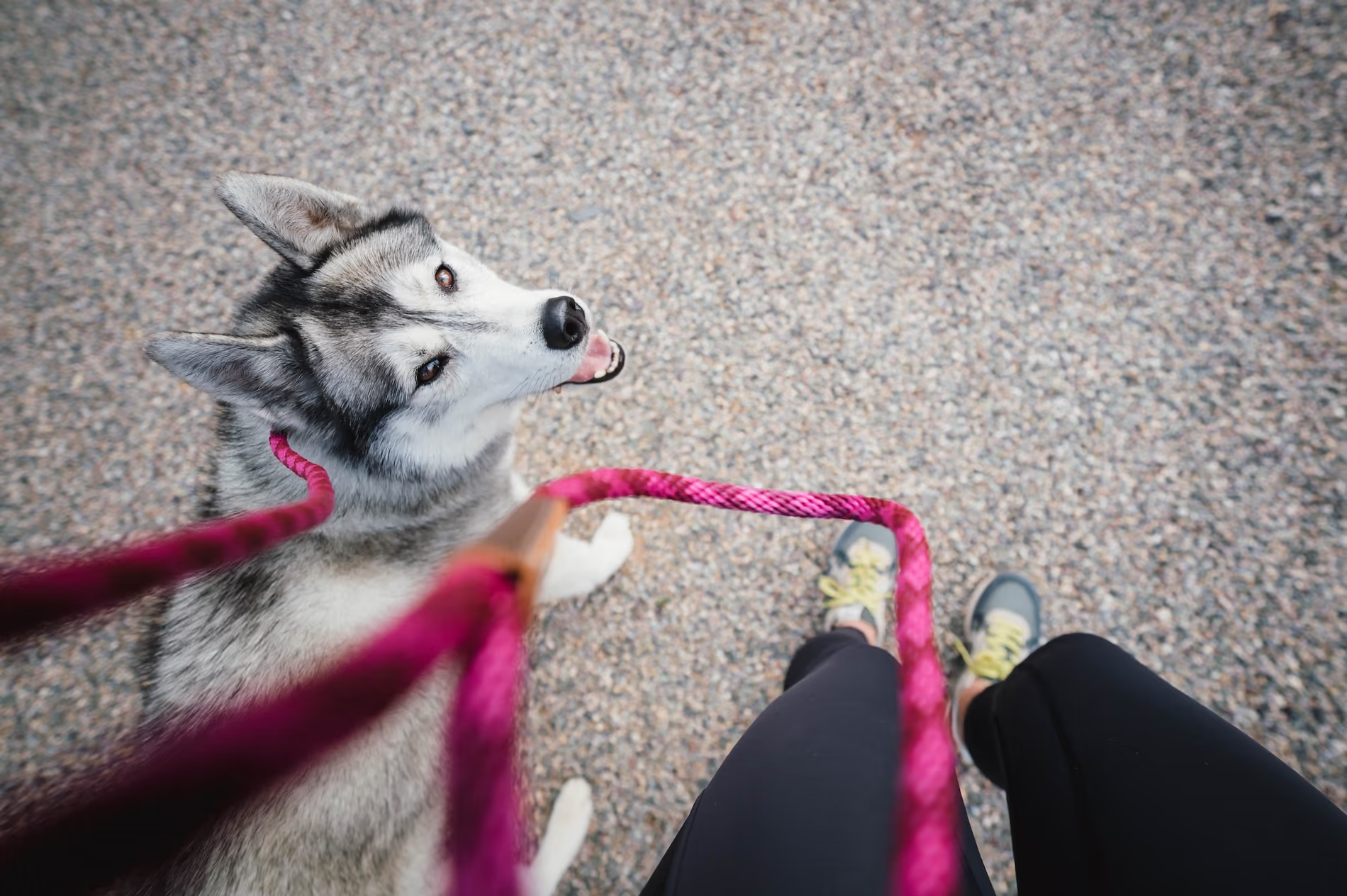
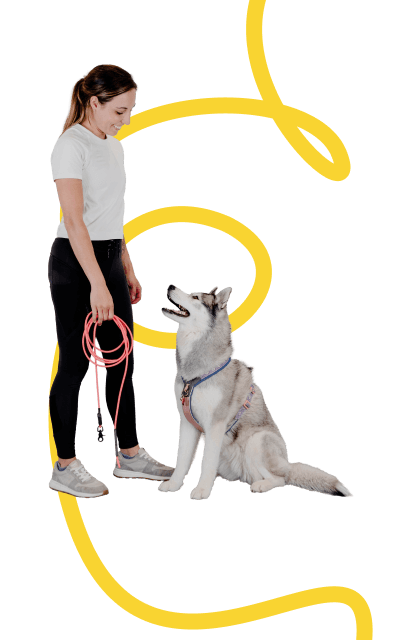
A "Loose Heel" means your dog walks near your side without pulling, checking in with you instead of dragging toward every squirrel in a three-block radius. It's a deliberately relaxed standard, your dog's shoulder doesn't need to be glued to your left leg the way a formal, competition-style version demands. As long as they stay roughly to one side, don't pull, and come back into position easily when asked, that counts. It transforms an outing from a tug-of-war into something both of you actually enjoy.
How to Teach Loose Heel
This one starts the same way every command on this list does, with a dog who already understands "Yes" from the free Basic Dog Commands course and knows a reward is coming.
- Start in a low-distraction space. Hold a treat at your side, level with your dog's nose.
- Take a few steps forward. If they stay roughly beside you without pulling, mark it with "Yes!" and reward.
- If they surge ahead, stop walking. Don't yank the leash, just become a statue until the leash goes slack, then continue.
- Gradually increase the number of steps between rewards as they get consistent.
- Practice direction changes so they learn to check in with you, not just walk in a straight line.
For a full structured program built entirely around this skill, our Loose Leash Walking course takes it further with real-world distractions and troubleshooting.
The Bigger Picture
Leash pulling is one of the top complaints among dog owners, and strict, formal positioning is more precision than most people actually need day to day. This approach gets you the real benefit, a relaxed, pull-free experience, without the rigid positioning most owners never bother maintaining long-term. This is exactly the skill our Loose Leash Walking course is built around.
Best For
- Dogs that pull excessively on the leash
- Owners who want a relaxed, pull-free experience without formal obedience-level precision
- Urban environments with heavy foot traffic
Key Strengths
- Eliminates dangerous leash pulling without demanding rigid positioning
- Creates an enjoyable outdoor experience, more exploration, less frustration
- Easier to maintain long-term than the formal version, since it fits how people actually live day to day
- Keeps the dog's attention on you in distracting environments
Possible Limitations
- Dogs bred to pull (sled breeds, working breeds) have a stronger natural instinct to overcome, this takes more time, not a different method
- Owner consistency matters enormously; if you sometimes allow pulling, they quickly figure out that persistence pays off
- If your dog tends to slightly pull toward interesting smells, redirect with a treat rather than tightening the leash
FREE LEASH PULLING STARTER GUIDE
Still Fighting the Leash?
Get our free leash pulling starter guide, matched to your dog's personality type, with simple exercises you can start on your next walk.
6. "Leave It"
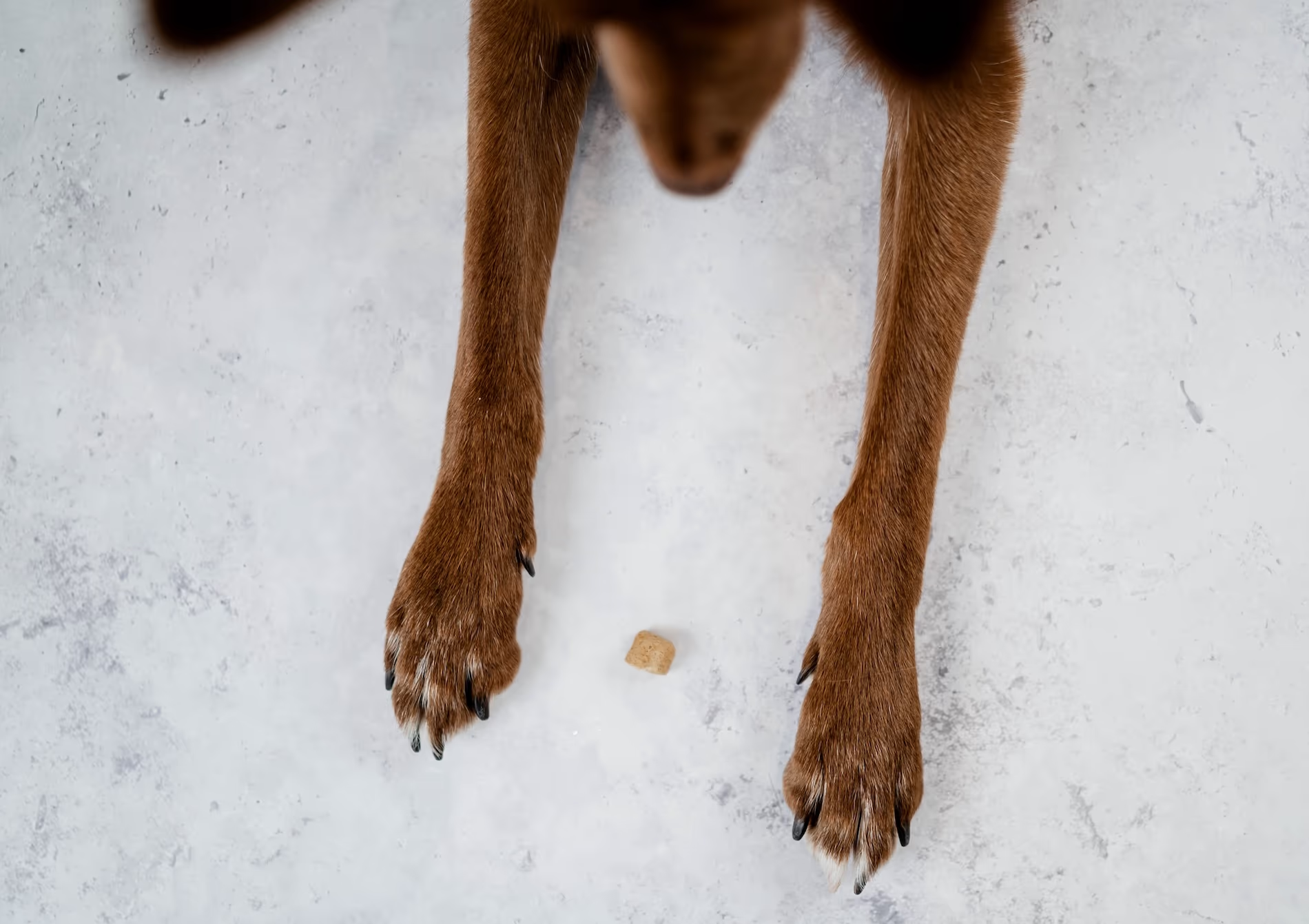
Leave it instructs dogs to ignore distractions or potentially harmful items. It's the difference between your dog eating a chicken bone on the sidewalk and walking past it. Even a well-behaved pup can't resist a dropped chicken nugget on instinct alone, that's exactly what leave it is for.
How to Teach Leave It
This command depends heavily on "Yes" and "Get it" from the Basic Dog Commands course. Your dog needs to trust that ignoring something now means a better reward is coming.
- Show your dog a low-value treat in a closed fist. Let them sniff and lick, but don't open your hand.
- The moment they stop trying and pull away, mark it with "Yes!" and reward from your other hand, never the fist.
- Once they reliably back off, add the word "leave it" right before you present your fist.
- Progress to placing the item on the floor, covering it with your foot if needed, and rewarding disengagement.
- Practice with higher-value items only once the low-value version is solid.
Tip: an open, flat palm facing them works well as the hand signal here. Just like the verbal cue, teach the signal first, then add "leave it" on top.
Why This Command Matters
This is a critical safety command. The leave it command teaches dogs to ignore distractions, whether that's something they shouldn't eat, an odd find on a walk, a child's toy, or anything that could present a choking hazard. The drop it command also helps ensure dogs release harmful items they've already picked up, making it a natural companion to leave it training.
Additionally, related verbal cues like the quiet command help stop barking before it escalates, and the back up command is useful for navigating tight spaces safely, both worth adding once your dog learns the core seven.
Best For
- Dogs that scavenge outdoors or eat inappropriate items
- Households with small children who drop food frequently
- Protecting dogs from foods, medications, and objects they shouldn't get into
Key Strengths
- Helps prevent them from eating something they shouldn't, genuinely useful when it matters most
- Protects valuable items from destruction
- Improves focus and impulse control outdoors
- Can be applied to ignoring other dogs, people, wildlife, or any distraction
- Keeps curious paws and noses away from anything that could hurt them, give them a treat the instant they turn away from a scavenged item, before they even question their choice
Possible Limitations
- Requires strong impulse control that takes time to develop, start with low-value items and gradually increase difficulty
- Particularly food-motivated dogs may need more reinforcement repetitions; if your dog likes high-value treats, use two treats, one as the "leave it" item and one as the reward for compliance
7. "Off"
The off command prevents dogs from getting up on furniture, people, and surfaces where they don't belong. When a dog jumps on a guest, an elderly family member, or a child, the consequences range from embarrassing to genuinely dangerous.
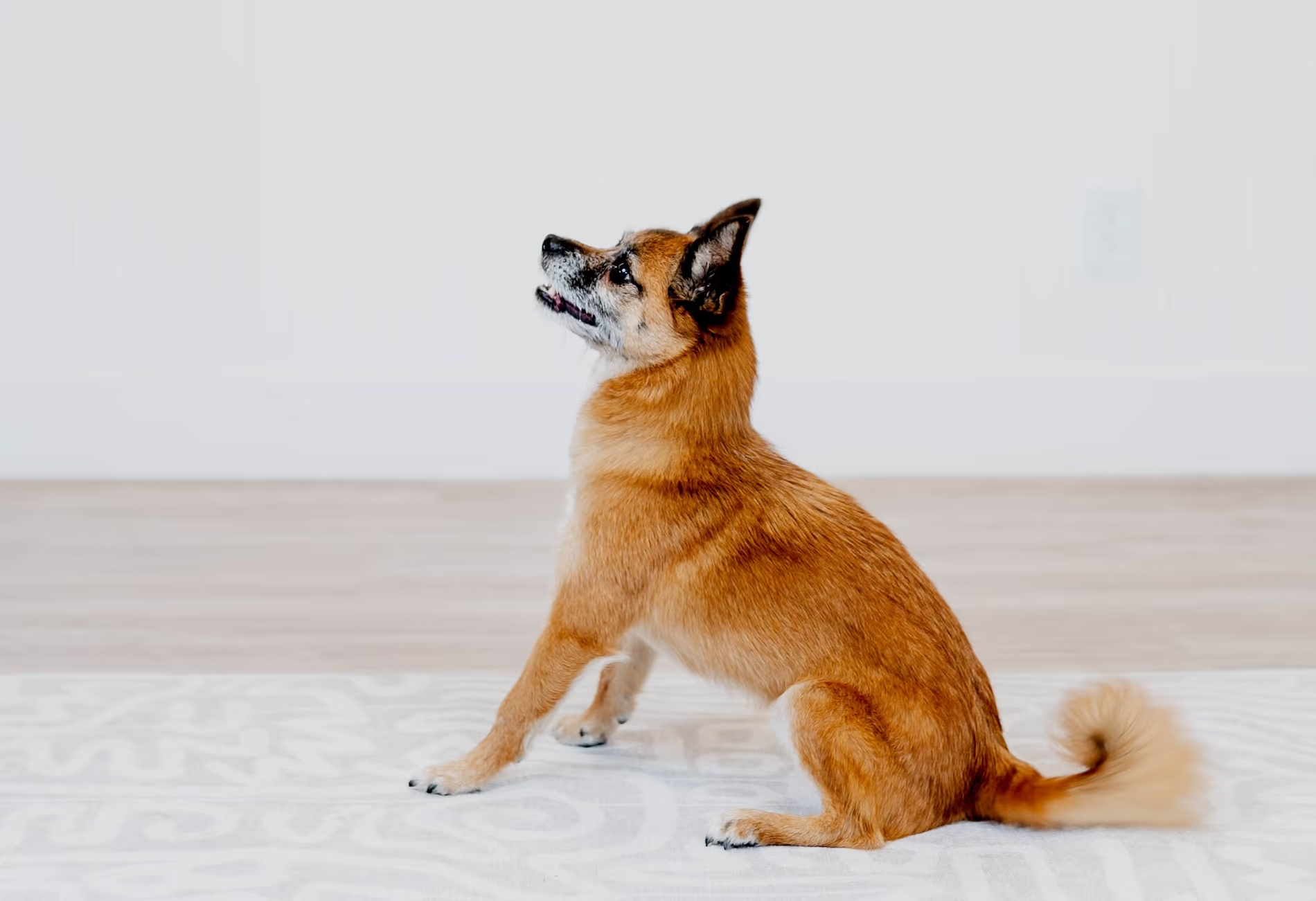
How to Teach Off
Off works best when your dog already understands "Yes" and "Good..." from the free Basic Dog Commands course. It gives them a clear alternative behavior to be rewarded for, instead of just being told what not to do.
- The moment your dog jumps up, turn away and ignore them completely, no eye contact, no talking, no pushing them off.
- The instant all four paws are on the ground, mark it with "Yes!" and reward.
- Ask for a sit as an incompatible behavior, one that's sitting can't do both at once.
- Reward calm greetings consistently, every single time, from every family member. Teaching them to wait a beat before approaching helps too.
- Never reward the behavior with attention, even negative attention like pushing away, to them, that's still contact.
Tip: teach a hand signal (a flat palm, low, facing them) for off before adding the verbal cue. It reads clearly even when someone's excitedly greeting them and not paying close attention to what you're saying.
The Bigger Picture
Jumping is one of the most common complaints from non-dog-owners visiting a home. A dog that respects boundaries, furniture, counters, people's personal space, is welcome in more places and situations. It's worth the extra effort to teach your dog this one early.
Best For
- Dogs that climb on furniture or greet people inappropriately
- Households with furniture restrictions or cleanliness standards
- Preventing injuries to elderly people or children
Key Strengths
- Establishes clear household boundaries
- Prevents damage to furniture and belongings
- Improves safety by stopping an overexcited dog from knocking someone over
- Creates respectful behavior around guests and family members
- Redirects excitement toward one toy they're allowed to grab instead of climbing on people
Possible Limitations
- Requires absolute consistency from all family members, if one person allows it, the dog gets mixed signals and the command deteriorates
- Dogs that are overly excited during greetings may need a redirect to an incompatible behavior (like sit) rather than just being told what not to do
Quick Comparison of Essential Dog Commands
- Sit. Best for foundational training, creating calm behavior. Difficulty: Easy. Safety impact: Moderate.
- Stay. Best for safety and boundary control. Difficulty: Moderate. Safety impact: High.
- Come. Best for emergency recall, off-leash safety. Difficulty: Hard. Safety impact: Critical.
- Place. Best for a designated settle spot, managing chaos at home. Difficulty: Moderate. Safety impact: Moderate.
- Loose Heel. Best for relaxed, pull-free walking, urban environments. Difficulty: Moderate. Safety impact: High.
- Leave It. Best for safety from toxic items, impulse control. Difficulty: Moderate. Safety impact: Critical.
- Off. Best for household boundaries, preventing jumping. Difficulty: Easy to Moderate. Safety impact: Moderate.
How to Choose Which Commands to Teach First
Start with Safety-Critical Commands
Prioritize sit, stay, and come. These three basic commands cover the most urgent safety scenarios, controlling them at thresholds, preventing bolting, and recalling from danger. If you can only teach your dog three things, make it these. A reliable dog sit and stay combination alone prevents most doorway and greeting disasters.
Consider Your Dog's Specific Behavioral Needs
Whatever you pick first, commit to it for at least a week before switching, that's often all it takes to teach your dog something new. Not every dog needs the same cue first. One that pulls on the leash like it's training for a sled race needs this skill early. One that scavenges every walk needs leave it. If your dog backs away from furniture rules or constantly dog jumps on guests, off becomes the priority. Let your dog's actual behavior problems guide your training order.
Most trainers actually teach hand signals first, not words, dogs are naturally tuned into body language, so a hand signal is usually easier for them to pick up than speech. Once your dog responds reliably to the hand signal, you layer the word on top and gradually fade the hand signal out. Consistency matters either way: use the same cue and the same hand signal every time.
Build on Training Success and Momentum
Start with easier, fun commands to teach your dog confidence. When a dog picks up sit quickly, both pet and owner gain momentum. That success makes harder commands like recall and loose-leash walking feel achievable. Training sessions should last 10 to 15 minutes, short enough to keep the dog's attention sharp, long enough to make real progress.
Teaching Commands with Hand Signals
Every command on this list can be taught with a hand signal, and for most dogs, the hand signal should actually come first, not as a backup plan. Dogs are naturally tuned into body language long before they understand speech, so a clear hand motion paired with a treat is usually the fastest way to teach anything new, faster than starting with a verbal cue alone.
Here's the order that actually works: train the behavior using a hand signal and a treat until your dog responds to the gesture alone. Then start adding the word right before the hand signal, so your dog links the two together. Once that connection is solid, flip the order, say the word first, pause a beat, and only give the hand signal if your dog doesn't respond. Over time, your dog needs the hand signal less and less, until the cue alone is enough.
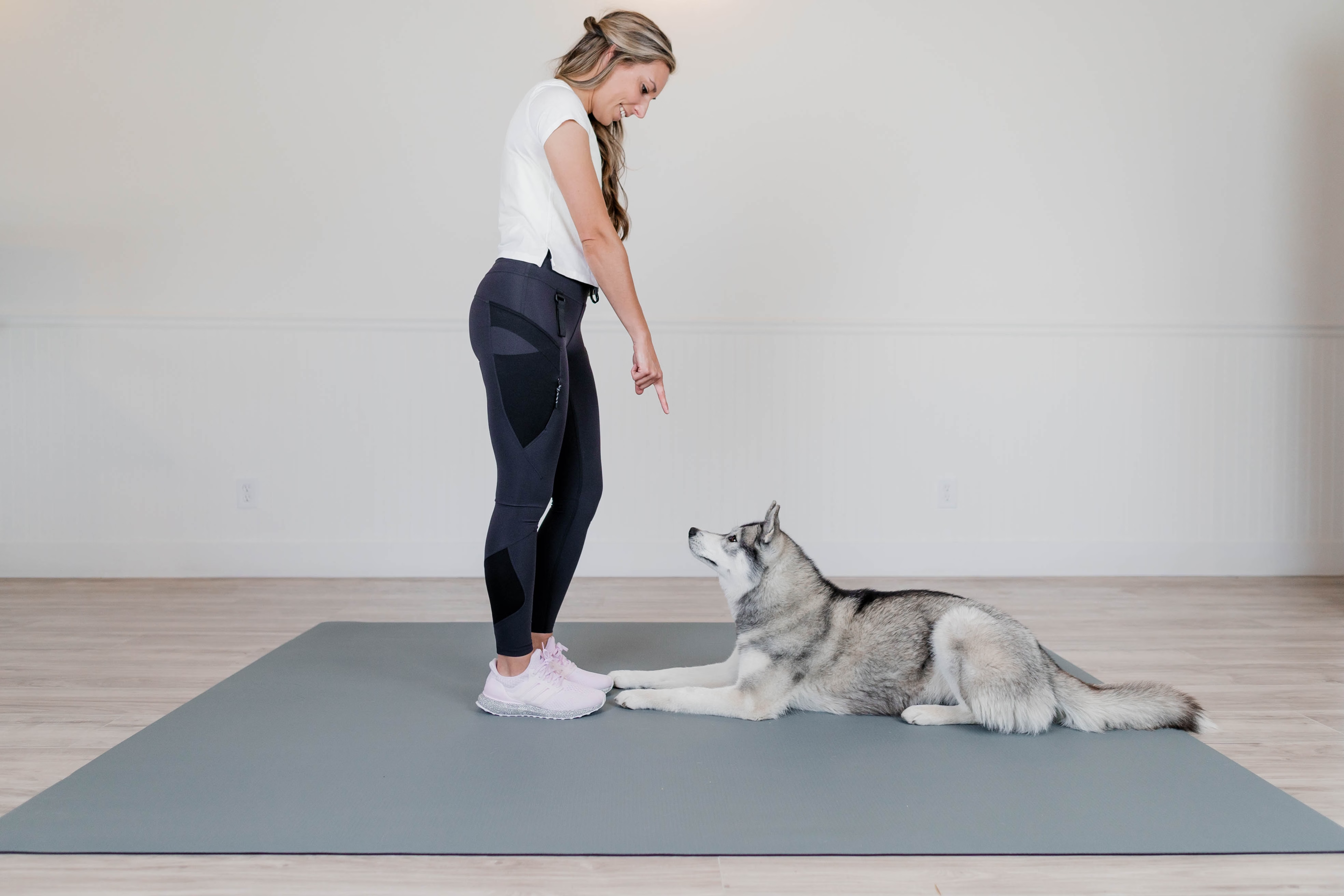
Hand signals stay useful even after your dog knows the verbal cue: across a distance outdoors, in a noisy environment where your voice gets lost, or for an older dog losing their hearing, a hand signal often gets through when speech won't. A raised palm for stay, a pointed finger toward their bed for place, a sweeping arm for come, these help your dog understand what you're asking, even when they can't hear you.
You can extend hand signals to leave it and off, too, a flat, open palm facing your dog works well for both, since it visually mirrors what you want: stop and don't touch. Hand signals aren't just a bonus party trick; for a dog that startles at loud noises or freezes around unfamiliar people, a calm hand signal is often more effective than raising your voice. Every dog can learn hand signals, regardless of age or breed, and since it's usually easier for them than speech, it's worth taking the time to teach your dog early rather than saving it for later.
Which Commands Are Most Important for Your Dog?
Not sure which of these dog commands to start with? Here's a simple way to decide:
- Choose sit and stay if you need foundational obedience and safety control, these are the commands to teach first.
- Choose come if your dog will spend time off-leash or in open areas where quick recall matters most.
- Choose loose heel if leash pulling is your primary daily challenge, this is exactly what our Loose Leash Walking course is built to fix.
- Choose leave it if your dog scavenges, mouths objects, or you have a treat inside reach of curious paws.
- Choose off if boundary issues and jumping are the behaviors disrupting home life.
A new puppy benefits most from sit and come taught simultaneously. An adult dog with established bad habits might need heel or leave it first. Let the dog's behavior, not a rigid curriculum, guide your priorities. The desired behavior you're working toward should dictate which command gets attention on any given day.
Final Thoughts
All seven of these dog commands work together as a system. Sit enables stay. Stay supports come. Place gives stay a physical destination, turning "hold still" into "go settle right there." Loose-leash skills make every outing safer. Leave it and off protect them from harm and your household from chaos. No single command does everything, but together, they cover the scenarios that matter most. These basic commands work together as a system, and mastering all seven of these dog commands gives them a genuinely useful vocabulary for everyday life and a real head start in dog training, well beyond party tricks.
Positive reinforcement is key in dog training to encourage desired behavior and build new behavior that actually sticks. The research consistently shows that reward-based training produces fewer behavioral problems, lower stress, and more positive behavior than aversive alternatives. Give them a treat when they get it right. Mark the moment. Be patient with the training process, because every dog progresses at a different pace.
Whether you're working with a puppy that hasn't learned a single cue or an older dog that needs a reset, the path forward is the same: pick the most important command for your situation, begin training with short sessions and clear verbal cues and visual cues, practice with real-world distractions, teach them to wait patiently in new situations, and build from there. Professional help can help your dog (and you) get past a wall faster than muddling through alone, there's no shame in bringing in someone who understands body language and learning theory better than you do.
Your dog doesn't need to play dead or stand on its hind legs or learn every cute trick on the internet to live a good life. It needs to sit when asked, come when called, and understand the boundaries that keep it safe. Start there. Everything else, the fun, the freedom, the trust, follows.