Recall Training
Recall Reliability: Why Your Dog Listens At Home, But "Forgets" Outside
By Natasha Johnson, Founder & Head Trainer
Have you ever noticed that your dog comes running the moment you call them inside the house, but outside it feels like they suddenly forgot everything they know? You're not imagining it, and your dog isn't being stubborn, disobedient, or dumb. What you're running into is the single most common recall problem there is, and it has a clear explanation once you understand how dogs actually learn. This guide walks through dog recall training from the ground up. Why recall falls apart outside, how to build the recall reflex that makes coming back automatic, which tools and recall games actually work, and how to get all the way to genuine off leash reliability with your dog.
What You'll Learn
- Why recall that works indoors falls apart the second you step outside
- Why trying to be the most exciting thing rarely wins with high-drive dogs
- What a recall reflex is, and why it beats relying on high value rewards alone
- How to use a long line to guarantee follow-through and build the reflex
- The recall games, and the common mistakes, that make or break your dog's recall
Why Your Dog's Recall Falls Apart Outside
The recall your dog nails at home is a different skill from the recall you're asking for outside. From your dog's perspective these are almost two separate situations, and that gap is where the whole problem starts.
GET THE FREE PLAN
Do You Know Why Your Dog Really Ignores You? Take our free quiz.
Learn about the 5 Recall Personality Types and get a FREE customized recall starter plan today.
From Your Dog's Perspective
Inside, your house is familiar and quiet. Your dog knows the space, knows the smells, and has nothing competing for their attention. When you call your dog inside, you're the most interesting thing going on. Recall is easy in there, and it has very little to do with training; there's simply nothing better on offer.
Step outside and the whole world cracks open. Other dogs to sniff, squirrels and movement to chase, smells stacked three deep on every fence post, and up in the mountains where I live, I frequently have to contend with wildlife like deer & elk. Every one of those things carries a higher reward value to your dog, than most of what we're waving around to get them back to us. When your dog blows off the recall outside, they aren't giving you attitude, they're doing simple math on what the environment is paying versus what you're paying.
Once you understand this, the fix starts to make sense, and it has less to do with being the most exciting thing out there than you'd think.
The Distraction Hierarchy Your Dog Has Already Built
Every dog builds a distraction hierarchy through experience. At the very top sit the big-ticket rewards, usually other dogs, wildlife, or a smell wired straight into instinct. Further down sit the ordinary distractions: a person walking by, a familiar smell, or background movement. You and your recall cue have to sit higher on that list than the competition, and that ranking is earned.
Dogs decide what's worth their attention based on what actually gets reinforced. If calling your dog has sometimes paid off big and other times actually resulted in negative consequences (like getting leashed up or leaving the park), then your recall cue is running on a shaky reinforcement history. The work is rebuilding that history with consistent, high value rewards every single time you call.
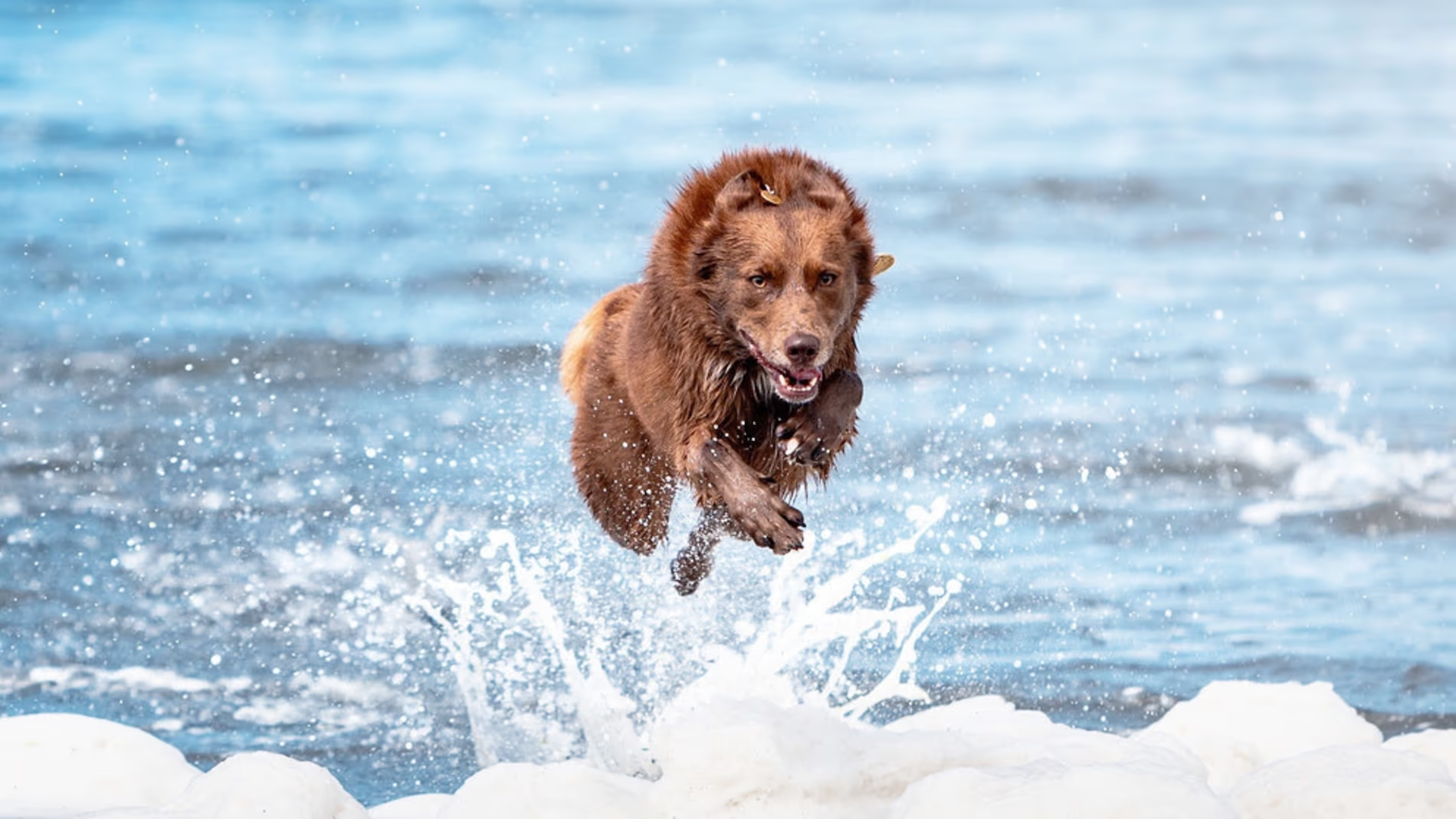
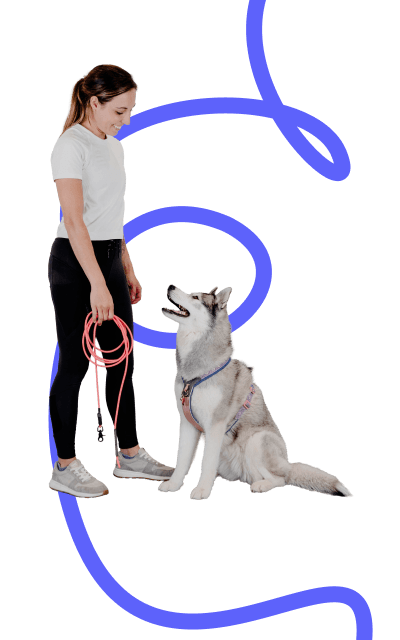
The catch is, you won't always win that ranking. With an easygoing, handler-focused dog you might genuinely stay near the top most of the time, and a value-based recall holds up fine. But with a high prey drive or independent dog, a husky like my Boots for example, there's no piece of chicken on earth that beats a fresh scent on the wind on the right day. If your whole recall depends on out-valuing everything else in the environment, you've built it on ground that shifts the moment the environment does.
So we stop trying to win that contest in the moment, because for a lot of dogs it just isn't winnable. We put our focus somewhere the competition can't reach instead, and that's the recall reflex.
What Is a Recall Reflex?
A recall reflex is exactly what it sounds like. Your dog hears one specific word and turns to come back before they've even thought about it. No weighing their options, no cost-benefit math against the squirrel, no window where they get to decide. They hear the word, they turn, they come. It fires underneath the value calculation rather than on top of it, and that is the entire point. You don't have to be worth more than the deer if your dog is already moving toward you before they've registered the deer at all.
High value rewards still matter here, and they matter a lot, but they're doing a different job than most people assume. The reward isn't there to win a bidding war against the environment in the moment. It's there to reinforce the reflex, so that automatic turn toward you keeps getting stronger every time it happens.
The reflex itself gets built through follow-through. In the early stages, your dog stays on a leash, a long line, or even a retractable leash, so that ignoring the recall is simply never on the menu. Every single time you say the word, you help your dog follow all the way through and come back, then you pay them well for it. Hear the cue, turn, come, get rewarded. Over and over and over.
Do that enough times and something clicks. The behavior stops being a decision and turns into a habit loop, wired the same way your dog already comes running when the treat bag crinkles. That automatic turn toward you, no thinking required, is the recall reflex. Some easygoing dogs can get a decent recall on value alone. For everyone else, and for real-world reliability with any dog, the reflex is what holds when it counts. It's the backbone of how we teach recall in both our Basic Voice-Only Recall Course and our Advanced E-Collar Recall Course.
Dog Recall Training: Building the Foundation
Building a great recall takes real time. Most trainers put genuine reliability in distracting situations somewhere around 6 to 12 months. That number isn't meant to scare you off, it's just honest. The dogs walking around with an excellent recall didn't get there in a few weeks of here-and-there practice. They got there through dog recall training with a clear structure, a very high rate of reinforcement, and a reflex drilled in until it became automatic.
GET THE FREE PLAN
Want a Free Recall Plan Built for Your Dog?
Get our free Recall Starter Plan, customized to your dog.
Choose Your Recall Cue And Protect It
Your recall cue, the specific word or sound you use every time you want your dog to come, needs to be chosen on purpose and then guarded. Most people land on "come." Plenty of trainers prefer a whistle, since a whistle carries further than your voice and sounds identical every time, no matter how frustrated you happen to be. A cue that always sounds the same is easier to wire into a reflex, which is a big part of why the whistle works so well.
Whatever you pick, the rule stays the same. Never use your recall cue unless you're ready to back it up and reward it right away. Calling your dog when they're too distracted to answer, then saying it again when they ignore you, quietly teaches them that the word is optional. A poisoned cue, meaning one your dog has learned to tune out, is one of the hardest things in all of dog training to repair, because now you're fighting a reflex you accidentally built in the wrong direction.
Protect your chosen recall cue like it's valuable, because it is.
Start Early, Start Simple
The best time to start recall training is the day your dog walks into your life. Puppy recall is far easier to build than repairing a broken recall in an adult dog, though it is genuinely never too late to start. An adult dog can absolutely learn a solid recall. It just asks for more time and more careful management of the environment while the behavior comes together.
Start training recall somewhere boring: different rooms in the house, a quiet garden, a fenced yard, well before anywhere public. Every rep in a low-distraction spot is a clean rep where your dog hears the cue and follows through, and clean reps are what build the reflex. Recall training that starts in the middle of distraction fails before it gets going, because every failed recall is a rep of ignoring you, and that builds a habit too, just the wrong one.
What Counts as a High Value Reward for Recall Training?
High value treats for recall training are the ones your dog would sell their soul for. Not everyday kibble, not a dry biscuit. Real food rewards: cooked chicken, cheese, hot dog, liver. Find the thing that makes your dog's eyes go wide.
High value also means different things to different dogs. For some, a ball or a tug toy beats any treat you could offer. If your dog lives for play over food, use that. Keep in mind what the reward is actually for, though. You're not trying to bribe your dog into choosing you over the whole environment every time. You're paying them for the turn toward you so the reflex keeps getting stronger.
Keep those high value rewards reserved for recall training and don't hand them out for free. Scarcity is what keeps them powerful. If your dog gets chicken in their bowl every night, chicken stops being special. Keep the yummy treats rare enough that they still land like a jackpot.
How to Teach Your Dog Recall Step by Step
Good recall gets built in stages, and each stage should feel solid before you move up. Dogs learn at their own pace, but the path never changes: low distraction to high, short distance to long, careful leash management to real off leash freedom. Every stage is the same job in a harder setting, protecting the follow-through so the reflex keeps building.
GET THE FREE PLAN
Skimming More Blog Posts Won't Fix Your Dog's Recall.
Get a free, step-by-step plan built for your dog's exact problem, and start this week.
Step 1: Building the Response Indoors
Start in the house, moving between different rooms. Say your verbal cue once, just once, in a bright cheerful voice. The instant your dog makes eye contact and starts toward you, back up to pull the movement along. When they reach you, reward immediately with a high value treat and some real enthusiasm. Take your dog's collar gently as they arrive too, so they don't learn to dance just out of reach right before the treat.
Practice calling your dog from all over the house in short training sessions, five to ten minutes at a stretch. At this stage you're stacking clean reps: the word, then the turn, then the reward, every single time. Dogs learn fast when the reward rate is high and steady, and this is where the reflex first starts to form.
Step 2: Practice Recalls in a Fenced Yard
Once the response indoors is strong, take it to a fenced yard. Same deal: one cue in that cheerful voice, immediate reward on arrival. Run several practice recalls per session, keeping each one short and worth their while.
This is also where recall games start earning their keep. Practice recalls should feel like a game, because a dog who's having a blast coming back will want to do it again and again, and that enthusiasm is the reflex getting stronger. Let recall turn into "the fun just ended," though, and you build a negative association that works against you every single time you call.
Step 3: Adding the Long Line
Before you go anywhere near genuine off leash work, bring in a long line. A 15 to 30 foot long line lets your dog roam and feel real distance while you keep the power to guarantee follow-through. If your dog ignores the recall cue, the long leash keeps them from running off, which protects the cue by never letting them rehearse ignoring it. This is the recall reflex being built rep by rep. Every time your dog hears the cue and follows through on the line, the habit gets a little more automatic, and every escape you prevent is a rep of ignoring you that never gets to happen.
Think of the long line as a safety net. Call your dog on leash, and if they don't answer, use the line to gently guide them your way, then reward the second they arrive. A dog on leash learns recall the same way an off leash dog does, through guaranteed follow-through, high value rewards, and a high rate of reinforcement.
Use the long line in open spaces, parks, and new places before you think about taking it off. Most dogs need several weeks of reliable recall on the long line before they're anywhere near ready for real off leash work.
Step 4: Proofing in Distracting Situations
Proofing means slowly cranking up the difficulty of the environment until the reflex holds under real conditions. Start with something mild, like a familiar park at a quiet hour, then build from there: other dogs at a distance, children playing, food on the ground.
Every new environment resets the difficulty. A dog with an excellent recall in your backyard might only have a basic recall at a brand new park, and that's completely normal. Dogs learn in context. Plan to drop your reward value and your distance back down when you change settings, then climb again from there, always on the line so ignoring stays off the table.
Distracting situations are exactly where reliable recall gets earned. Don't dodge them. Work through them on purpose, with the long line as your safety net, until the reflex is strong enough to hold on its own.
Recall Games That Actually Work
Making recall training feel like play is one of the most effective moves you've got. Dogs who believe recall is a fun game come back faster, happier, and more reliably, and every enthusiastic sprint back is another rep drilling the reflex deeper.
Round Robin Recall: Family Members Take Turns Calling
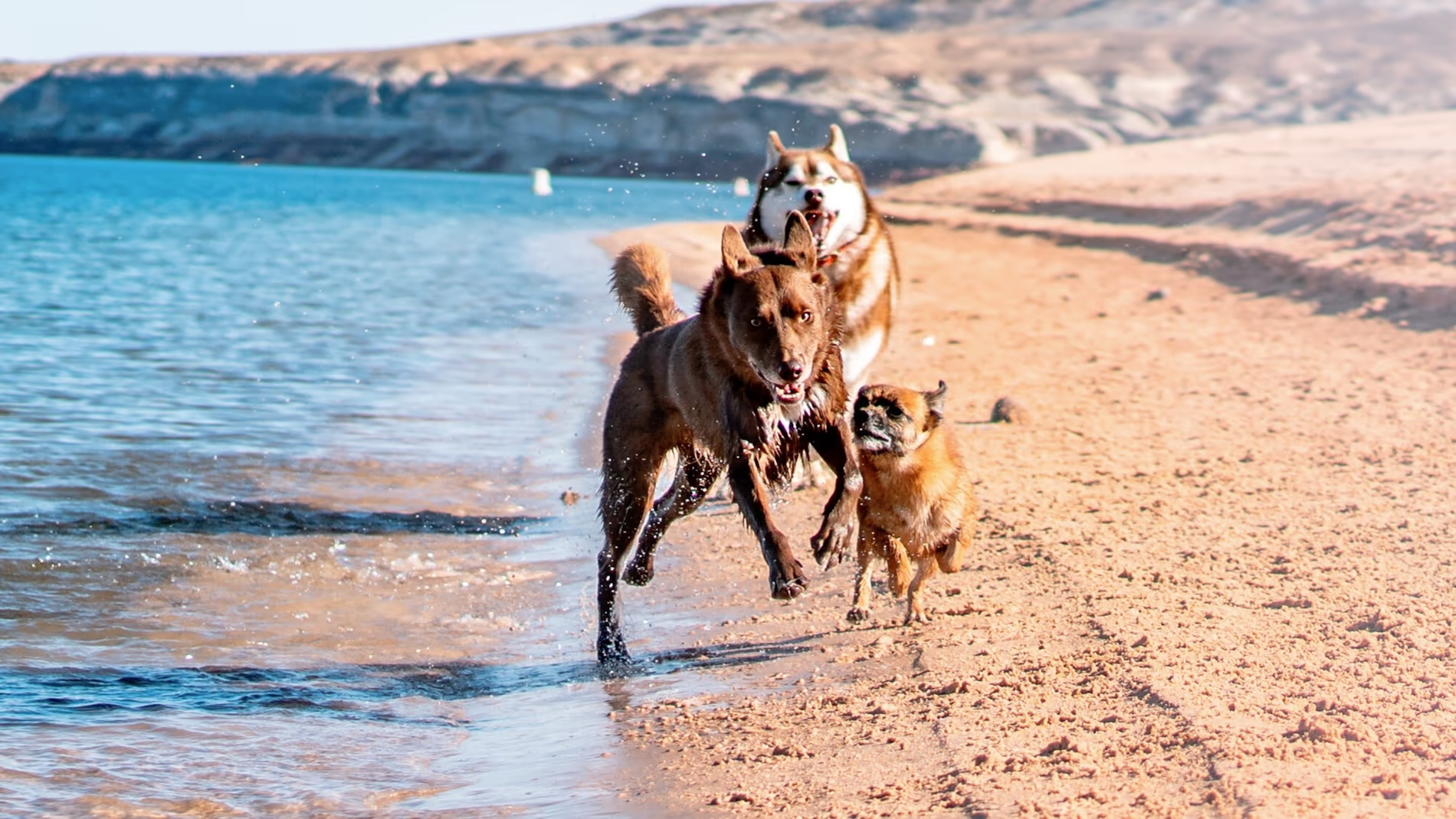
Round robin recall is one of the best recall games for a house full of people. Family members spread out across different rooms or around the yard and take turns calling the dog. Everybody's holding high value treats. The dog arrives, gets a big reward and a pile of praise, then the next person calls.
The game teaches your dog that a recall cue from anyone in the family is worth answering, and that sprinting back always pays. The faster they run, the more exciting it gets. Swap in a favorite toy instead of treats now and then to keep longer play sessions feeling fresh.
Hide and Seek
Put your dog in a sit stay, or have another person hold them, and go hide. Then call. Your dog has to use eye contact, read your body language on the way, and lean on their nose to track you down, and the payoff when they find you is explosive. This one builds focus, attention on you inside a busy environment, and a strong positive association with the recall cue all at the same time.
It's also a quick game you can pull out anywhere in everyday life, no setup required. Duck behind a tree mid-walk, call your dog, and turn coming back into an exciting thing instead of a buzzkill.
Chase Recalls
Run in the opposite direction from your dog while you call them. Dogs are built to chase movement, so when you take off, their instinct is to come after you. Lean into it. Be the most exciting thing in the field by moving, making noise, and staying a little unpredictable. The moment your dog commits to chasing you down, recall has become something they're doing because they want to.
The Long Line: Your Most Important Tool
The long line earns its own section because most people underuse it, and it's genuinely the single most important piece of recall training equipment you own. It's the tool that makes the reflex possible, because it's the only thing that lets you guarantee follow-through at a distance before the behavior is automatic.
It lets you practice recall in real environments, at real distances, before your dog's recall is ready for off leash work. It shuts down self-rewarding escape behavior, which is one of the biggest setbacks in all of recall training. And it hands you the confidence to let your dog explore and sniff and actually engage with the world, because you know you can guarantee the follow-through if you need to.
How Long of a Leash for Recall Training?
For recall training in open spaces, a 30 foot long line is the sweet spot. It gives your dog enough room that the recall feels real and challenging, without so much slack that you can't manage it. In a smaller fenced area, or when you're working near other dogs, a 15 foot line gives you tighter control. Always clip the line to a well-fitted harness instead of your dog's collar. If a dog hits the end of a long line at a full sprint, that sudden stop is hard on the neck.
The Mistakes That Poison Your Recall Cue
Recall training mistakes are easy to make and slow to undo. Every one of these works by breaking the reflex, teaching your dog that the cue and the follow-through don't actually go together.
VIRTUAL DOG TRAINING
Need Personalized Help?
Still struggling to train the perfect recall? Receive personalized help from our trainers. Book a free consultation call today.
Calling Your Dog to End the Fun
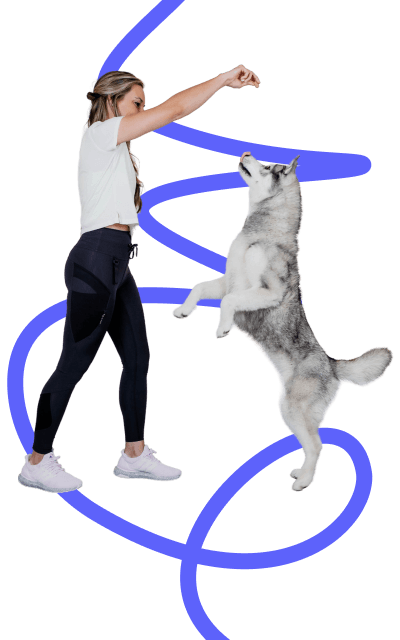
If your recall cue reliably announces that the fun is over, your dog learns to avoid it. This is one of the most common ways owners build a negative association with the recall cue without ever meaning to. The fix is simple: call your dog, give a high value reward, then send them right back to play. Trainers sometimes call this a recall sandwich. Recall, reward, release. Now the cue predicts a jackpot and then more freedom, so there's nothing about it to avoid. Practice calling your dog back during play often, not only when it's time to leave.
Repeating the Recall Cue
Say the recall cue once. If your dog doesn't respond, don't say it again, go get them with the long line instead. Every "come, come, come, COME" while your dog ignores you teaches them that the word is optional and that they've got a few seconds to think it over, which is the exact opposite of a reflex. Never repeat the cue. Call once, help them follow through, and immediately reward every successful return.
Not Immediately Rewarding Every Return
Every successful recall gets rewarded. Not most of the time. Not when you happen to have a treat. Every time. Patchy reinforcement is the fastest way to weaken a reflex that's still under construction. Keep high value treats on your body all through your training recall sessions so you can reward the instant your dog arrives and keep that habit loop firing.
Off Leash Work: When Is Your Dog Ready?
Off leash work belongs at the end of the process, not the start. Most dogs aren't ready for off leash recall until they've got months of consistent recall training behind them, dependable responses in genuinely distracting situations, and a reflex that fires reliably, something like a 99% response to the cue, before you take the safety net away.
ADVANCED E-COLLAR RECALL BUNDLE
Ready for Real Off-Leash Freedom?
For a distraction-proof recall command that holds up in the real-world. Our bundle guides you step-by-step.
Your dog's recall doesn't have to be flawless for them to enjoy off leash time, but it does have to be automatic enough that you'd bet on it in the messiest situation you're likely to meet. Other dogs walking up. Wildlife nearby, which where I live in the mountains is a real and regular thing. Kids sprinting past. That's the bar, and notice it's about the reflex holding, not about you happening to be more interesting than whatever just showed up. Put in your own training sessions under those conditions before you lean on recall when it truly counts.
Off Leash in Open Spaces vs a Fenced Yard
A fenced yard erases the consequence of failure. If your dog blows the recall, they still can't actually go anywhere. Off leash in open spaces carries real risk the second recall breaks down. Treat them as two different challenges. A dog who reliably recalls in a fenced yard has earned more long line work in open spaces, not a free pass to off leash freedom out there. Build the layers before you start pulling them away.
Frequently Asked Questions
Is It Ever Too Late to Teach a Dog Recall?
No. An adult dog can absolutely develop a solid recall, it just takes more time and more careful management of the environment while you build it. The trick with an older dog is starting fresh on a brand new recall cue with no failed history hanging off it, treating it exactly like puppy recall training, and drilling the follow-through patiently until the new reflex takes hold.
How Do You Fix a Dog That Ignores the Recall?
Start over with a new recall cue, ideally a whistle or a word you've never used before. The old cue is poisoned, and you won't rescue it. With the fresh cue, go back to basics. Only call your dog when you can guarantee the follow-through, keep them on a long line so ignoring is impossible, immediately reward every return with high value treats, and never repeat the cue. You're rebuilding the reflex from scratch, in low distraction environments, before you take it anywhere harder.
How Long Does It Take to Train Reliable Recall?
Plan on 6 to 12 months for genuine reliability in distracting situations. Basic recall in a low distraction environment can come together in a few weeks of consistent training sessions. Turning that into a reflex that holds across different environments, around other dogs, and against real competing motivations is what takes sustained work over many months. Start training recall early and treat it as an ongoing practice, not a one-time lesson.
What Is the 7 7 7 Rule for Dogs?
The 7 7 7 rule is a socialization guideline for puppies: 7 different surfaces, 7 different locations, and 7 different people, all before 7 weeks old. It's aimed at building confidence and resilience during the critical socialization window. It isn't a recall training rule specifically, but good early socialization builds the kind of settled, confident dog who can actually focus on training recall instead of drowning in the environment.
What Is the 3-3-3 Rule for Dog Training?
The 3-3-3 rule usually gets applied to rescue dogs: 3 days to decompress, 3 weeks to learn the household routine, and 3 months to feel truly at home. For recall training, it's a reminder that a newly adopted dog needs time to settle before you begin. Start recall training once your dog is comfortable in their environment, not in the first few days home.
What Breed of Dog Has the Best Recall?
Breeds developed to work closely with people, like Border Collies, Labradors, Golden Retrievers, and Spaniels, tend to come with a natural leaning toward good recall, because their working history depended on responding to human direction. These are also the dogs you can sometimes get away with training on value alone. Breeds with high prey drive or a strong independent streak, like Huskies, Beagles, Greyhounds, and the Nordic breeds, are a different story, because the competing motivations baked into their genetics are genuinely hard to outbid, and you won't outbid them every time. My own dog Boots is a husky, so trust me, I train recall on hard mode every single day, and the reflex is exactly why it works. A dog's recall comes down to training history far more than breed. A well-trained husky with a real recall reflex will outrun a poorly trained Labrador every time.
How Do You Teach a Stubborn Dog Recall?
A so-called stubborn dog almost always has a recall problem that boils down to two things: the recall cue carries a weak or negative history, and you've been relying on value to win a contest you keep losing. Fix the first by starting fresh with a new verbal cue. Fix the second by putting your dog on a long line and guaranteeing the follow-through every single time, so the turn toward you becomes a reflex instead of a choice they get to make. Short training sessions, extremely high value rewards, low distraction to begin with, and a little patience will get through to almost any dog.
Natasha Johnson
Founder & Head Trainer