-282.jpg&w=3840&q=75)
Methodology
Clicker Training for Dogs: A Complete Beginner's Guide
By Natasha Johnson, Founder & Head Trainer
Clicker training sounds almost too simple to be real. You press a little device, it makes a clicking sound, and your dog figures out what you want faster than you expected. That simplicity is exactly the point. This guide covers everything you need to start clicker training your dog: the science behind it, the exercises you can try tonight, and the mistakes that quietly trip people up. By the end, you'll also see why plenty of experienced trainers get the very same result with nothing but a well-chosen word.
What You'll Learn
- What clicker training is, and the short history and science behind why it works
- How to charge a clicker (or a marker word) so your dog understands it
- The gear you need, and how to sharpen your timing
- Capturing, shaping, and luring, plus three beginner exercises to try tonight
- How to use food rewards, fade the clicker, and fix the most common mistakes
What Is Clicker Training?
Clicker training is a positive reinforcement dog training method that uses a small handheld device to mark the exact moment your dog performs a desired behavior. The clicker makes a short, distinct sound, and that sound tells your dog, with a precision your voice can rarely match, "Yes, that is exactly what I wanted."
Every click is followed by a food reward, or something else your dog genuinely values. Over time your dog learns that the click predicts good things, so whatever behavior earned it starts showing up more often. That clean link between behavior and reward is what makes the message land in a way plain praise usually can't.
Free Foundations Course
Want to Start Today, No Clicker Required?
A clicker is just one kind of marker, and a word like "Yes!" works just as well. Our free Foundations Course teaches you that marker system, step by step.
Clicker training is science-based, grounded in operant and classical conditioning, but you don't need a psychology degree to use it. The formula really is that simple: your dog does something you like, you click, you treat. From there you can teach almost anything, from basic manners like sit and stay to complex tricks and dog sports, and it works the same for puppies, adult dogs, and seniors. The core principles don't change with age or breed. It's also why clicker training works just as well on cats, horses, and plenty of other animals. This isn't a dog-specific trick, it's basic learning theory.
How Clicker Training Changed Dog Training
For most of the last century, dog training meant compulsion. The methods came straight out of military and police programs, and they taught through correction: leash pops, choke chains, and physically pushing or placing the dog into position. William Koehler's 1962 training manual became the American standard for decades, and it ran almost entirely on pressure and correction. It worked, in the sense that dogs learned to avoid the unpleasant thing. But the dog was mostly working to escape pressure rather than to earn anything, and teaching a brand-new behavior from scratch was slow going.
Then the science caught up. Back in the 1930s and 40s, B.F. Skinner's work on operant conditioning showed that behavior is shaped by what follows it, and that a precisely timed reward could build behavior with far more accuracy than punishment ever could. The catch was timing: to reward the exact right moment, you needed a way to tell the animal "that, right there." The real proving ground turned out to be animals you can't correct at all... Marine mammal trainers had to teach entirely through positive reinforcement, using a whistle or a click as a marker that told the animal the precise instant it got something right.
Marine trainer Karen Pryor carried that approach back to dogs. Her 1984 book Don't Shoot the Dog! put the science into plain language for everyday owners, and through the 1990s she helped turn clicker training into a household name. For the first time, a pet owner could teach a dog the way a dolphin trainer teaches a dolphin: mark the behavior, reward it, repeat.
What clicker training really changed was the teaching itself. A clicker gives you a precise way to say "yes, that," at the exact moment a behavior happens, which makes teaching something new faster and clearer than words alone. It also opened doors that compulsion never could:
- Faster learning. Because the click marks the exact moment of correct behavior, your dog spends far less time guessing what earned the reward.
- Clearer communication. A clicker makes the same sound every time, while your voice shifts with your mood and your energy.
- Capturing and shaping. You can reward a behavior your dog offers on its own, or build a complex trick one small step at a time, instead of only correcting what you don't want.
- More confidence. Dogs learning this way offer up new behaviors more willingly, because trying pays off instead of risking a correction.
Picture teaching a sit. The old compulsion way: you pull up on the leash and push down on your dog's rear, and the dog folds to escape the pressure. The clicker way: you lure your dog's nose upward with a treat, click the instant the rear touches the ground, and hand over the reward. Your dog chooses to sit because sitting makes good things happen. Same position, completely different experience for the dog.
None of this means correction vanished from dog training. Plenty of trainers still layer in other tools to build reliability once a dog knows a behavior, especially for something like off-leash recall. But the teaching almost always starts here, with a marker and a reward, because it's still the clearest way to show a dog what a behavior even is.
How Does Clicker Training Work? (The Science Made Simple)
Clicker training work rests on two well-established learning principles, and neither one needs a textbook.
The first is classical conditioning. You pair the click, a neutral sound your dog doesn't care about, with a treat, a food reward your dog absolutely cares about. After enough repetitions the click itself starts to mean something. It becomes a conditioned reinforcer: your dog hears the click and expects the reward, and the sound alone now carries value.
The second is operant conditioning. Behaviors that lead to good things happen more often. When your dog lies down, hears a click, and gets a treat, lying down becomes a behavior worth repeating. You're shaping what your dog does by controlling what happens next.
Here's the loop in real life. You're teaching "Down." Your dog sinks into a lying position, and the instant the belly hits the floor, you click. Then you deliver a treat. After a handful of reps your dog starts offering the down more often, because that specific behavior is the one that produces the click and the reward. The whole formula is behavior, then a click, then a reward.
One thing worth being clear about: the click itself is not the reward. It's a marker, a signal that the reward is on its way. It tells your dog which behavior earned the good thing, even if the treat lands a second or two later. That bit of precision is what makes the whole system work.
The Marker: Clicker vs. Marker Word
The marker in clicker training is the audible signal that tells the dog "that's the exact behavior you are getting rewarded for." It can be a clicker device or a spoken marker word - both serve the same function.
A marker word is a short, consistent verbal cue like "Yes!" or "Good!" used at the exact moment of desirable behavior. Some owners prefer it because it's always available. You can't lose your voice in the couch cushions the way you can lose a clicker. It works when your hands are full, when you're in water, or when you've left your gear at home.
The trade-off: a clicker produces an identical sound every time. Your voice doesn't. Tone, pitch, and volume shift with your mood and energy. A tired "yes" at 9 PM sounds nothing like an enthusiastic "YES!" at 10 AM, and that inconsistency can slow learning.
Free Foundations Course
Want to Nail Your "Yes!" Marker, Free?
Picking a marker word is easy, the timing is the hard part. Our free Foundations Course builds your "Yes!" marker, step by step.
If you choose a marker word, pick something short - one or two syllables - with a happy, neutral tone. Avoid words you use constantly in conversation. "Yes!" works, only because when you use it for training, you say it in a very specific way that typically isn't used in regular conversation. Keep in mind, dog's understand sounds, not actual words.
The principles are the same regardless of which marker you use: mark the moment, then reward. The marker must happen at the instant the dog performs the right thing, and the treat follows shortly after. For everyday pet training, most professional trainers actually default to a marker word rather than a device - the split-second timing difference matters far more in competition-level work than it does for teaching a dog to sit, come, or settle at home. Whichever marker you choose, it only works if you use the exact same one every time, without exception - consistency is what turns a random sound into a marker your dog actually trusts.
Getting Started: Loading or Charging the Clicker
Before you train a single behavior, your dog has to learn what the click means. This step is called charging or loading the clicker, and it's pure classical conditioning. It works exactly the same if you're charging a spoken marker word instead. The mechanism doesn't care which sound you use, as long as it's the same one every time. Really, you're just teaching your dog one tiny piece of vocabulary: this marker means a food reward is coming. That's the whole foundation the rest of this guide is built on.
Here's how a first session looks:
- Sit with your dog in a quiet room with no distractions.
- Click the clicker once (or say your marker word, "Yes!"
- Immediately deliver a small treat within one to two seconds.
- Repeat 10–15 times. That's one session.
Use small, soft treats that the dog can eat quickly. You want a high rate of reinforcement, not a dog spending 30 seconds chewing between reps. Tiny pieces of cooked chicken, cheese, or soft commercial training treats work well. Small pieces keep the pace fast.
The sign that your dog gets it: they hear the click (or Marker Word) and whip their head toward you, looking for the treat. That anticipatory response means the association has formed. Most dogs pick this up in one or two short practice sessions - sometimes in a single sitting if the dog is super food-motivated.
Not charging the clicker properly can lead to confusion later. If the dog doesn't understand that click means reward, the click is just noise. Charge the clicker by clicking and treating 10–15 times before you ask for any behavior.
Essential Gear for Clicker Training
The setup is simple and inexpensive. You need three things to start; everything else is optional.
The clicker. A standard box clicker costs a few dollars and produces a loud, sharp click. If your dog is sensitive to noise, an adjustable-volume clicker lets you dial the sound down. For very sound-reactive dogs, a softer clicker or a marker word may be a better starting point. It's also the one piece of gear you can skip entirely if you'd rather train with a marker word instead, since your voice doesn't need batteries or a trip to the pet store.
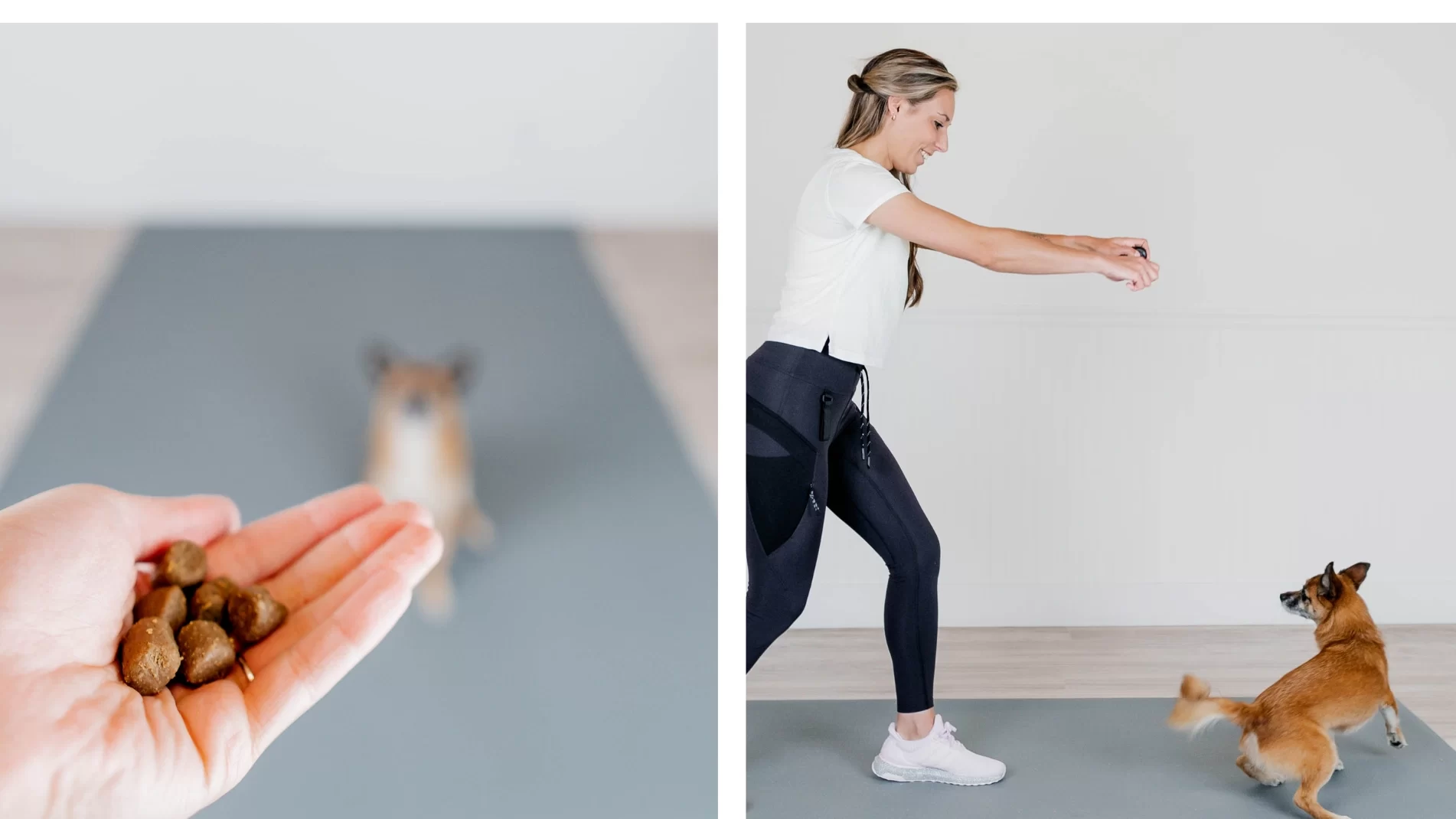
The treats. Food treats should be pea-sized or smaller, soft, and something the dog genuinely wants. Think small pieces of cooked chicken, string cheese torn into bits, or commercial training treats designed to be eaten in one second. Avoid anything hard or crumbly that takes time to chew - that slows down the session.
A treat pouch. Delivering the reward quickly matters. Fumbling through a bag or digging through pockets adds delay and breaks focus. A clip-on treat pouch keeps rewards accessible and your hands free.
Optional additions:
- A light line or leash for outdoor safety
- A mat or bed for teaching "place" or settle behaviors
- A target stick for more advanced shaping work later
Timing: Marking the Right Moment
Timing is what separates real clicker training from clicking randomly and hoping. The click has to land during the behavior, at the exact moment your dog does the right thing, not after it's over or once your dog has already moved on to something else.
Think of your click, or your marker word, as the shutter button on a camera. You're not moving your dog or asking them for anything, you're snapping a photo of the exact instant they do the right thing. Press it a beat too early or too late and you capture the wrong picture. Get it right and your dog knows precisely which moment earned the reward.
That precise timing is the clicker's whole advantage. The clicker marks the exact moment of correct behavior, which is why it beats a delayed "good boy" every time.
Here's what good timing looks like:
- Sit: click when rear touches the ground, not when dog is standing back up.
- Down: click when elbows are flush with the floor, not when elbows are still lifted.
- Look: click when dog's eyes meet yours, not when dog has already looked away.
Click the instant your dog nails the behavior. One second late and you might be marking a head turn, a step forward, or something else entirely.
A great beginner drill: drop a tennis ball and try to click the exact instant it hits the floor. Practice it without your dog until your reflexes sharpen up. Timing is a skill, and it gets better with reps.
The treat can come a second or two after the click, and that delay is fine. The clicker marks the moment; the treat confirms it. The part that has to be sharp is that click.
Capturing, Shaping, and Luring Behaviors
There are three main techniques for getting a dog to perform a behavior you can then mark and reward.
Capturing means waiting for your dog to offer a behavior on their own and clicking the moment it happens. If your dog lies down while you're watching TV, click and treat. You're simply catching a good behavior your dog already does, like lying quietly, and reinforcing it. Capturing works beautifully for calm, natural behaviors.
Shaping involves breaking down complex behaviors into smaller, progressive steps and rewarding each step toward the final goal. Teaching "roll over" might start with clicking a head turn, then a shoulder shift, then a partial roll, then the full behavior. Clicker training can teach dogs to perform complex behaviors step-by-step using this approach. Shaping is the technique that unlocks the most creative and advanced work.
Luring uses a food treat held near the dog's nose to guide the animal into position. Move the treat upward and backward over the dog's head to lure a sit; move it downward to the ground for a down. Once the dog is performing the behavior reliably with the lure, you phase the lure out and add a verbal cue.
When to choose each:
- Capturing - for calmness, settling, or any behavior the dog offers on its own.
- Luring - for quick results on basic obedience cues like sit, down, and stand.
- Shaping - for complex tricks, novel behaviors, or when you want the dog thinking independently.
Most trainers use a mix of all three, depending on what they're trying to teach and the individual dog's temperament.
Core Clicker Training Exercises for Beginners
These three foundation clicker training exercises build focus, communication, and your own timing. Keep sessions short, five to ten minutes, one to three times a day, and always end on a win.
Recall, The Voice-Only Way
Turn That Marker Into a Rock-Solid Recall.
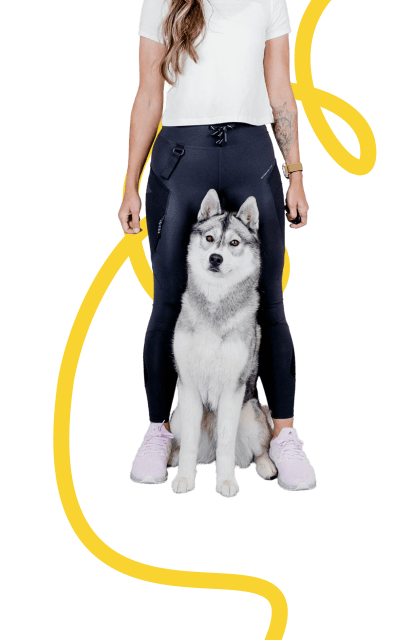
Once your dog understands the marker, teaching recall is easy. Our Basic Voice-Only Recall course builds a come-when-called you can trust, in seven simple workouts.
The Name Game
The Name Game teaches your dog that their name means "look at me."
- Say your dog's name once, in a clear, normal tone.
- The instant the pup looks at you, click.
- Deliver a treat.
- Wait a few seconds. Repeat.
Practice in different rooms. Then try the garden. Then a quiet street. Your dog learns that their name is a cue to check in with you, which is the foundation under nearly every other behavior you'll teach.
Sit
Teaching sit involves moving a treat over the dog's head - nose follows the treat upward, rear goes down.
- Hold a treat just above your dog's nose.
- Slowly move it backward over the head.
- As the rear hits the ground, click.
- Deliver the treat.
After several repetitions, add the verbal cue "sit" just before the lure. Then gradually phase out the lure, clicking and treating the sit on verbal cue alone.
Look (Focus Cue)
The Look cue helps dogs focus on their owner in distractions - and it's surprisingly powerful for building engagement.
- Hold a treat near your dog's nose.
- Move it from the nose toward your eyes.
- When the dog makes eye contact, click and treat.
- Gradually increase the duration of eye contact before clicking.
Keep these short at first. Even a one-minute round of Look gets real work done, and these exercises teach your dog the basics of paying attention and responding to a cue.
Using Food Rewards and Other Reinforcers
In clicker training, the reward is what makes the whole system worth anything from your dog's point of view. The click tells your dog what they did right; the reward is why they bother doing it again. Every pet feels food rewards a little differently, so watch what your own dog treats as a genuine reward versus something they'll eat but don't really care about.
Not all food rewards are created equal. Think of them in tiers:
- Low value (Regular kibble, dry biscuits): easy behaviors in quiet environments.
- Medium value (Commercial training treats, carrot bits): moderate difficulty, light distractions.
- High value rewards (Chicken, hot dog, cheese, liver): hard behaviors, high-distraction environments.
Use high-value treats to keep your dog motivated when the task is challenging or the environment is competing for attention. Match the reward to the difficulty.
Non-food reinforcers matter too. Some dogs respond to a tug game, a thrown ball, a sniffing break, or access physical pets as powerfully as they respond to food. Mixing in play and praise can keep sessions exciting and prevent the dog from getting bored with the same treat.
For beginners, food is easiest because it's fast to deliver and universally motivating. But watch your dog - if they light up for a specific toy or activity, that's a reinforcer you can use.
Clicker training encourages dogs to enjoy learning new behaviors, and the reward system is why. When trying produces good things, trying becomes fun.
When and How to Fade the Clicker and Treats
You don't need to carry a clicker and treat pouch for the rest of your dog's life. Once a behavior is reliable across multiple contexts, the clicker can be reserved for teaching new behaviors or working through challenges. Many owners use this exact stage to drop the physical clicker for good and shift to a marker word instead - by the time a behavior is this reliable, the dog is responding to the marker's meaning, not the specific sound of a mechanical device.
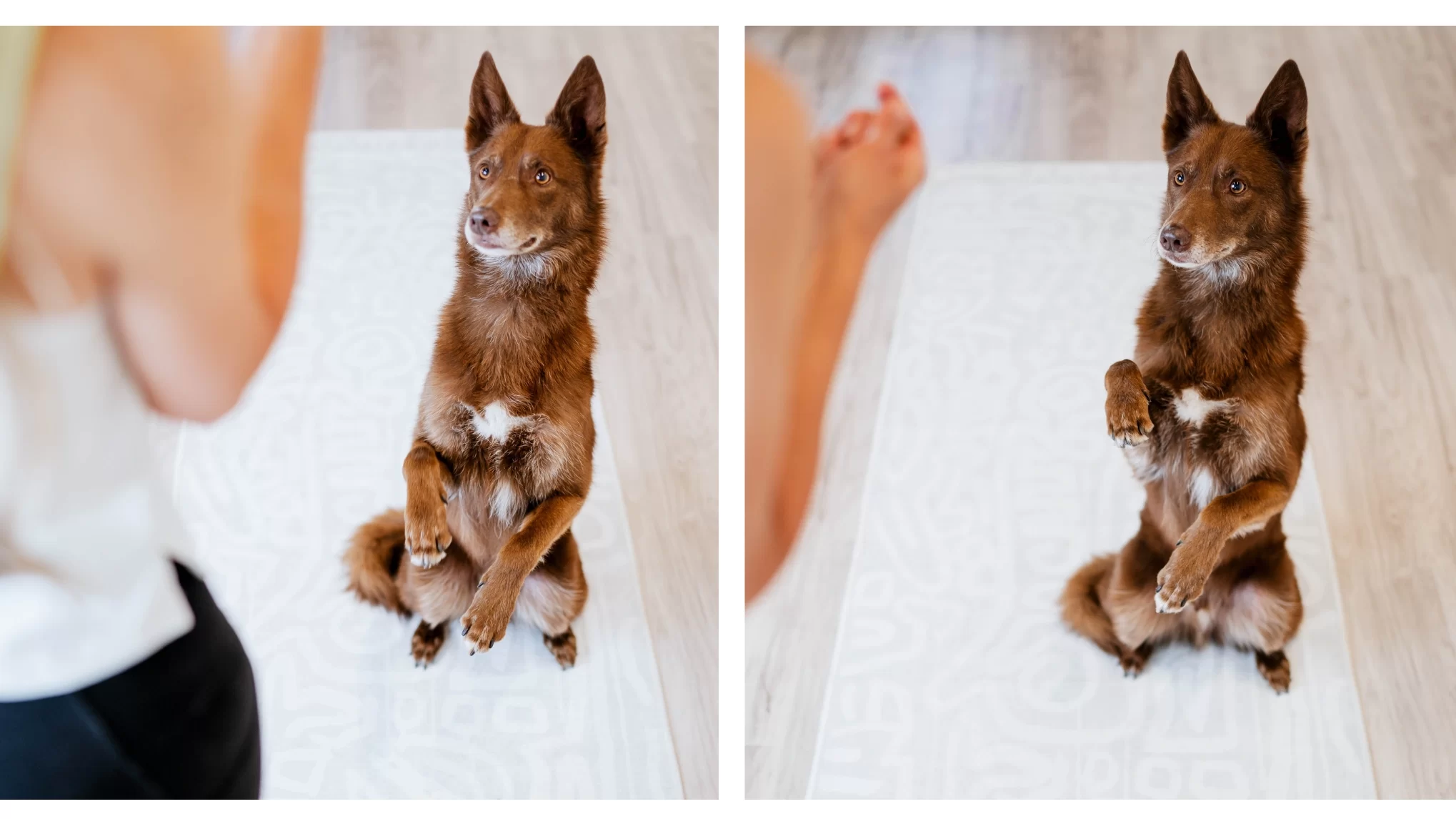
The transition follows a clear path:
- Continuous reinforcement. Click and treat every correct response. This is where all training starts.
- Intermittent reinforcement. Once the behavior is solid, reward every second or third correct response. Still praise every time.
- Variable reinforcement. Reward randomly - sometimes after one rep, sometimes after four. This actually strengthens behavior because the dog can't predict which repetition pays off.
Gradually varying rewards can help maintain a dog's understanding of trained behaviors over the long term.
One important caution: research on partial reinforcement - clicking without always delivering a treat - found that dogs who received clicks without consistent food follow-through showed signs of negative emotional states. Early in training, keep the click-to-treat ratio at 100%. Fade treats only after the behavior is genuinely strong.
Occasional rewards throughout the dog's life will keep behaviors sharp and enthusiastic. A well-timed treat for a beautiful recall at the park, even years into training, goes a long way.
Common Clicker Training Mistakes (and How to Fix Them)
Everyone makes these clicker training mistakes. Dogs are forgiving, but spotting the errors early will speed you up. They apply whether you're using a clicker or a marker word, because good timing works the same either way.
Clicking too late. A late click confuses your dog about which behavior actually earned the reward. Click after your dog has already stood up from a sit and you've marked standing, not sitting. Fix it by slowing down, watching your dog closely, and working one behavior at a time.
Forgetting to treat after a click. Every click needs a reward behind it. A click with no treat chips away at the click's meaning. Even if you clicked by accident, pay it out anyway. The click is a promise, so keep it.
Clicking multiple times. One click per behavior. Multiple clicks for a single action create noise without clarity. Click once, treat once.
Using the clicker as a remote control. Using the clicker as a remote control is a common mistake - clicking to get the dog's attention or to call them over. The clicker is a marker, not a command. It marks what already happened; it doesn't ask for something to happen.
Sessions that drag on. Training sessions should last 5–10 minutes to prevent boredom. A tired, full, or overstimulated dog won't learn efficiently. End while the dog still wants more.
Quick troubleshooting tip: If the dog looks confused, freezes, or starts offering random behaviors, the exercise is too hard. Make it easier. Reduce the criteria. Increase the rate of reinforcement. Let the dog succeed before raising the bar.
What If My Dog Doesn't Respond or Seems Scared of the Clicker?
Some dogs need adjustments, and that's normal.
If the clicking sound startles your pup, muffle it. Put the clicker in your pocket or behind your back. Try a softer clicker designed for sensitive dogs, or switch to a marker word entirely. The tool matters less than the principle: mark the moment, then reward.
If the dog doesn't perform the cue, don't force it. Don't click or treat - simply wait and reset. Try a simpler version of the behavior. If the dog won't lie down from standing, try clicking when they lower their head toward the ground - a small movement in the right direction. Build from there.
Never push, pull, or physically position the dog. Use gentle luring instead. If even luring doesn't work, reduce the environment's difficulty. Move to a quieter room. Remove distractions. Some dogs shut down when overwhelmed, and the fix is always less pressure, not more.
For anxious dogs, keep practice sessions extremely short - even one minute of successful engagement is productive. End on an easy win. Let the dog learn that training is safe before you ask for anything challenging.
Personalized Virtual Coaching
Want Eyes on Your Timing?
Clicker timing is a skill, and a second set of eyes speeds it up fast. Book a free consultation and get one-on-one coaching built around you and your dog.
Expanding Skills: Everyday Manners and Fun Tricks
Once you and your dog have the basics down, the same clicker training principles scale to virtually any behavior.
Everyday manners you can teach with a clicker:
- Polite leash walking without pulling
- Going to a mat or bed on cue
- Waiting at doors instead of jumping or bolting
- Coming when called, even with distractions
- Settling quietly when visitors arrive
Fun tricks worth trying:
- Spin in a circle
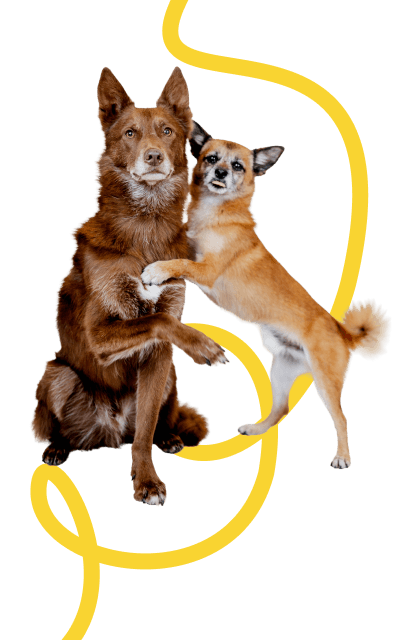
- Paw shake or high five
- Bow
- Weave between your legs
- Stepping onto novel surfaces or objects
Work on only one or two new behaviors at a time. Trying to train five things in one session creates confusion. End each session on something easy - a behavior the dog already knows - so the animal walks away feeling successful.
Practicing in different places is crucial. A dog who sits perfectly in your kitchen may act like they've never heard the word in a park. That's not stubbornness; it's a failure to generalize. Practice each behavior in the living room, the garden, a quiet street, then gradually busier environments. Each new location is a new context the dog needs to learn in.
A meta-analysis of 34 studies on conditioned reinforcement found a medium-to-large effect size for clicker-type training interventions, confirming that the approach produces measurable behavior change across species and settings.
Free Foundations Course
Put This Into Practice, Free.
The free Foundations Course turns everything in this guide into short, guided sessions with your dog, so your marker actually sticks.
Clicker Training as Part of a Long-Term Training Plan
Clicker training isn't a phase you complete and move past. It's a communication system you can use for the life of the dog.
Once basic obedience is reliable, you can combine clicker-trained cues with life rewards - the things your dog wants access to every day. Want to go outside? Sit first. Want to greet a visitor? Wait calmly. Want dinner? Hold a down. These real-world contingencies make trained behaviors part of daily life rather than something that only happens during formal exercise.
Consistent, short daily practice beats occasional long sessions every time. Five minutes of focused work each day builds more reliable behavior than a 45-minute weekend marathon. The process of learning never really stops for dogs - or for the people training them.
As your dog matures, clicker training extends naturally into new territory: dog sports like agility or nose-work, behavior modification for reactivity or fear, advanced obedience, or simply teaching a new trick because it's fun. The form changes; the science doesn't.
The clicker is one of the simplest tools in dog training. It's a small noise that carries an obvious message: you did the right thing, and something good is about to happen. That loop - behavior, click, reward, repeat - is the foundation of a relationship built on clarity, trust, and mutual enjoyment. Start with one behavior, one marker - clicker or voice, whichever you'll actually remember to bring - and five minutes tonight.
Natasha Johnson
Founder & Head Trainer